
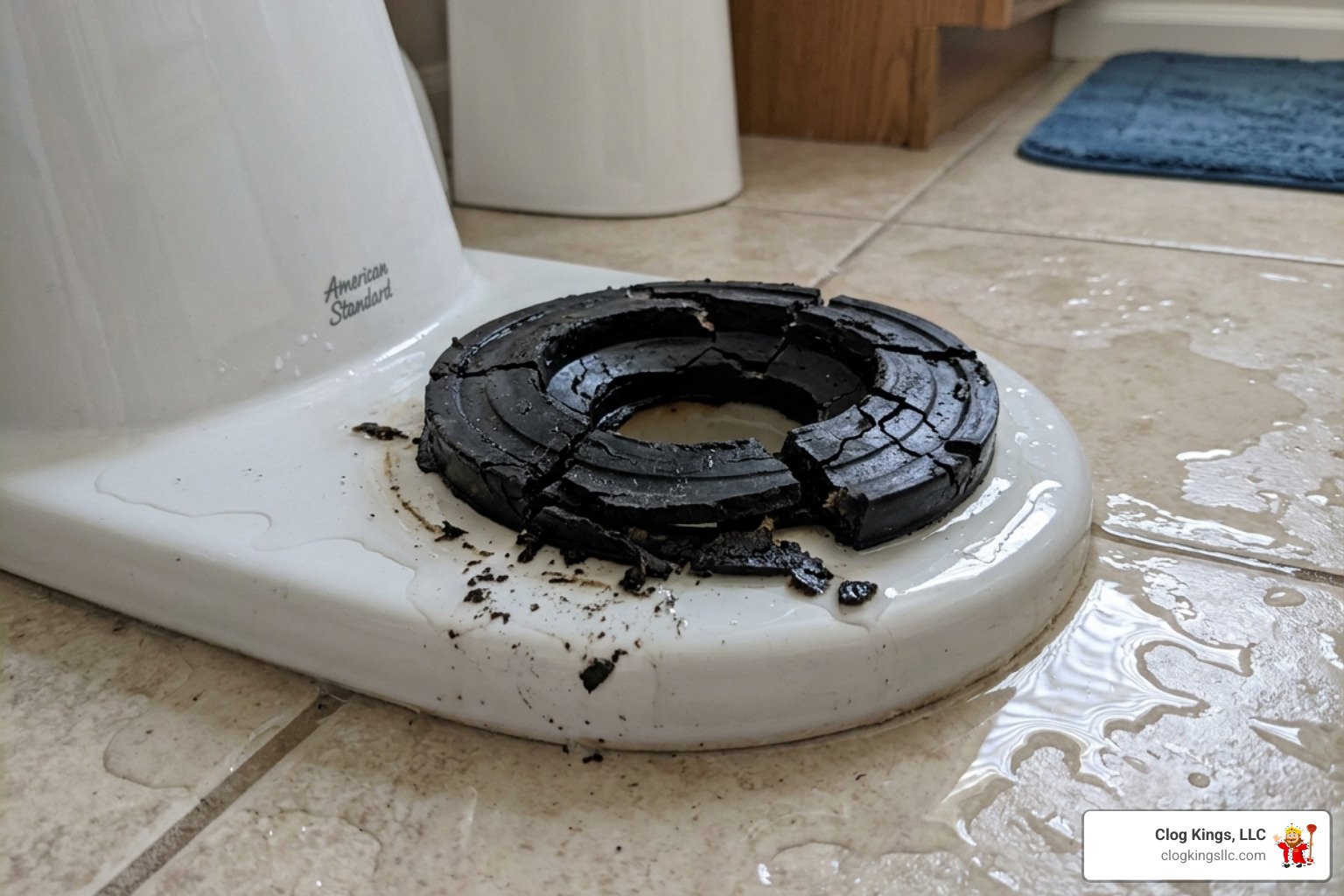

A Broken Toilet Seal Is Leaking More Than Just Water
A broken toilet seal is one of the most common — and most overlooked — plumbing problems in any home. Here’s what you need to know right now:
Quick Answer: What to do about a broken toilet seal
- Stop using the toilet to prevent further water damage to your subfloor
- Check for signs: water pooling at the base, sewage smell, or a rocking toilet
- Dry the area and place paper towels around the base overnight to confirm the leak source
- Replace the wax ring — this is a DIY job for most homeowners, or call a plumber if the flange is damaged
- Expect to pay $5–$15 in materials for DIY, or $105–$215 for professional service
That small puddle at the base of your toilet might not seem like a big deal. But left unchecked, a broken seal lets sewer gases into your home and slowly destroys the subfloor beneath your feet. Water damage restoration can run anywhere from $1,300 to $6,500 — all because of a $10 wax ring.
The good news? This is a fixable problem. Most of the time, you don’t need a new toilet. You just need a new seal.
I’m Joey Denick, and with over 20 years of hands-on plumbing experience, I’ve replaced more broken toilet seals than I can count — from simple wax ring swaps to full flange rebuilds on water-damaged subfloors. In this guide, I’ll walk you through everything you need to diagnose, fix, and prevent this problem for good.
Identifying a broken toilet seal: Signs and Symptoms
We often think of plumbing leaks as dramatic events—pipes bursting and water spraying everywhere. However, a broken toilet seal is usually a silent offender. It’s a slow, creeping issue that can go unnoticed for weeks until the damage is already done.
The first thing we tell our customers in Tampa and St. Petersburg is to trust their senses. If something feels, smells, or looks “off” around the porcelain throne, it probably is.
Is it a broken toilet seal or just condensation?
Before you start tearing the bathroom apart, let’s rule out “sweating.” In our humid Florida climate, cold water sitting in the toilet tank can cause condensation to form on the outside of the porcelain. This moisture then drips down and pools at the base, looking suspiciously like a leak.
To tell the difference, try the “Paper Towel Test”:
- Thoroughly dry the entire toilet and the floor around it.
- Wrap a few dry paper towels around the base of the toilet.
- Check them after a few hours or overnight.
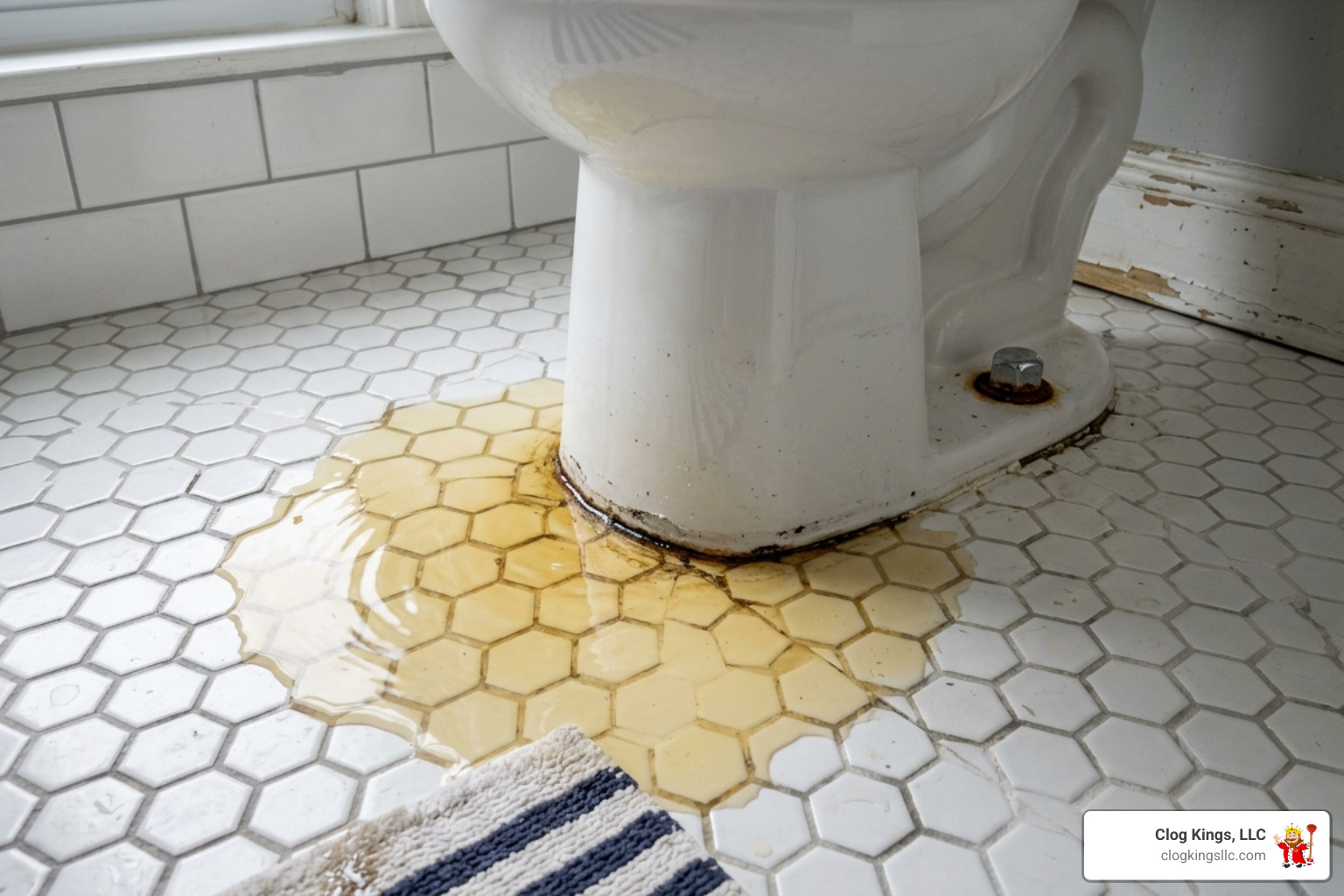
If the towels are damp but the water is clear and odorless, you likely have a condensation issue. If the water is yellowish, has a brown tint, or carries a distinct “bathroom” aroma, you are dealing with a broken toilet seal. For more complex diagnostic help, you can check out more info about toilet repair services to see how we handle these “ghost” leaks.
Clear indicators of a failing wax ring
If you notice any of the following, your wax ring has likely given up the ghost:
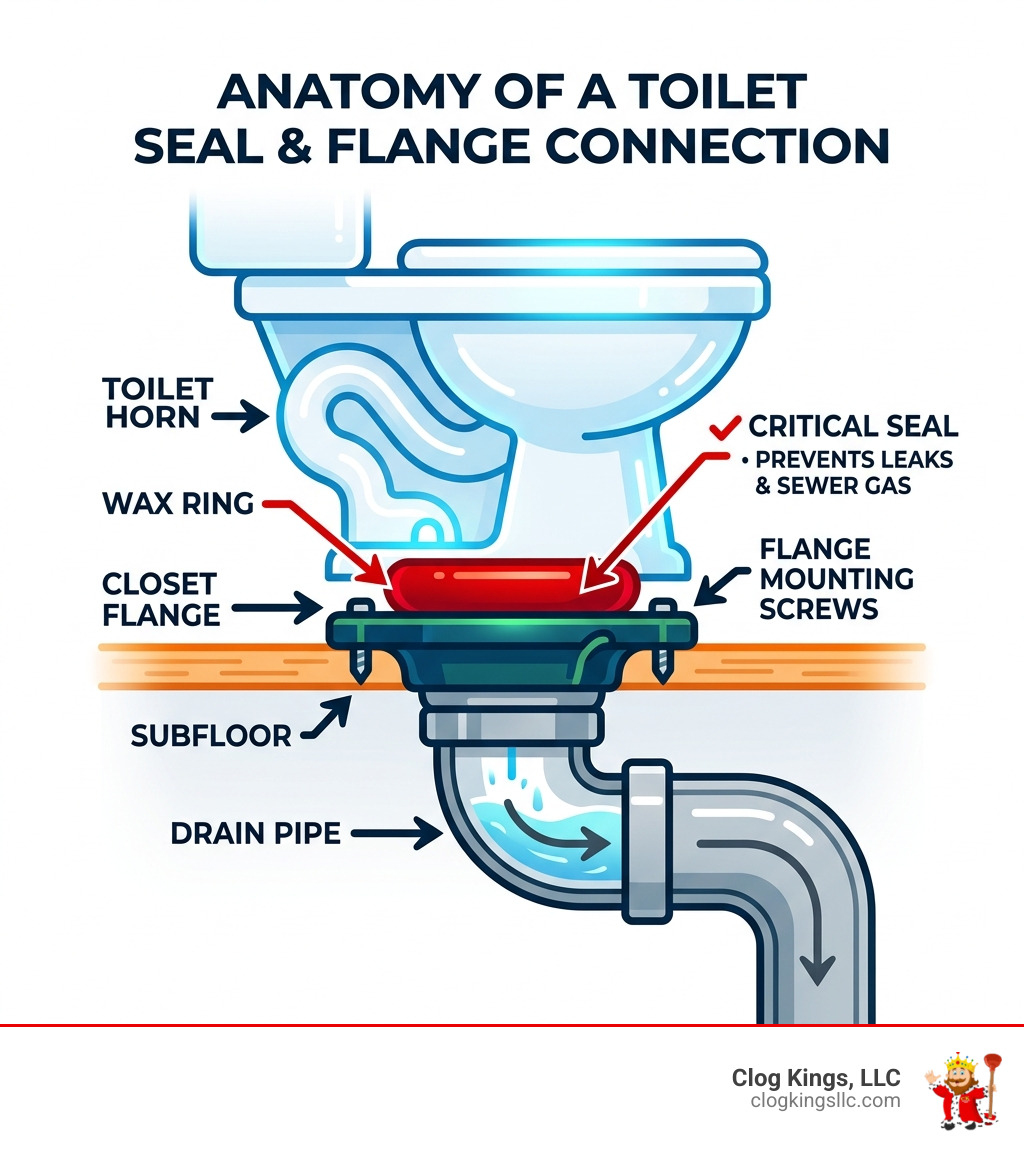
- Sewer Odors: This is the “stink” we talk about. A wax ring doesn’t just keep water in; it keeps sewer gases (like methane) out. If your bathroom smells like a septic tank despite being clean, the airtight barrier is broken.
- The “Wobble”: If the toilet rocks when you sit down, the seal is doomed. Every time that toilet moves, it squishes and deforms the wax. Once wax is compressed or shifted, it doesn’t “spring back.” A wobbly toilet is a seal-killer.
- Floor Stains and Soft Spots: Look for yellow or brown staining on the tile or grout. If you have linoleum or wood, look for warping. Forbes Home reports that water damage restoration can cost homeowners between $1,300 and $6,500 depending on severity, making early detection vital.
- Ceiling Stains Below: If the leaking toilet is on the second floor, you might see a bubbling or discolored patch on the ceiling directly beneath the bathroom. This is a red-alert situation.
Why Seals Fail and Choosing Your Replacement
You might be wondering, “Why did this happen now?” Most toilet seals are designed to last 20 to 30 years, but several factors can cut that life short.
- House Settling: As homes in Hillsborough or Manatee County settle into the Florida soil, the floor can shift slightly, pulling the flange away from the toilet.
- Improper Installation: If the original installer didn’t center the ring or used a ring that was too thin for the floor height, it was only a matter of time.
- Structural Movement: Frequent “pile-driving” (sitting down too hard) or children using the toilet as a step-stool can break the bond between the wax and the porcelain.
Understanding the toilet wax ring
The traditional wax ring is a simple loop of molded paraffin wax. It sits between the “horn” (the outlet at the bottom of your toilet) and the “closet flange” (the pipe fitting in the floor). When you set the toilet down, the weight of the porcelain crushes the wax, creating a custom-molded, watertight, and airtight gasket.
Wax is naturally resistant to mold and bacteria, which is why it has been the industry standard for over a century. However, it is a “one-shot” deal. If you lift the toilet even a fraction of an inch after setting it, the seal is broken and you must use a new ring.
Wax vs. Wax-free: Which should you choose?
Today, we have options beyond just standard wax. Products like Harvey’s Bol-Wax No. 5 offer a wax ring reinforced with a urethane foam core, which helps it keep its shape better than pure wax.
| Feature | Traditional Wax Ring | Wax-Free / Rubber Seal |
|---|---|---|
| Cost | Very Cheap ($5-$8) | Moderate ($12-$20) |
| Installation | Messy, one-shot attempt | Clean, repositionable |
| Longevity | 20-30 years | 10-15 years |
| Best For | Level, standard floors | Uneven floors or DIYers |
| Reliability | High (Industry Standard) | Good, but can lose tension |
While wax-free seals (made of rubber or foam) are popular for DIYers because they aren’t messy and allow you to reposition the toilet, we find that a high-quality wax ring still provides the most reliable long-term seal, especially in older homes where the flange might not be perfectly level.
Step-by-Step Guide to Fixing the Leak
Ready to get your hands dirty? Replacing a broken toilet seal is a project that takes about 2 to 3 hours for a beginner. It’s a great way to save a few hundred bucks, provided you don’t run into a broken flange (the plastic or metal ring the toilet bolts to).
According to the EPA, repairing leaks can save households over 10,000 gallons of water per year. That’s enough to fill a small backyard pool!
Tools and materials for your broken toilet seal project
Before you pull that toilet, make sure you have everything on this list. There is nothing worse than having a hole in your floor and realizing you’re missing a $2 bolt.
- New Wax Ring: We recommend a “jumbo” or “extra thick” ring if you have recently installed new tile.
- New Closet Bolts: Always replace these. The old ones are likely corroded.
- Adjustable Wrench: For the bolts and the supply line.
- Putty Knife: To scrape off the old, nasty wax.
- Disposable Gloves: Trust us on this one.
- Bucket and Sponge: To get every last drop of water out.
- Penetrating Oil: If your old bolts are rusted solid.
- New Supply Line: We recommend a 12-inch-long Fluidmaster supply tube because they are flexible and much easier to install than rigid copper lines.
Installing the new seal and resetting the toilet
1. Drain the Toilet: Turn off the water valve behind the toilet. Flush it until the tank is empty. Use a sponge or a wet/dry vac to suck the remaining water out of the bowl. If you don’t, that water will end up on your floor the moment you tilt the toilet.
2. Disconnect and Unbolt: Disconnect the water supply line. Remove the plastic caps at the base and unscrew the nuts from the closet bolts. If they spin, you might need to grip the bolt with pliers while turning the nut.
3. Lift the Toilet: This is the heavy part. Toilets weigh between 70 and 120 pounds. Lift with your legs, not your back! Move the toilet onto a piece of cardboard or an old towel to avoid scratching your floor or the toilet base.
4. Scrape and Inspect: Use your putty knife to scrape every bit of the old wax off the floor flange and the bottom of the toilet. This is the most important step—new wax will not bond to old wax. Inspect the flange. If it’s cracked or rusted through, stop here and call a pro. A seal won’t hold on a broken flange.
5. Set the New Ring: You can place the ring on the bottom of the toilet or directly on the flange. We find placing it on the flange and centering it over the hole is easier for beginners.
6. Reset the Toilet: Lower the toilet straight down over the new bolts. Do not rock it! Once it touches the wax, use your body weight to sit on the toilet (lid closed, please!) to compress the wax.
7. Tighten and Test: Tighten the nuts hand-tight, then give them another quarter-turn with the wrench. Switch sides as you tighten to keep the pressure even. Reconnect the water, flush it ten times, and watch the base like a hawk for any leaks.
Professional vs. DIY: Costs and Prevention
While we love a good DIY spirit, sometimes a broken toilet seal is just the tip of the iceberg.
- DIY Cost: Usually under $30 for the ring, bolts, and a new supply line.
- Professional Cost: Typically $105 to $215. This includes the labor, materials, and a warranty on the work.
When should you put down the wrench and call us?
- The Flange is Broken: If the bolts won’t stay in the floor, you can’t fix the seal.
- The Floor is Squishy: If the wood around the toilet is rotted, the toilet will never be stable.
- You Only Have One Bathroom: If things go wrong, you don’t want to be without a bathroom overnight.
There are 4 reasons you should hire a plumber for toilet repairs, including the fact that we have the tools to spot hidden leaks behind walls that a DIYer might miss. Plus, ignoring a leak can lead to a skyrocketing water bill. If you’ve noticed your bill creeping up, read about why a running toilet can skyrocket your hillsborough county water bill.
How to prevent future toilet wax ring leaks
Once your new seal is in, you want it to last another 30 years. The secret is stability.
- Stop the Rock: If the toilet wobbles even slightly, use plastic shims to level it before tightening the bolts.
- Check the Bolts: Every few months, give the toilet a gentle nudge with your knee. If it moves, the bolts might have loosened. Tighten them carefully.
- Don’t Stand on the Rim: Use a step stool to change lightbulbs or reach high shelves. Standing on the toilet puts uneven pressure on the seal.
The caulking debate: Should you seal the base?
This is a hot topic in the plumbing world. Most building codes require caulking around the base of the toilet for hygiene (it prevents “mop water” and “other fluids” from getting under the toilet). However, many plumbers hate it because it can hide a leak from a broken toilet seal until the floor is completely rotted.
We recommend the “Three-Side Method”: Apply a bead of high-quality kitchen and bath caulk around the front and sides of the toilet, but leave a 1-inch gap at the very back. This “observation gap” allows water to escape onto the floor if the seal fails in the future, giving you an early warning before the subfloor is damaged.
Frequently Asked Questions about Toilet Seals
How long does a toilet wax ring typically last?
Under normal conditions, a wax ring lasts 20 to 30 years. However, if the toilet is loose and rocks back and forth, the seal can be destroyed in just a few months. In our Florida heat, wax stays relatively soft, which is good for the seal but means it can shift more easily if the toilet isn’t bolted down tight.
Can I stack two wax rings to reach a low flange?
We see this a lot in DIY “fails.” If you’ve added new flooring (like thick tile) and your flange is now sitting below the floor level, stacking two rings is a recipe for disaster. They can easily slide apart. Instead, use a “Jumbo” wax ring or, better yet, install a flange extender kit to bring the flange up to the correct height.
When should I call a professional for a seal issue?
If you pull the toilet and see black mold, standing water in the subfloor, or a flange that is cracked or rusted, it’s time to call in the experts. Also, if you’ve replaced the ring and the toilet still leaks, you might have a hairline crack in the porcelain bowl itself, which requires a full toilet replacement.
Conclusion
A broken toilet seal is a small part that causes big headaches. Whether you decide to tackle this as a weekend project or want the peace of mind that comes with professional service, don’t wait. The longer that water sits, the more expensive the repair becomes.
At Clog Kings, LLC, we’ve seen it all—from simple $10 fixes to $5,000 subfloor reconstructions. We provide 24/7 emergency plumbing services across Pasco, Manatee, Pinellas, and Hillsborough Counties. If you’re smelling something funky or seeing puddles you can’t explain, let us take the “stink” out of your plumbing.
For professional toilet repair and installation that you can count on, give us a call today. We’ll make sure your throne is solid, sealed, and ready for another 30 years of service!
