

Is a 64,000 Grain Water Softener Right for Your Home?
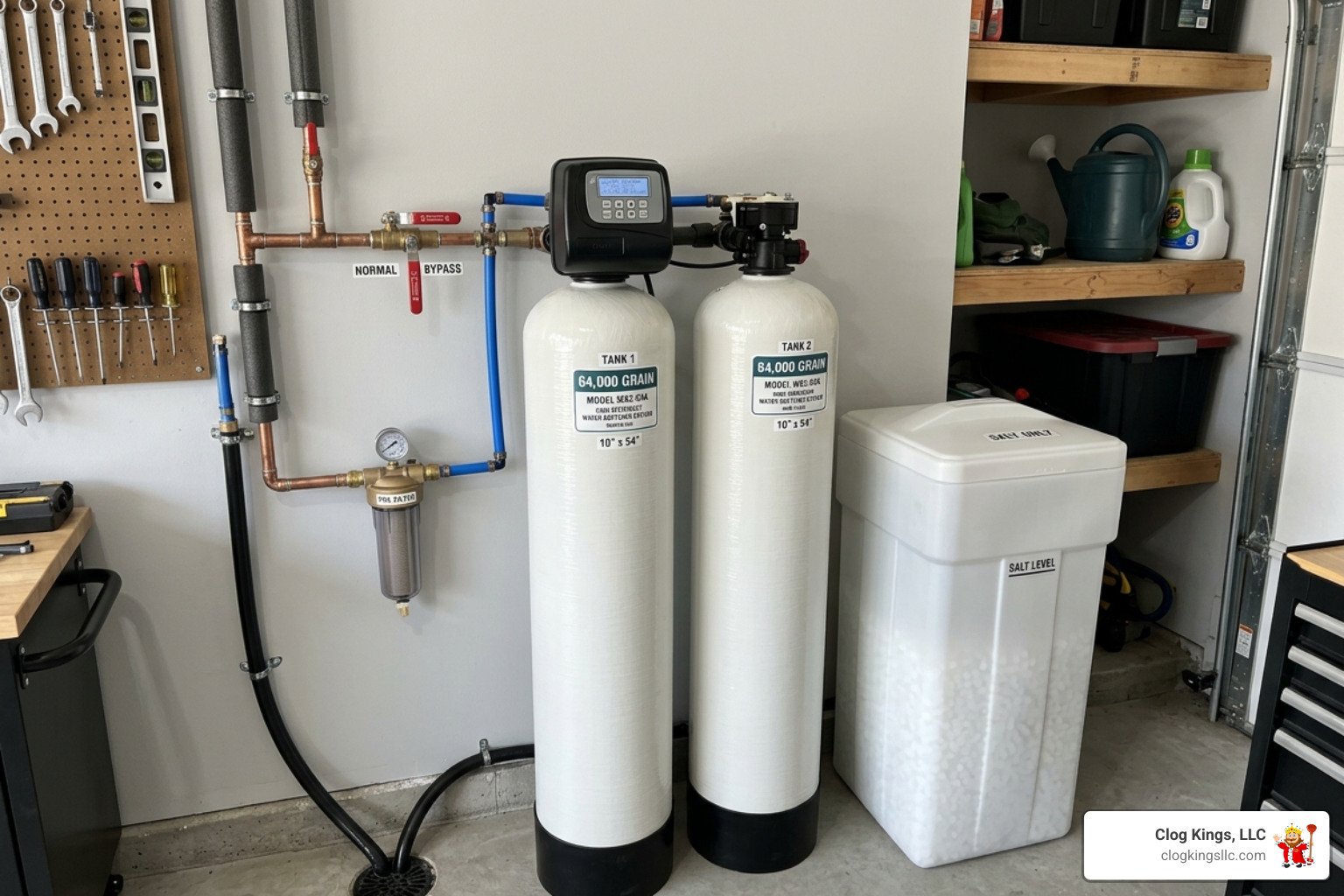
A 64000 grain water softener is one of the most popular high-capacity systems available for larger homes — and for good reason.
Quick answer: Here’s what you need to know at a glance:
| Feature | Details |
|---|---|
| Best for | 5-8 people, 4-6 bathrooms |
| Grain capacity | 64,000 grains of hardness |
| Max hardness handled | Up to 110 GPG |
| Iron removal | Up to 2 PPM (standard) / 10 PPM (fine mesh) |
| Flow rate | Up to 20 GPM |
| Salt per regeneration | 18-20 lbs |
| Water per regeneration | 50-75 gallons |
| Typical price range | $690 – $1,029 |
| Resin volume | 2.0 cubic feet |
If you have hard water in Florida, you already know the damage it causes. Scale coats your pipes. Spots cover your dishes. Your water heater works harder than it should. Over time, it all adds up to expensive repairs and shorter appliance lifespans.
For larger households, a standard 32k or 48k system simply runs out of capacity too fast. It regenerates more often, uses more salt, and still may not keep up with peak demand. A 64,000 grain system is built to handle the load.
Whether your water comes from a city line or a private well, choosing the right softener — and sizing it correctly — makes a real difference in performance and cost.
I’m Joey Denick, a plumbing and water treatment professional with over 20 years of experience helping homeowners find the right 64000 grain water softener for their specific water conditions and household needs. In this guide, I’ll walk you through everything you need to make a confident, informed choice.
Understanding the 64000 Grain Water Softener: How It Works
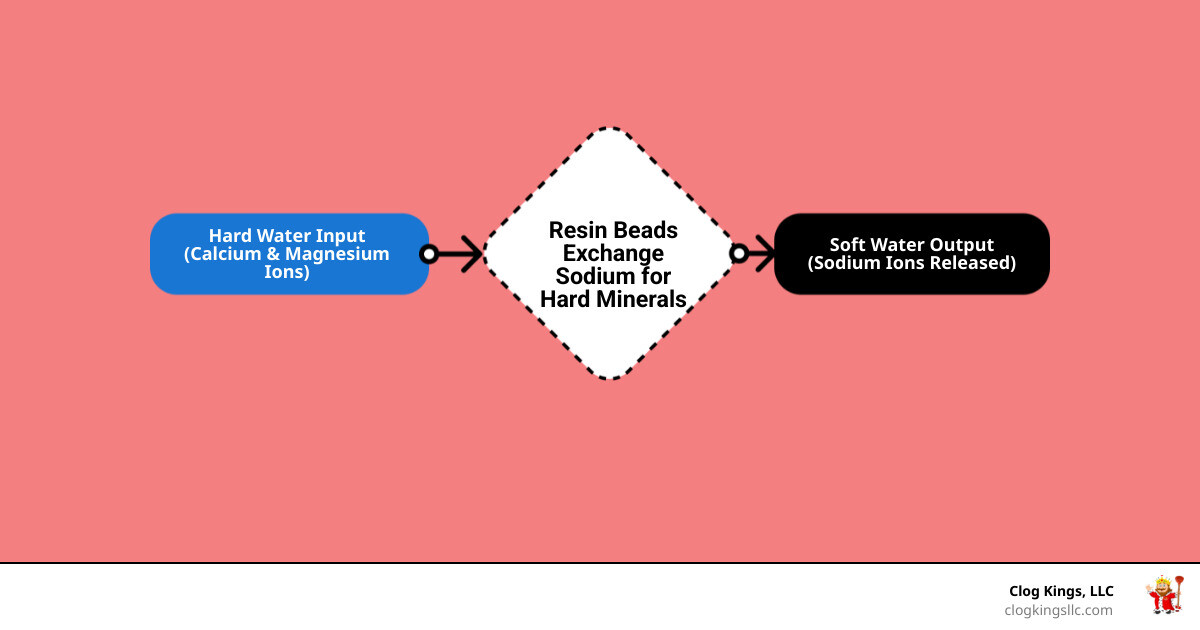
To understand why a 64000 grain water softener is such a powerhouse, we have to look at the science inside the tank. These systems operate on a process called ion exchange. Think of the water softener as a chemical magnet. Inside the main tank (the resin tank), there are millions of tiny plastic beads called resin.
In a 64k system, you’ll typically find 2.0 cubic feet of this resin. These beads are negatively charged and hold onto sodium ions. As hard water—full of calcium and magnesium—flows through the tank, those minerals are attracted to the beads. The resin “trades” its sodium for the hardness minerals, leaving you with soft water.
When the beads are completely covered in calcium and magnesium, the system needs to “recharge.” This is the regeneration cycle. The system flushes the resin with a concentrated salt solution (brine) from the side tank, knocking off the minerals and sending them down the drain. Because a 64000 grain water softener has a larger resin bed, it can hold onto a lot more hardness before needing to clean itself.
One of the biggest advantages of these high-capacity units is the flow rate. Most 64k systems are designed for high-demand homes, offering a flow rate of up to 20 gallons per minute (GPM). This means you can run the dishwasher, a load of laundry, and have two people showering at the same time without seeing a drop in water pressure or softness. If you want to dive deeper into how these systems shield your home, check out the ultimate guide to water softeners benefits installation and maintenance. For those looking for Technical Guidance/Instructions, understanding the flow path is key to a successful setup.
Sizing and Selecting a 64000 grain water softener for Large Households
Sizing a water softener isn’t just about the size of your house; it’s about the math of your water usage. If you buy a system that is too small, it will regenerate every single night, wasting water and salt. If it’s too big, the resin can actually foul because it sits too long between cycles.
For residents in Pasco, Pinellas, Hillsborough, and Manatee Counties, our water is notoriously hard. A 64000 grain water softener is usually the “sweet spot” for families of 5 to 8 people.
| System Capacity | Ideal Household Size | Number of Bathrooms | Resin Volume |
|---|---|---|---|
| 32,000 Grains | 1-3 People | 1-2 Baths | 1.0 cu ft |
| 48,000 Grains | 3-5 People | 2-3 Baths | 1.5 cu ft |
| 64,000 Grains | 5-8 People | 4-6 Baths | 2.0 cu ft |
When selecting your unit, look for WQA Certified Water Specialist recommendations. A certified professional can help you calculate your GPG (grains per gallon). For example, if your water has 20 GPG of hardness and your family uses 400 gallons a day, you are removing 8,000 grains daily. A 64k system would last about a week between regenerations, which is ideal for resin longevity.
Pricing typically ranges from $690 to $1,029 depending on the control valve and resin type. We always recommend looking for NSF/ANSI 44 certifications, which ensure the system has been tested for structural integrity and softening effectiveness.
Comparing 64000 grain water softener vs. Smaller Capacities
The jump from a 48k to a 64k system might seem small, but the performance difference is significant. A 64000 grain water softener contains 2.0 cubic feet of resin compared to the 1.5 cubic feet found in 48k models. That extra half-cubic foot provides a larger surface area for ion exchange, which directly translates to better “peak demand” performance.
Smaller systems often use 3/4-inch internal valves, which can bottleneck your water flow. Most high-quality 64k systems come with 1-inch high-flow valves. This ensures that even in a large home with 4 or 5 bathrooms, you won’t experience that annoying “pressure drop” when multiple faucets are open. Plus, because the 64k system regenerates less frequently, the internal parts—like the seals and spacers in the control head—tend to last much longer.
Advanced Features: Fine Mesh Resin and Iron Removal
Not all 64k softeners are created equal. The type of resin inside makes a huge difference, especially if you are on well water in areas like East Hillsborough or North Manatee County.
- Standard Resin (8% Crosslink): This is the industry standard for city water. It’s durable and handles typical hardness well.
- 10% Crosslink Resin: This is a premium resin that is more resistant to chlorine. If you are on city water that smells like a pool, 10% crosslink resin will last much longer than standard resin.
- Fine Mesh Resin: This is the “secret weapon” for iron removal. Standard resin beads are larger, leaving gaps where iron can slip through. Fine mesh resin beads are much smaller and packed tighter.
If you struggle with “clear water iron” (water that looks clear but leaves red stains in the tub), a 64000 grain water softener with fine mesh resin can handle up to 10 PPM of iron. This eliminates the need for a separate, expensive iron filter in many cases. If you are exploring broader water filtration options, you might also find systems that incorporate KDF media to treat hydrogen sulfide (that rotten egg smell) alongside the softening resin.
Benefits of a 64000 grain water softener for Well Water
Well water presents unique challenges like sediment, manganese, and varying pressure. A high-capacity softener acts as a protective barrier for your entire home. We often recommend installing a sediment pre-filter before the softener to catch sand and silt that could clog the delicate control valve.
For well owners, pump pressure is vital. A 64000 grain water softener requires a certain flow rate to backwash properly. Most systems work best with a 40/60 pressure switch setting on your well pump. If your pressure is too low (like a 30/50 switch), the system might not be able to lift the resin bed during the cleaning cycle, leading to hard water “breakthrough.”
Installation Requirements and Long-Term Maintenance
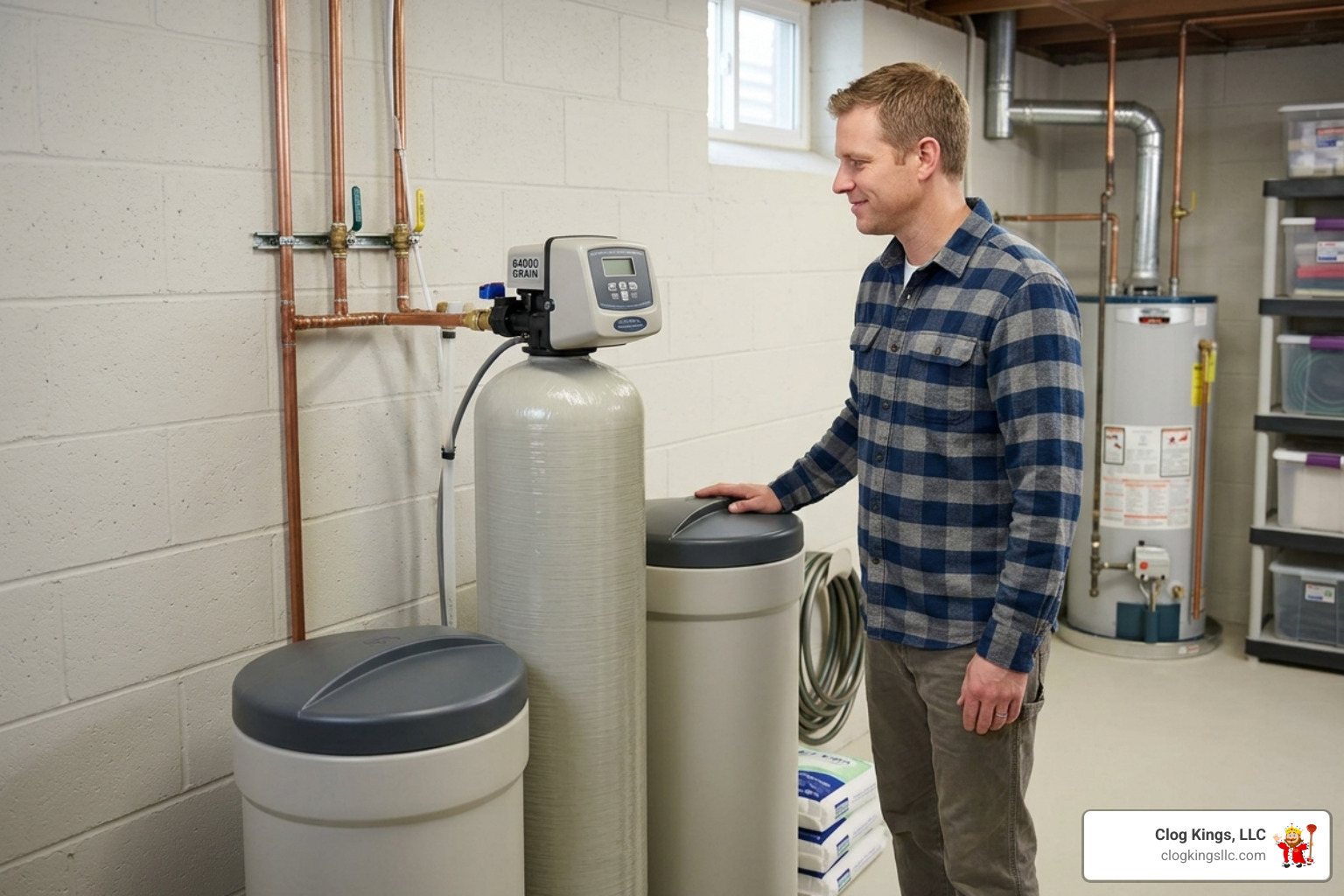
Installing a 64000 grain water softener requires a bit of planning regarding space. These are “twin tank” systems, meaning you have a tall, skinny resin tank and a shorter, wider brine tank where the salt lives.
- Footprint: You’ll need a minimum area of 18″ x 30″.
- Tank Size: The resin tank is typically 12″ in diameter and 52″ tall (about 60″ total height with the control valve).
- Brine Tank Placement: The brine tank should be within 6 feet of the main unit.
- Drainage: You need a place for the discharge water to go during regeneration. The drain line can usually run up to 7 feet vertically, but no higher, or the backpressure will prevent the system from draining correctly.
While many homeowners consider this a DIY project, water softener installation involves cutting into your main water line and ensuring proper bypass valve setup. We always recommend professional installation to ensure your warranty remains valid and your plumbing stays up to code.
Salt and Water Consumption in a 64000 grain water softener
A common concern is how much it costs to run these big units. Thanks to modern “metered” controls, they are surprisingly efficient. A metered system counts every gallon you use and only regenerates when the resin is actually exhausted.
- Water Usage: Each regeneration uses between 50 and 75 gallons.
- Salt Usage: A typical cycle consumes about 18 to 20 lbs of salt.
- Storage: Most brine tanks hold about 160 lbs of salt, meaning you only need to add bags every few months.
We recommend using high-quality pellet salt. Avoid “rock salt,” which contains impurities that can create a “salt bridge” (a hard crust that prevents the brine from forming). You can also use potassium chloride if you prefer a salt-free discharge for your lawn or septic system. Modern digital heads also feature power outage recovery, so they won’t lose your settings if the Florida lightning knocks the power out for a few minutes.
Frequently Asked Questions about High Capacity Softeners
Can a 64000 grain water softener be installed outdoors?
In Florida, many of us have limited space in the garage or laundry room. While you can install these systems outside, there are major caveats. The digital control valve is an electronic component. If it’s exposed to direct rain or the brutal Florida sun, the plastic will degrade and the electronics will fry.
If you must install outdoors, you must use a weather-protected enclosure or a small shed. Most manufacturers will void the warranty if the unit is left completely exposed to the elements.
How often should I add salt to my 64000 grain system?
For a family of five, you’ll typically find yourself adding two 40-lb bags of salt every 8 to 10 weeks. A good rule of thumb is to check the brine tank once a month. If you can see water at the bottom, it’s time to add salt. You want to keep the salt level at least a few inches above the water line.
Does this system require a battery backup for power outages?
Most modern 64k systems, like the Aquasure Harmony or Fleck models, use non-volatile memory. This means even if the power goes out, the system remembers your hardness settings and where it was in the cycle. However, they usually do not have a battery for the clock. You may need to reset the time of day after a long outage so the system doesn’t regenerate in the middle of your morning shower!
Conclusion
A 64000 grain water softener is a serious investment in your home’s infrastructure. It protects your water heater, keeps your clothes brighter, and ensures your skin and hair don’t feel the “crunch” of Florida’s hard minerals. For large families in the Tampa Bay area, it’s often the most cost-effective way to guarantee high-quality water at every tap.
At Clog Kings LLC, we’ve seen the damage that untreated water can do to local plumbing systems. Whether you are in Pasco, Manatee, Pinellas, or Hillsborough County, we are here to help. We offer 24/7 local service and expert installation to make sure your high-capacity system is dialed in perfectly for your home’s unique water chemistry.
Don’t let hard water wear down your home. Schedule your water softener service today and let our team of professionals bring the luxury of soft water to your family.
