
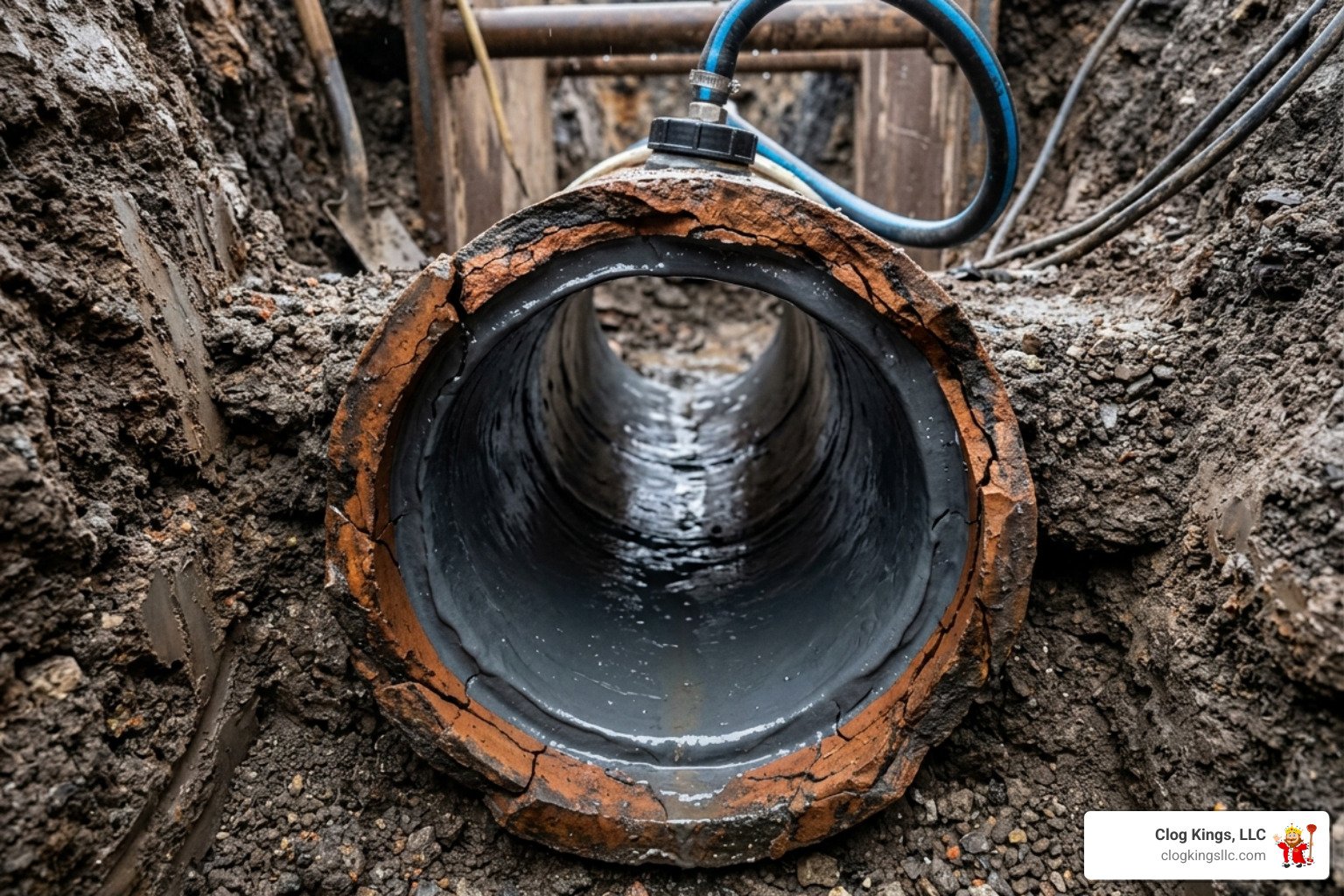

Why Clay Pipe Repair Epoxy Is the Fastest Fix for Failing Underground Pipes
Clay pipe repair epoxy is one of the most effective ways to seal cracks, stop leaks, and restore aging sewer lines — without digging up your yard.
Here’s what you need to know at a glance:
| Question | Quick Answer |
|---|---|
| What is it? | A two-part putty or resin that bonds to clay pipe walls to seal leaks and cracks |
| How fast does it work? | Sets in 20–25 minutes; full cure in 1–24 hours depending on product |
| Can it work underwater? | Yes — many epoxy putties cure even on wet or submerged surfaces |
| Is it strong enough? | Yes — products like J-B Weld WaterWeld rate at 4,370 PSI strength |
| DIY or professional? | Both — DIY putties exist, but trenchless epoxy lining requires a pro |
Clay pipes were the standard for sewer lines across the U.S. for most of the 20th century. They’re tough, but they’re also brittle. Over decades, they crack from soil shifting, tree root intrusion, and simple age. When they fail, you’ve got a problem that can’t wait.
The good news? You don’t always need to tear up your driveway or lawn to fix it.
Trenchless epoxy lining and epoxy putty repairs have changed the game — giving Florida homeowners a faster, cleaner, and often more affordable path to a working sewer line.
I’m Joey Denick, and with over 20 years of hands-on experience in pipe repair and trenchless solutions — including dozens of clay pipe repair epoxy jobs across Pasco and Pinellas County — I’ve seen what works and what doesn’t. Let’s break it all down for you.
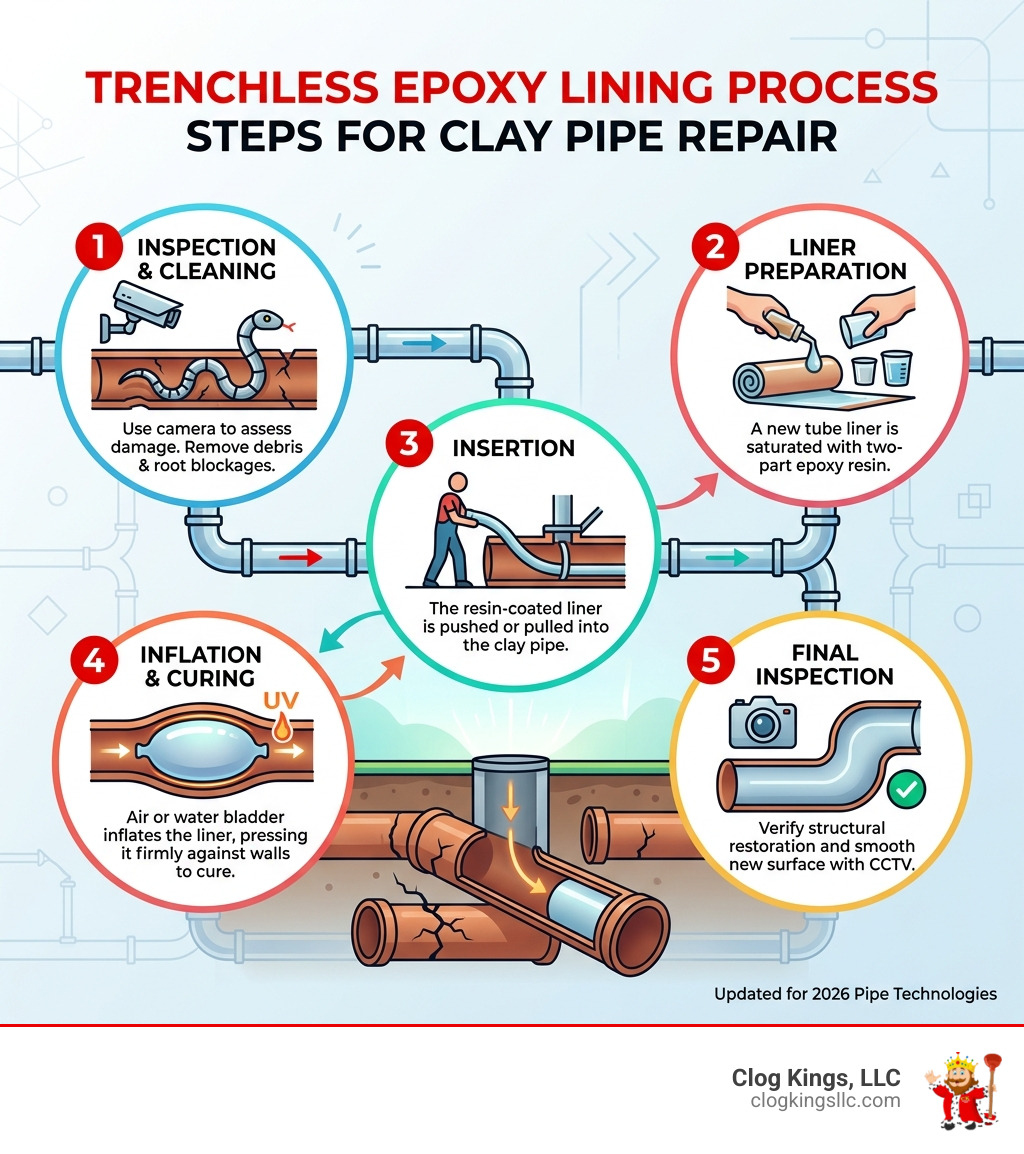
What is Clay Pipe Repair Epoxy and How Does it Work?
At its core, clay pipe repair epoxy is a specialized adhesive system—usually consisting of a resin and a hardener—that undergoes a chemical reaction to transform from a soft state into a rock-hard solid. When applied to vitrified clay, it creates a high-strength chemical bond that essentially becomes part of the pipe structure.
This isn’t just a “band-aid.” It works through a process of molecular cross-linking. When you mix the two components, they begin to heat up (an exothermic reaction) and harden. This allows the material to seal leaks, bridge cracks, and provide structural reinforcement to areas weakened by age or external pressure. Because clay is a porous, ceramic-based material, the epoxy “bites” into the surface, creating a seal that is often stronger than the original pipe itself.
Beyond just plugging holes, epoxy is vital for preventing further deterioration. If you’ve noticed signs of failing pipes, such as slow drains or soggy patches in your yard, the epoxy acts as a barrier against the number one enemy of clay lines: tree roots. Roots seek out the moisture in pipe joints; epoxy seals those joints so tightly that roots can’t find a way in.
The Versatility of Epoxy
While we primarily use it for heavy-duty sewer work, the science behind clay repair epoxy is so reliable it’s used in surprising places:
- Historical Restoration: Collectors often use specialized moulding clays and epoxies for historical tobacco pipe restoration, fixing chipped bowls or stems on pipes dating back to the 1600s.
- Marine Use: Because many epoxies cure underwater, they are staples for repairing boat hulls and fuel tanks.
- Industrial Maintenance: It is frequently used to seal corroded joints in cast iron rainwater stacks or concrete flood walls.
Understanding the Strength of Clay Pipe Repair Epoxy
When we talk about “strength,” we aren’t just using a buzzword. We look at PSI (pounds per square inch) ratings. For example, J-B Weld WaterWeld is rated at a staggering 4,370 PSI tensile strength. To put that in perspective, that is stronger than many types of concrete.
Here are the technical specs that matter for your home:
- Pressure Resistance: High-quality epoxies can withstand water pressure up to 500 PSI. Since most residential sewer lines are gravity-fed and not under high pressure, this provides a massive safety margin.
- Temperature Tolerance: Most plumbing epoxies handle temperatures up to 250°F, while heavy-duty versions like Original J-B Weld can withstand up to 550°F. This is more than enough for any hot water your dishwasher or shower can produce.
- Material Fillers: Depending on the job, we use different “flavors” of epoxy. Steel-filled putty sticks offer extreme impact resistance, while ceramic-filled resins (like Sylmasta AB Original) provide superior wear resistance and a longer “working time” for complex repairs.
Step-by-Step Guide to Fixing Leaks and Cracks
If you are tackling a small, accessible crack yourself, using a clay pipe repair epoxy putty stick is the most user-friendly method.
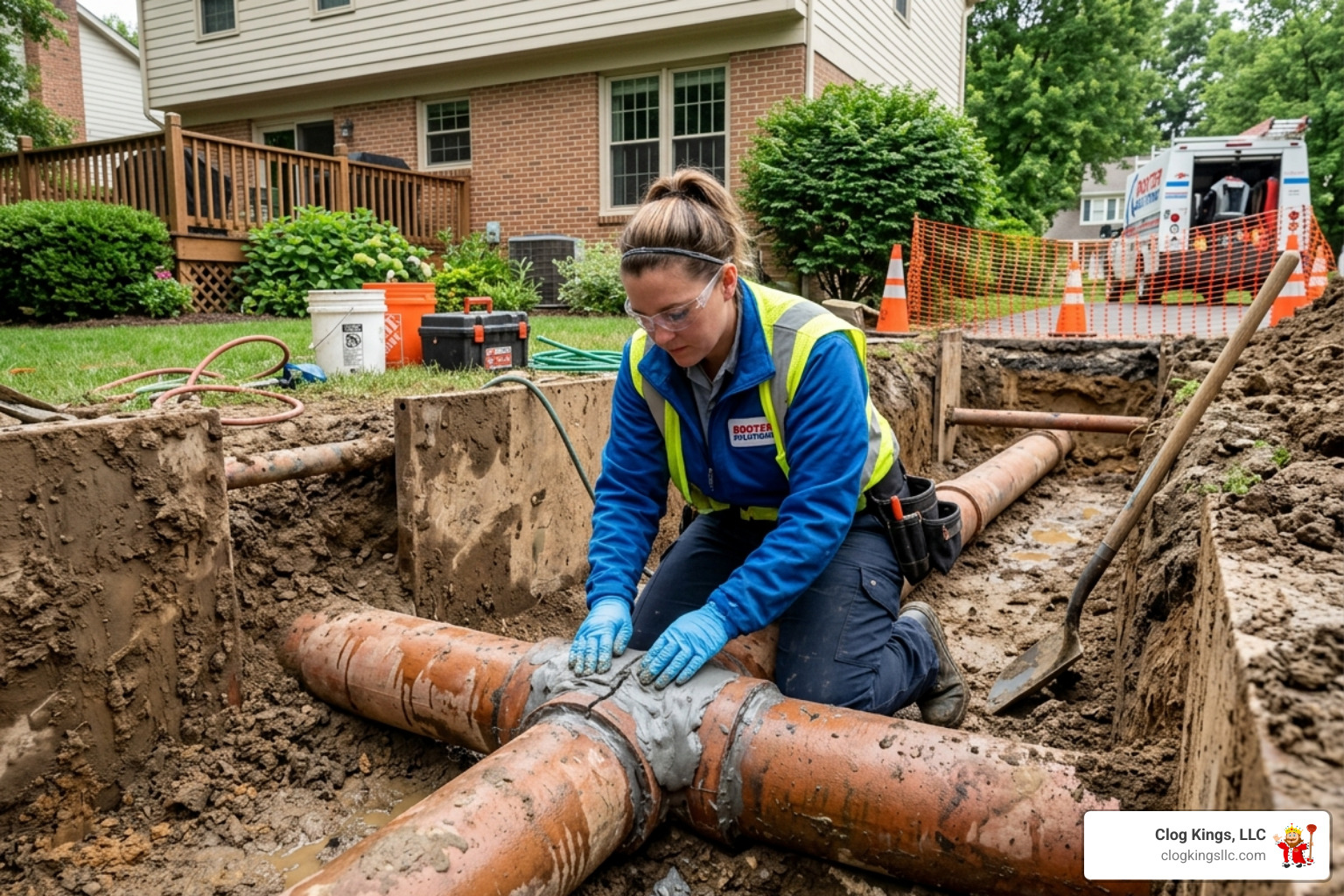
Tools and Safety Gear
Before you start, gather your supplies:
- Epoxy Putty: (e.g., J-B Weld WaterWeld, Oatey Fix-It Stick, or PC-Plumbing Putty).
- Safety Gear: Nitrile gloves are a must (epoxy is sticky and can irritate skin). Wear eye protection to prevent splashes during surface cleaning.
- Cleaning Tools: A wire brush, sandpaper, or a degreasing agent.
The Repair Process
- Mix the Epoxy: Most putty sticks have the hardener in the center and the resin on the outside. Slice off the amount you need and knead it with your gloved hands until the color is uniform (no streaks!).
- Apply to the Crack: Force the putty into the crack or hole. Don’t just layer it on top; you want it to penetrate the void.
- Shape and Smooth: You generally have a 20-minute work window before the material begins to stiffen. Use a damp finger to smooth the edges for a seamless seal.
- Wait for the Cure: While it may feel hard in 30 minutes, most products require a 24-hour full cure before they reach maximum strength.
Preparing Surfaces for Clay Pipe Repair Epoxy
Preparation is 90% of the job. If the surface is slimy, greasy, or covered in “biofilm” (sewer gunk), the epoxy will bond to the gunk instead of the pipe.
- Surface Roughening: Use a heavy-grit sandpaper or a wire brush to “scuff” the clay. This creates more surface area for the epoxy to grab onto.
- Degreasing: If the pipe is accessible, wipe it down with a fast-evaporating cleaner.
- Removing Root Intrusion: If roots have cracked the pipe, they must be completely cleared out. Any organic material left behind will rot and cause the repair to fail.
- Moisture Considerations: One of the best features of modern epoxy is its ability to bond to wet surfaces. However, for the best results, stopping the flow of water temporarily allows the epoxy to set without being washed away.
When to Choose Professional Clay Pipe Repair Epoxy Services
While a putty stick is great for a small crack in a basement pipe, it won’t help you if the leak is 10 feet underground in your front yard. This is where professional sewer repair comes in.
In the Tampa Bay and Pinellas County areas, our shifting sandy soils often lead to “offset joints” where two sections of clay pipe no longer line up. A DIY putty can’t fix that, but a professional clay pipe repair epoxy liner can.
The Professional Edge
We use advanced systems like Sylmasta E190 Brushable Repair Epoxy or CIPP (Cured-In-Place Pipe) resins. These are not simple putties; they are industrial-grade liquids used to saturate a felt liner.
- Deep Sewer Lines: We use robotic cameras to find the break and “trenchless” technology to pull a new epoxy liner through the old pipe.
- Underwater Applications: If your line is constantly backed up or submerged, we use specialized resins that are designed to displace water and cure perfectly in “wet” environments.
- Efficiency: Professional resins often have a 30-minute work time but can be “heat-cured” to harden in just a few hours, getting your toilets back in service by dinnertime.
Epoxy Putty vs. Professional Trenchless Lining
It’s important to understand the difference between a “patch” and a “lining.” A patch fixes a hole; a lining fixes the whole pipe.
| Feature | DIY Epoxy Putty | Professional Trenchless Lining (CIPP) |
|---|---|---|
| Best For | Small, visible cracks/holes | Long cracks, root intrusion, buried lines |
| Durability | 5–10 years (typically) | 50+ years |
| Structural Integrity | Localized reinforcement | Creates a “pipe within a pipe” |
| Cost | $15–$30 | $3,000–$10,000 (average) |
| Equipment | Hand tools | Video cameras, pneumatic bladders, liners |
If your clay pipes are showing multiple cracks or frequent root clogs, a sectional patch is just delaying the inevitable. You can learn all about trenchless pipe lining to see how we create a brand-new, seamless pipe inside your old one without digging a single trench.
Maintenance Tips to Protect Your Repair
Once your clay pipe is repaired, keep it healthy:
- Video Inspections: Have a pro run a camera through every 2 years to ensure no new roots are attacking the joints.
- Root Inhibitors: Use copper sulfate-based foaming agents once a year to keep nearby oak or palm tree roots at bay.
- Avoid Harsh Chemicals: While epoxy is chemically resistant, frequent use of caustic “liquid plumbers” can eventually degrade the bond between the epoxy and the clay.
Frequently Asked Questions about Clay Pipe Repair
Can epoxy putty be used on wet or underwater clay pipes?
Yes! Products like J-B Weld WaterWeld and PC-Plumbing Putty are specifically designed to be applied to wet surfaces. They can even be applied while the leak is actively dripping. The epoxy displaces the water and creates a permanent seal as it cures.
How long does epoxy take to set and fully cure on clay pipes?
Most “fast-set” epoxies will harden to the touch in 20 to 25 minutes. However, “set time” is not the same as “cure time.” You should wait at least 1 hour for emergency use and 24 hours for a full chemical cure to reach maximum PSI strength. Factors like cold weather can slow this process down significantly.
When should I choose epoxy repair over full pipe replacement?
You should choose epoxy repair if the pipe is mostly structurally sound but has localized cracks or leaking joints. If the clay pipe has “pancaked” (collapsed) or has large sections missing, epoxy won’t have enough surface area to bond to, and a full sewer replacement may be necessary.
Conclusion
Clay pipes are a piece of Florida’s history, but they don’t have to be a source of modern-day stress. Whether you’re using a simple clay pipe repair epoxy putty for a quick fix or calling in the pros for a full trenchless liner, the goal is the same: protecting your home from water damage and costly excavation.
At Clog Kings LLC, we specialize in saving old pipes using the latest trenchless technology. From St. Petersburg to Tampa and throughout Pasco and Manatee Counties, we help homeowners restore their plumbing with minimal disruption.
Don’t wait for a small crack to become a backyard sinkhole. Schedule a professional sewer repair today and let us give your old clay pipes a new lease on life.
