
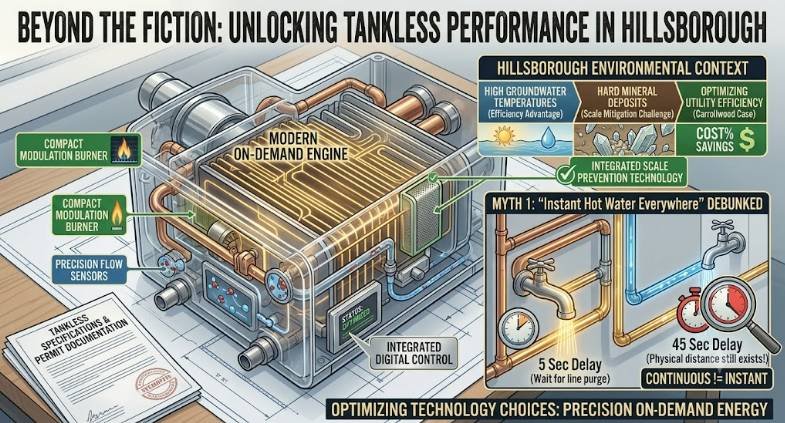

Whether you are navigating the suburban growth of Brandon, managing a commercial property in downtown Tampa, or maintaining a home in Carrollwood, upgrading your plumbing infrastructure involves making smart technology choices. When it comes to hot water systems, tankless technology is frequently discussed—but it is also surrounded by persistent misinformation.
Many property owners hesitate to make the switch because of outdated rumors regarding performance, installation limitations, or ongoing maintenance. In Hillsborough County, unique environmental factors like high groundwater temperatures and hard mineral deposits alter how these systems operate compared to other parts of the country.
Separating fiction from fact is essential if you want to optimize your property’s utility efficiency. Let’s debunk the five most common myths surrounding high-efficiency tankless water heaters in the Tampa Bay market.
Myth 1: “Tankless Heaters Provide Instant Hot Water Everywhere Simultaneously”
This is the most common misconception. Property owners often confuse continuous hot water with instant hot water.
The Reality of On-Demand Delivery
A tankless unit eliminates the giant holding tank by activating powerful heating elements or gas burners only when a hot water tap is opened. However, the water still has to travel through the physical pipes from the unit to your fixture. If your bathroom is located 50 feet away from the water heater, you will still experience a brief delay while the cold water sitting in the lines clears out.
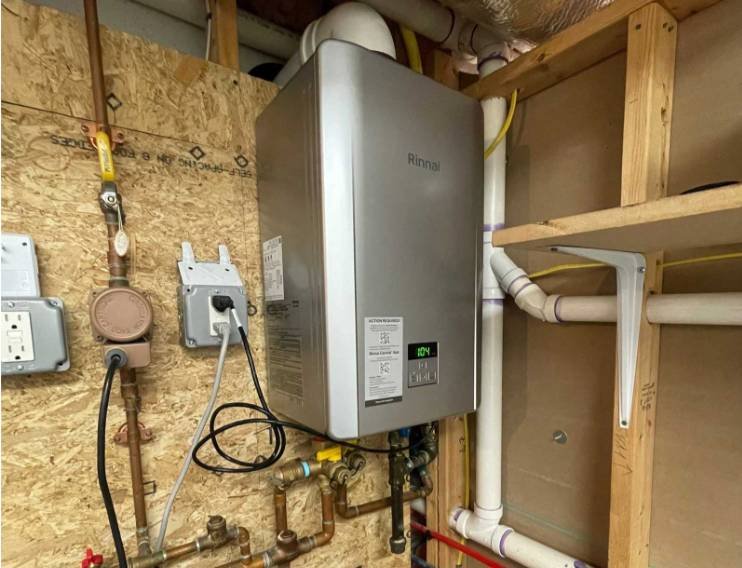
The core advantage isn’t that the water arrives instantly, but that it never runs out. Traditional 40- or 50-gallon tanks deplete their stored reserves during back-to-back showers or heavy appliance use, requiring a lengthy recovery period. A properly sized tankless unit provides a continuous stream of hot water for as long as the tap remains open.
To achieve instant delivery, our team can integrate a dedicated recirculation loop pump with your tankless water heater installation. This configuration keeps hot water moving through your primary distribution lines continuously, eliminating the wait time completely.
Myth 2: “They Are Completely Maintenance-Free Since There Is No Tank”
Because tankless units lack a massive steel cylinder prone to rust and sediment accumulation, many people assume they can simply install them and forget about them. In Hillsborough County, this mistake can destroy a high-performance system within a few short years.
The Threat of Florida Hard Water
The municipal and well water supplies across the Tampa Bay area contain high concentrations of dissolved calcium and magnesium carbonates. When this hard water passes through the internal components of a tankless system, the intense thermal transfer causes these minerals to crystallize rapidly.
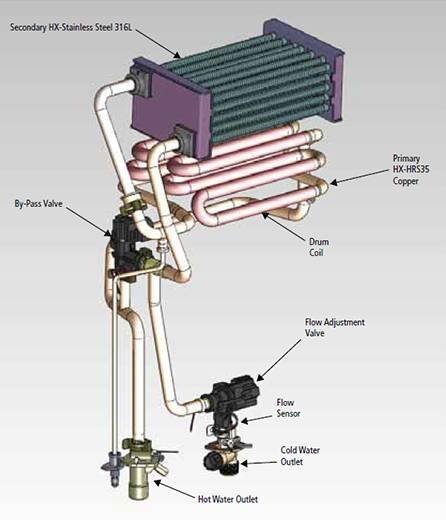
HIGH-MINERAL WARNING: The Heat Exchanger Insulator Effect
As mineral scale accumulates along the narrow passages of the internal heat exchanger, it forms a dense, chalky insulating barrier. This forces the system to burn hotter and work significantly harder to heat the water, leading to localized overheating, cracked components, and premature system failure.
To keep your system running optimally, the internal components must be flushed annually with a food-grade descaling solution to clear out these mineral deposits. At Clog Kings LLC, we recommend pairing a new tankless unit with a dedicated water softener installation. By binding the hard minerals before they hit the heat exchanger, you protect your system, maintain peak energy efficiency, and safeguard your factory warranty.
Myth 3: “Tankless Systems Do Not Save Enough Energy to Justify the Cost”
Skeptics often look strictly at the initial investment of a tankless changeout compared to a cheap traditional tank and conclude the math doesn’t work out. This narrow view ignores how traditional water heaters actually consume energy.
Ending Standby Energy Loss
A conventional tank operates on a constant cycle of waste. It heats 50 gallons of water to roughly 120°F–140°F, lets it sit, and then kicks back on when the water naturally cools down—regardless of whether you are awake, at work, or away on vacation. This continuous reheating loop is known as standby energy loss.
A tankless water heater eliminates standby loss entirely by drawing zero operational power until a flow sensor detects an open faucet.
[Traditional Tank] ──> Constant Cycling (Heats Water 24/7 Regardless of Use) ──> Higher Waste
[Modern Tankless]   ──> Flow Sensor Activation ──> On-Demand Heating Only     ──> 24-34% More Efficient
Because our local groundwater temperatures in Central Florida hover around a warm 70°F–75°F year-round, a tankless unit only needs to raise the water temperature by about 45°F to hit a comfortable shower range. This low thermal demand allows tankless systems to operate at peak efficiency, yielding substantial monthly energy savings that help offset the upfront installation costs over time.
Myth 4: “They Can’t Handle Multiple Appliances Running at the Same Time”
This myth stems from early, undersized point-of-use models introduced decades ago. Some homeowners still worry that running a washing machine will cause their shower water to turn ice cold.
Understanding Flow Rates and Gallons Per Minute (GPM)
Modern whole-home tankless systems are highly capable, provided they are correctly calculated for your specific household demands. Capacity is measured in Gallons Per Minute (GPM) rather than total storage volume.
| Appliance / Fixture Type | Average Demand (GPM) | Performance Impact in Tampa Bay |
| Low-Flow Showerhead | 1.5 – 2.0 GPM | Easily sustained by standard entry-level systems. |
| Standard Dishwasher | 1.0 – 1.5 GPM | Intermittent demand; draws minimal thermal capacity. |
| Washing Machine | 2.0 – 2.5 GPM | Continuous demand; requires solid operational capacity. |
| Simultaneous Load Capacity | Up to 7.0+ GPM | A premium whole-home unit handles two showers and a laundry cycle simultaneously without a drop in temperature. |
Because Florida’s warm incoming groundwater requires less energy to heat, a standard residential tankless unit delivers significantly higher GPM output here than the exact same model installed in a cold northern state. When handling a comprehensive general plumbing repair or system swap, our technicians carefully analyze your household fixture layout to ensure your new unit has the precise GPM rating needed to power your home seamlessly.
Myth 5: “Installation is a Simple DIY Project to Save Money”
With the wealth of instructional videos available online, many property owners view a tankless swap as a straightforward Saturday project. However, shifting from a storage tank to an advanced on-demand system requires serious mechanical modifications that go far beyond basic connection lines.
The Complexity of Advanced Mechanical Systems
A code-compliant tankless installation involves working with high-voltage electricity, complex gas line adjustments, and dedicated ventilation paths:
Gas Pressure Requirements: Gas-fired tankless units consume a significant volume of BTUs instantly when activated. This often requires running a larger, dedicated gas line from your meter to the unit to prevent pressure drops that could shut down your other gas appliances.
Intake and Exhaust Venting: Unlike standard tanks that vent naturally up a basic chimney, high-efficiency condensing tankless units utilize specialized dual-pipe PVC venting systems to pull in fresh air and exhaust cool combustion gases safely through an exterior wall.
Electrical Grid Demands: Whole-home electric tankless models require substantial electrical capacity, often demanding up to three or four dedicated 40-amp circuit breakers. Installing one frequently requires a comprehensive electrical panel upgrade to keep from overloading your home’s main power grid.
Attempting to bypass these technical demands can lead to severe safety hazards, code enforcement violations, and voided equipment warranties.
The Clog Kings Advantage
Clog Kings LLC specializes in designing and executing code-compliant, high-performance hot water upgrades across Pinellas, Pasco, Hillsborough, and Manatee Counties. We are fully licensed, bonded, and insured, operating in strict accordance with the standards set by the Florida Department of Business and Professional Regulation.
Our expert technicians do not rely on guesswork or standard templates. We calculate your exact household water usage, test your water hardness levels, evaluate your structural layout, and install your system to the highest professional standards. We believe in providing transparent, upfront flat-rate pricing with absolutely no hidden fees. To support those who have invested heavily in our community, we proudly offer dedicated senior and military veteran discounts across all of our service options.
What to Expect During a Professional Installation
We ensure every tankless conversion is handled with precision:
System Load Calculation: We evaluate your property’s fixtures, incoming water temperatures, and maximum simultaneous usage demands to establish the ideal GPM size.
Infrastructure Assessment: We inspect your existing electrical panel capacity or gas line sizing to confirm your home can safely support the new system.
Visual Pipe Diagnostics: If your property has older or questionable drainage lines, we can run a professional video plumbing inspection to make sure your main lines are ready for the new system’s flow patterns.
Professional Installation: We remove your old tank, mount the new unit, run the dedicated ventilation and utility connections, and install easy-access flush valves for streamlined annual maintenance.
Quality Sign-Off: We test the system under full household load, adjust the digital temperature controls, and handle all local municipal permit filings to ensure complete code compliance.
Schedule Your Assessment Today
Stop letting outdated myths keep you from enjoying a continuous supply of hot water and lower monthly utility costs. A professionally designed tankless conversion adds long-term value, improves energy efficiency, and modernizes your home’s infrastructure.
If your current water heater is leaking, making strange knocking noises, or simply failing to keep up with your household needs, our team is here to help. Beyond water heating solutions, we provide comprehensive plumbing support—including advanced sewer repair for structural main lines and precision drain cleaning to clear out tough blockages.
Take control of your home utilities:
Book Your Assessment: Contact Us for a Free Estimate using our secure online scheduling tool to arrange a professional hot water options review.
Urgent Tank Failures: If your current water tank has ruptured or is actively flooding your property, call us immediately at 727-479-4028 for priority emergency technician dispatch.
Explore Hard Water Solutions: Protect your investment by reviewing our professional water filtration options to keep your new system free from destructive mineral scale.
We keep the water flowing smoothly across the greater Tampa Bay area with 24/7 emergency availability, upfront flat-rate pricing, and industry-leading technical expertise. Reach out to our team today!
