

When Your Sewer Line Fails, Every Minute Counts
Sewer repair is the process of diagnosing and fixing damaged, blocked, or deteriorating sewer lines — and in Tampa Bay, it’s a problem that can sneak up on homeowners fast.
Here’s a quick overview of what you need to know:
| What You Need | What to Do |
|---|---|
| Identify the problem | Look for slow drains, gurgling sounds, sewage odors, or soggy yard patches |
| Get a diagnosis | Schedule a professional sewer camera inspection |
| Choose a repair method | Trenchless (CIPP lining, pipe bursting) or traditional excavation |
| Hire a licensed pro | Permits are required; DIY is not recommended |
| Act fast | Delays lead to sewage backups, sinkholes, and costly property damage |
In Pinellas County and across the Tampa Bay area, aging cast iron and clay pipes are a ticking time bomb for homeowners. Many of these lines were installed decades ago and were never designed to handle the demands of a modern household. Add in Florida’s sandy, shifting soil — and the relentless pressure of tree roots seeking moisture — and you have a recipe for sudden, serious failure.
The worst part? Most sewer problems are invisible until they become a crisis. By the time you notice a backup or a foul smell, the damage underground may already be significant.
You don’t have to figure this out alone. This guide will walk you through everything — from spotting early warning signs to understanding your repair options — so you can make a confident, informed decision without getting your hands dirty.
I’m Joey Denick, a licensed Master Plumber with over 20 years of hands-on experience in sewer repair across Tampa, St. Petersburg, and Clearwater. I’ve seen how fast a small sewer issue can turn into a full-blown emergency, and I’ve put together this guide to help you get ahead of it.
Identifying the Warning Signs of a Failing Sewer Line
In my two decades of crawling through Florida crawlspaces and peering into cleanouts, I’ve learned one thing: your house will try to tell you when something is wrong. The problem is that most homeowners don’t speak “sewer” until there’s a foot of wastewater in the bathtub.
In the Tampa Bay area, particularly in older neighborhoods in St. Petersburg and Tampa, the signs of a failing line can be subtle at first. You might notice 3 common signs of a damaged sewer pipe like a lingering “swampy” smell or a toilet that bubbles when the shower runs. These aren’t just quirks of an old house; they are distress signals.
Indoor Red Flags
Inside your home, the first signs usually involve airflow and drainage. If you hear gurgling toilets or notice that multiple drains are slow at the same time, the blockage is likely in the main sewer stack or the lateral line leading to the street. Persistent clogs that return shortly after plunging are a major red flag.
Another nasty symptom is backflow. This is when wastewater from your toilet or sink literally pushes back up through the floor drains. If you see water pooling around a basement or utility room floor drain, you are likely dealing with a collapsed or heavily obstructed line. Before the situation escalates, check out these 5 signs you need a sewer line inspection to catch the problem before it hits your living room floor.
Outdoor Symptoms
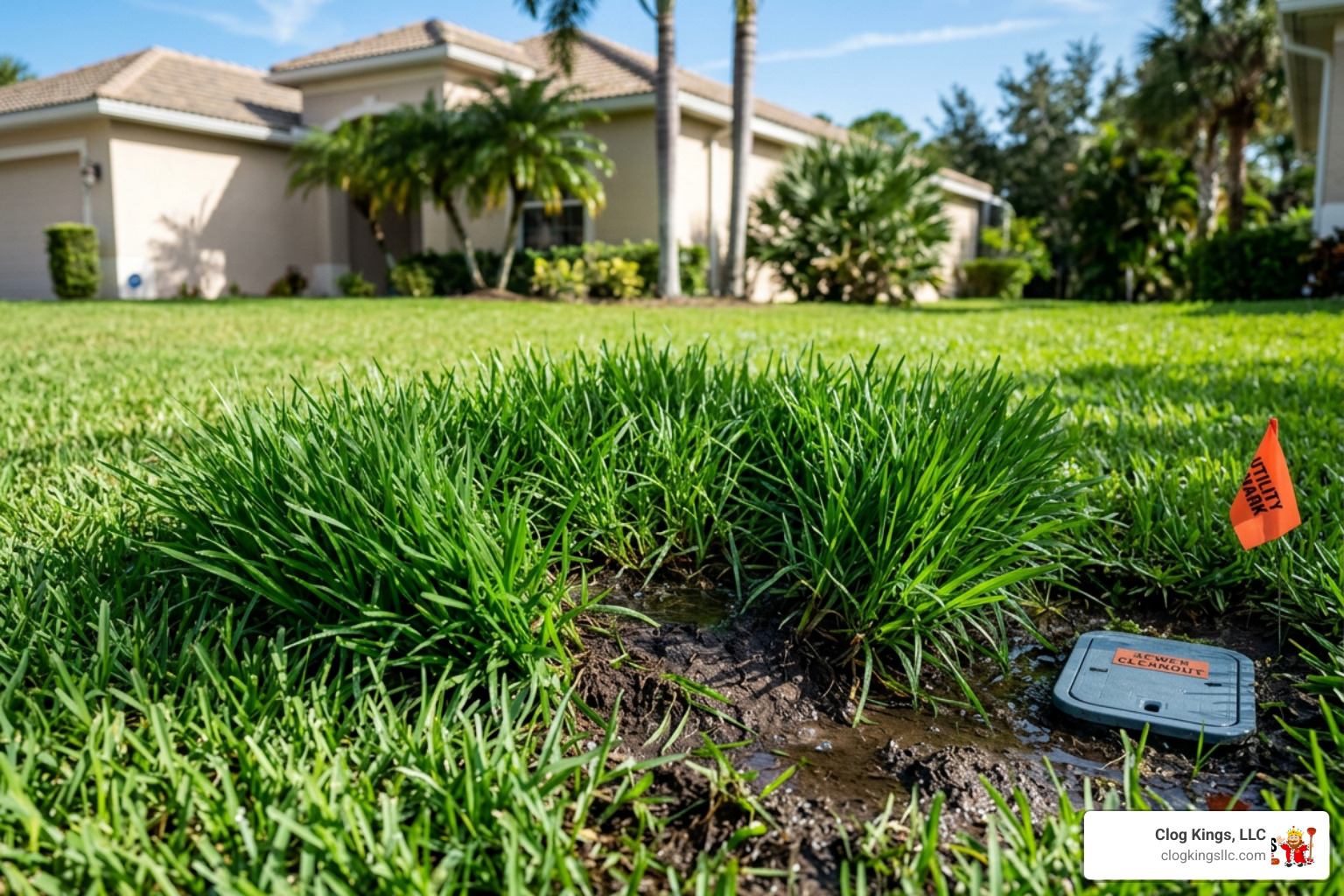
Sometimes the best evidence is in your yard. Florida’s high humidity and sandy soil create unique conditions. If you see a patch of lush, unusually green grass directly over where your sewer line runs, it’s not a miracle of nature—it’s a leak. Your lawn is essentially being fertilized by raw sewage.
As the leak continues, the water washes away our sandy Florida soil, leading to sinkholes or soggy, soft patches in the turf. In extreme cases, a shifting sewer line can even cause foundation cracks or attract rodent activity, as rats are notorious for using broken sewer pipes as “highways” into your home.
Common Causes of Sewer Line Damage in Tampa Bay
Understanding why your pipes failed is the first step in deciding how to fix them. A sewer is a complex system of underground conduits, and in our region, they face a unique set of enemies. From the common sewer line issues we see daily, three main culprits stand out.
Tree Root Intrusion
Tree roots are the #1 enemy of sewer repair in the Clearwater and Tampa areas. Roots are naturally attracted to the moisture and nutrients inside your pipes. They can find a tiny crack or a loose joint in a clay pipe and force their way in. Once inside, they grow rapidly, creating a “root ball” that catches grease and debris.
We often use hydro-jetting—a high-pressure water blast—to clear these out, but if the roots have compromised the structural integrity of the pipe, a more permanent solution like lining is required.
Aging Infrastructure and Material Failure
If your home was built before 1970, you likely have cast iron or clay pipes. Brittle clay cracks easily under the weight of shifting soil, while cast iron scaling occurs as the inside of the metal pipe rusts and catches debris, eventually narrowing the flow to a pinhole. We also occasionally see Orangeburg pipe (essentially tar-paper pipes), which are prone to collapsing entirely. This is why we emphasize the importance of sewer maintenance in hillsborough county; catching corrosion early can save you tens of thousands in replacement costs.
Pipe Bellies and Shifting Soil
Florida’s sandy soil is prone to shifting, especially during our heavy rainy seasons. This can cause a “belly” or a sag in the line. Because sewer lines rely on gravity to move waste, a belly creates a standing pool of water where solids settle, eventually leading to a total backup.
Traditional vs. Trenchless Sewer Repair: Which is Right for You?
When we tell a homeowner they need a sewer repair, the first thing they usually picture is a massive yellow backhoe tearing up their prize-winning rose bushes or expensive pavers. While that “open-cut” method was once the only way, modern technology has given us better options.
Deciding when you should replace vs repair your sewer line depends heavily on the type of damage and the location of the pipe.
| Feature | Traditional Excavation | Trenchless (CIPP/Bursting) |
|---|---|---|
| Digging | Full-length trenching | Two small access points |
| Landscape Impact | High (lawns, driveways destroyed) | Minimal |
| Duration | 3–5 days | 1–2 days |
| Cost | Lower upfront, high restoration cost | Higher upfront, low restoration cost |
| Durability | 50+ years (with new PVC) | 50+ years |
When to Choose Trenchless Sewer Repair
If your sewer line runs under a driveway, a pool deck, or expensive landscaping, trenchless is almost always the better call. It’s often the most cost-effective choice for Pinellas County sewer lines because you don’t have to pay to rebuild your driveway or replant your yard after we’re done. Methods like CIPP lining allow us to create a new pipe inside your old one with minimal digging.
The Necessity of Traditional Excavation
Trenchless isn’t magic. If the pipe has completely collapsed, or if there is a severe back-fall (meaning the pipe is sloped the wrong way), we have to dig. You can’t line a pipe that isn’t there. We also have to use traditional open trenching if there is significant utility interference that makes “blind” pulling or lining too risky.
Advanced Trenchless Sewer Repair Techniques
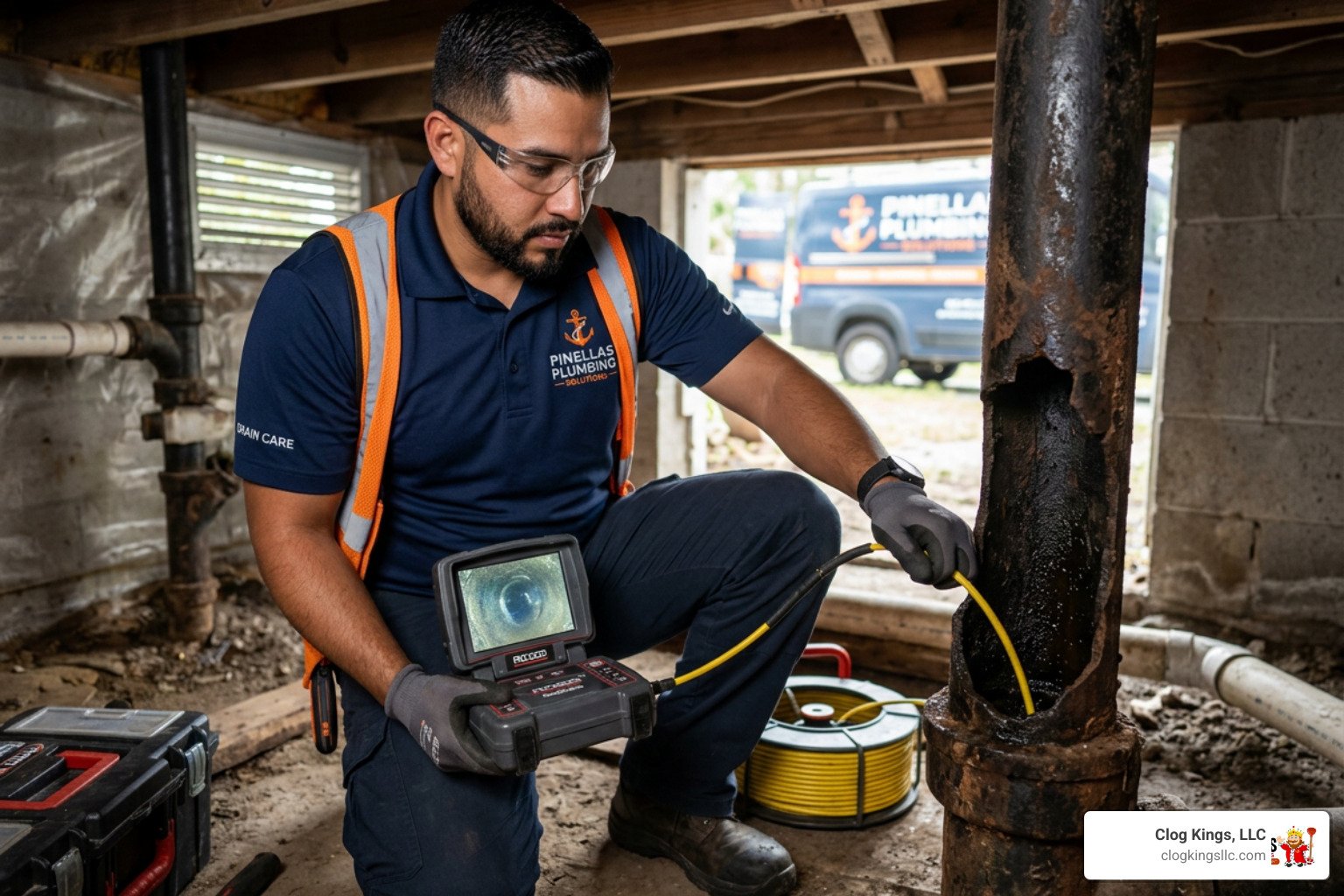
We pride ourselves on using the latest tech to solve old-world problems. Before we ever suggest a repair, we perform a video inspection of sewer lines. This involves sending a high-definition camera down the pipe so you can see the cracks and roots for yourself. We might even suggest a smoke test to find elusive leaks that are allowing sewer gas into your home.
Cured-in-Place Pipe (CIPP) Lining
CIPP is one of our favorite tools. We take a flexible felt liner saturated with epoxy resin and pull it through your existing pipe. We then inflate a bladder to press the liner against the old pipe walls. Once the resin cures, the bladder is removed, leaving behind a seamless restoration that is root-resistant and has a 50-year lifespan. It’s essentially a brand-new pipe without the trench.
Pipe Bursting Technology
If your old pipe is too damaged for a liner, or if you need to increase the size of your line to handle more waste, we use pipe bursting. A hydraulic head is pulled through the old line, literally shattering the old pipe and pulling a brand-new HDPE pipe (High-Density Polyethylene) behind it. This is a common choice for a full sewer replacement when the original line is beyond saving.
Costs, Timelines, and Homeowner Responsibilities
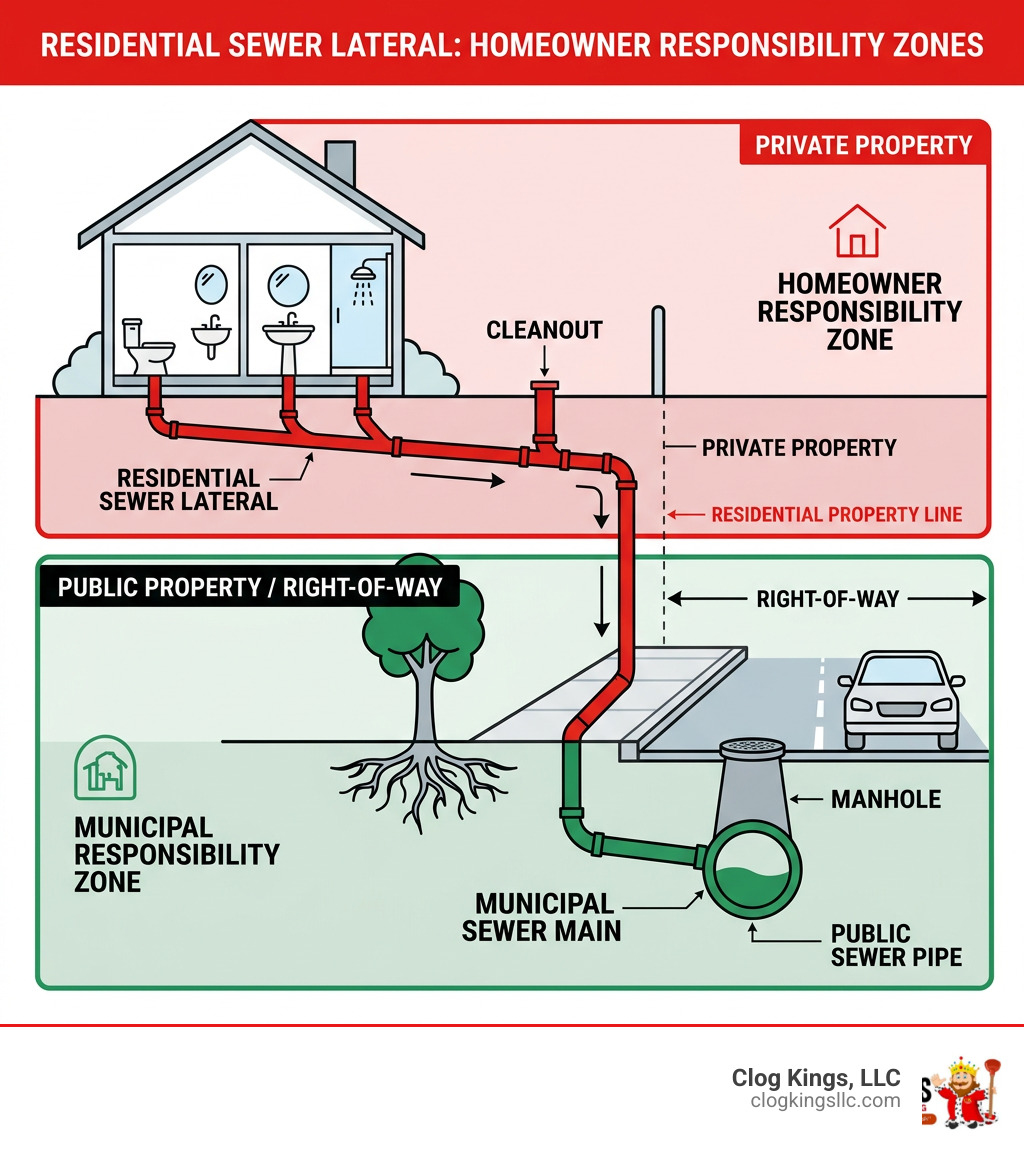
One of the most confusing parts of a sewer crisis is figuring out who pays for what. In Tampa and St. Pete, the rule is generally simple: you own the “lateral” from your house all the way to the connection at the city’s main line. This includes the section under the sidewalk and sometimes even under the street.
Knowing when to call a professional for sewer repair in Hillsborough County is vital because the city will not fix your private line, and a backup on your property is your responsibility to clean up.
The Cost of Professional Sewer Repair
The cost of sewer repair varies wildly based on several factors:
- Depth: The deeper the pipe, the more it costs to reach it.
- Length: More pipe means more material.
- Accessibility: Is the pipe under a concrete slab or an open yard?
- Restoration: Trenchless may cost more for the plumbing work but saves you thousands on landscaping.
On average, a spot repair might cost a few thousand dollars, while a full trenchless replacement of a long lateral can range from $5,000 to $15,000. However, compared to the $30,000+ some homeowners face when they have to tear up a street, trenchless is a bargain.
Project Timelines and Expectations
We know you want your water back on. A spot repair usually takes about a day. A full trenchless replacement typically takes 1 to 2 days. Traditional excavation can take up to a week when you factor in the time needed for city inspection windows and backfilling the soil. At Clog Kings LLC, we offer 24-hour service because we know that sewer lines don’t wait for business hours to fail.
Frequently Asked Questions about Sewer Repair
How long does a typical sewer repair take?
Most residential sewer repair projects we handle in the Tampa Bay area are completed in 1 to 2 days. Trenchless methods are significantly faster because they eliminate the need for massive excavation and the subsequent dirt-moving.
Does homeowners insurance cover sewer line collapse?
Standard policies often do not cover sewer line failure unless it’s caused by a sudden, covered peril. However, many homeowners have a “Sewer Line Endorsement” or “Service Line Coverage” that can help. It is always worth checking your policy before a crisis hits.
What is the difference between a sewer belly and a clog?
A clog is a temporary blockage (like grease or wipes) that can be cleared with a snake or hydro-jet. A sewer belly is a structural sag in the pipe where water and waste pool. You can unclog a belly, but it will keep clogging until the pipe is physically leveled or replaced.
Conclusion
Dealing with a sewer failure is stressful, but it doesn’t have to be a disaster. As a Master Plumber, my goal is always to provide the most durable fix with the least amount of disruption to your life. Whether you’re in Tampa, St. Petersburg, or Clearwater, you have options that don’t involve destroying your property.
If you suspect your pipes are failing, don’t wait for the backup. We offer advanced technology, 24/7 emergency response, and a team that treats your home like our own. For expert sewer repair you can trust, reach out to us at Clog Kings LLC. We’ll get your system flowing again—and we’ll keep our hands (and yours) as clean as possible in the process.
