

The Truth About Drain Cleaning (And Why Most Homeowners Get It Wrong)
Drain cleaning is the process of removing built-up debris, grease, hair, and blockages from your home’s pipes to restore full, healthy water flow.
Here are the most effective methods, ranked from simplest to most powerful:
| Method | Best For | Effectiveness |
|---|---|---|
| Plunger | Surface-level clogs | Low |
| Baking soda + vinegar | Light buildup, odors | Low-moderate |
| Enzymatic cleaner | Organic buildup prevention | Moderate |
| Drain snake / auger | Hair, soap clogs | Moderate-high |
| Hydro-jetting | Grease, roots, scale | Very high |
| Camera inspection + pro cleaning | Deep or recurring issues | Highest |
Here’s the frustrating reality most Florida homeowners discover too late: that bottle of drain cleaner under the sink? It’s probably making things worse.
Store-bought chemical cleaners often burn a small hole through a clog without clearing it completely. Worse, they can corrode metal pipes and weaken PVC joints over time. Meanwhile, the real culprit — years of grease, soap scum, or even tree roots — keeps growing back.
The good news is that modern professional drain cleaning methods, especially hydro-jetting and video camera inspections, can clear almost any blockage completely and safely, often in under an hour for standard jobs.
I’m Joey Denick, and with over 20 years of hands-on experience in drain cleaning and plumbing systems, I’ve seen what works, what doesn’t, and what turns a $150 service call into a $3,000 pipe repair.
In this guide, I’ll walk you through exactly how to clean your drains the right way — from simple DIY habits to knowing when it’s time to call a pro.

Understanding the Difference Between Drain Cleaning and Drain Clearing
When you call a plumber, you might hear the terms “clearing” and “cleaning” used interchangeably, but in the plumbing world, they are worlds apart. Understanding this distinction is the first step toward long-term pipe health and avoiding the hidden costs of neglecting drain cleaning.
Think of a clogged pipe like a blocked artery. Drain clearing is like poking a small hole through the blockage to get the blood—or in this case, the water—moving again. It’s a temporary fix. On the other hand, drain cleaning is like a total “pipe scouring” that returns the interior of the pipe to its original, smooth state.
| Feature | Drain Clearing (The “Quick Fix”) | Drain Cleaning (The “Full Restore”) |
|---|---|---|
| Method | Basic snaking or plunging | Hydro-jetting or specialized mechanical cutting |
| Action | Punctures a hole through the clog | Scours the entire pipe wall end-to-end |
| Results | Temporary relief | Long-term reliability |
| Debris Removal | Leaves residue behind | Removes grease, scale, and hair completely |
| Root Handling | May snag a few roots | Shaves roots down to the pipe walls |
If you only opt for clearing, the sticky residue left on the pipe walls acts like a magnet for the next piece of hair or glob of soap that comes down the line. This leads to recurring blockages and more service calls. True drain cleaning ensures the pipe wall integrity is maintained while removing every last bit of sludge.
The Professional Drain Cleaning Process
When we arrive at a home in Pinellas or Hillsborough County, we don’t just start guessing where the problem is. Modern drain cleaning is a high-tech operation that prioritizes diagnostic accuracy over “poke and hope” methods.
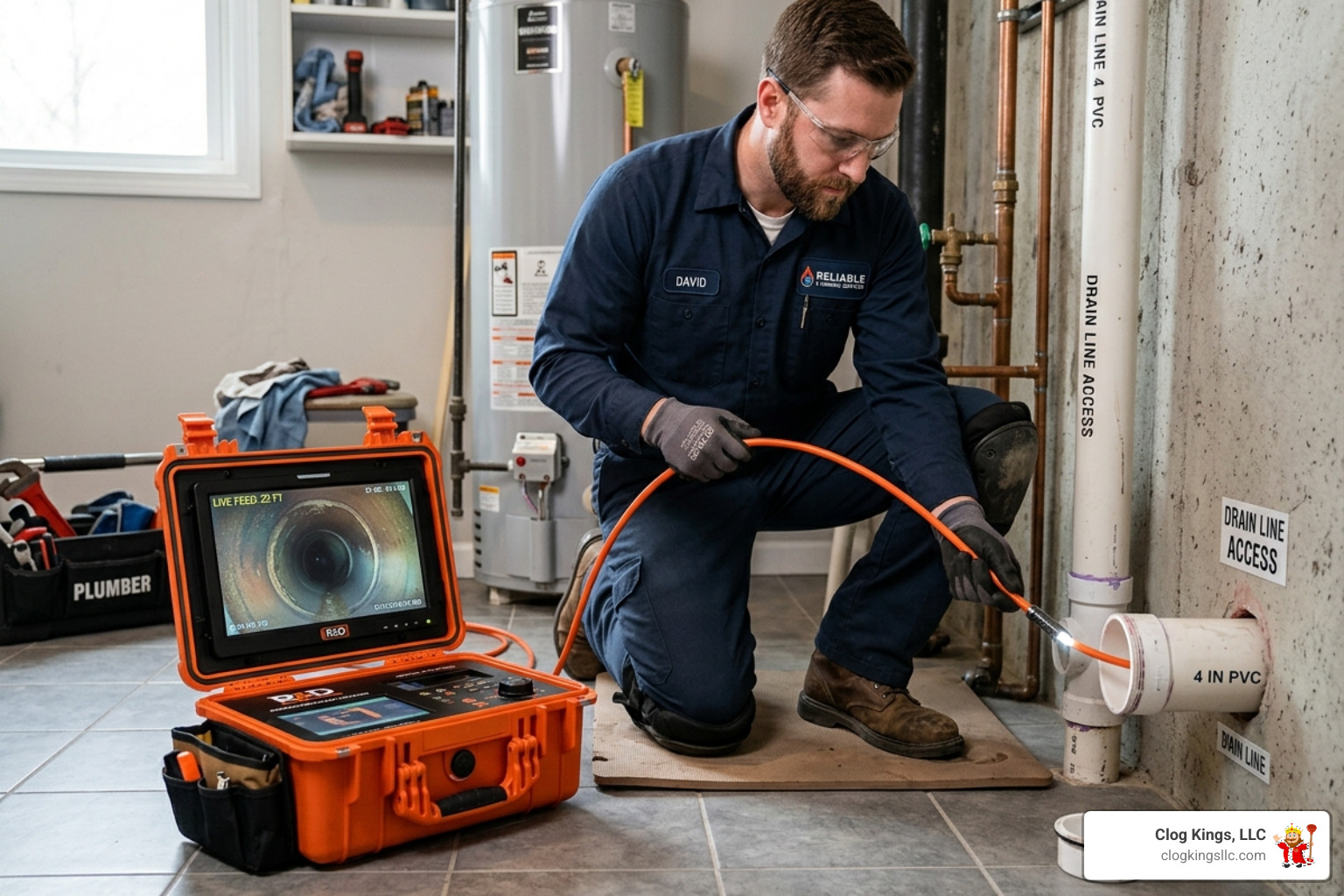
Step 1: Video Camera Inspections
The process almost always begins with a high-definition sewer camera. We feed a waterproof, fiber-optic camera into your line to see exactly what’s going on. Is it a “fatberg” of kitchen grease? Is it a ball of hair? Or is it tree roots that have cracked the pipe? This step prevents us from using the wrong tool and potentially damaging your system.
Step 2: Mechanical Snaking and Augers
For simple clogs, we use professional-grade drain snakes. Unlike the flimsy ones you find at a hardware store, these are powerful mechanical cables. A drain snake (best for 1 1/4″ to 2″ lines) or a drain auger (for 1 1/2″ to 3″ lines) can physically break apart solid obstructions.
Step 3: Hydro-Jetting
If the camera reveals heavy grease or scale buildup, we move to more info about professional drain cleaning tools like the hydro-jetter. This machine uses a blast of high-pressure water—up to 4,000 PSI—to literally scrub the inside of your pipes. It’s powerful enough to pulverize tree roots and wash away decades of mineral scale, yet safe for most modern pipe materials.
Specialized Drain Cleaning for Every Room
Not all drains are created equal. Each room in your Florida home presents unique challenges:
- Kitchen Sinks: These are the “grease traps” of the home. Even if you don’t pour oil down the drain, soap and food particles create a sticky sludge.
- Bathroom Drains: Hair is the enemy here. Combined with toothpaste and soap scum, it forms a rope-like blockage that is incredibly difficult to move with a plunger.
- Floor Drains: Often found in laundry rooms or garages, these catch dirt and grit. If they aren’t cleaned, they can back up and cause localized flooding.
If you’re looking for a quick maintenance routine, check out our guide on how to drain clean in 5 easy steps.
Is Professional Drain Cleaning Safe for Your Pipes?
A common concern we hear from homeowners in Manatee and Pasco Counties is whether high-pressure tools will break their pipes. The answer depends on the material.
- PVC and Modern Plastics: Hydro-jetting is incredibly safe and effective for these.
- Cast Iron and Clay: These older materials require a professional assessment first. If a pipe is already severely corroded or collapsed, high pressure could cause further damage. This is why the camera inspection is non-negotiable.
When it comes to septic safety and the environment, professional methods are actually the “greenest” choice. We use pure water and mechanical force rather than toxic chemicals. While some research on the effectiveness of pressurized drain tools shows that air-burst cleaners can be hit-or-miss, professional hydro-jetting is a proven, non-toxic method that protects your backyard and the local Florida water table.
Why Professional Methods Outperform DIY and Chemicals
It is tempting to grab a $10 bottle of “Max Strength” gel from the store. However, why DIY drain cleaning could cost you more in the long run is a lesson many learn the hard way.
- Chemical Damage: Store-bought cleaners use caustic or oxidizing chemicals. These generate heat to dissolve clogs. In older metal pipes, this accelerates corrosion. In PVC pipes, it can soften the plastic and weaken the joints, leading to “mystery leaks” behind your walls.
- The “Small Hole” Syndrome: Chemicals rarely dissolve the whole clog. They burn a small path through the center, allowing water to flow temporarily. Within weeks, the hole closes back up, and you’re back to square one.
- Safety Hazards: If the chemical doesn’t work and the drain stays backed up, you now have a sink full of “acid water.” This makes it dangerous for a plumber to work on the fixture and can cause severe chemical burns to your skin or eyes.
Professional drain cleaning is also the only real solution for professional drain cleaning for odors. That “rotten egg” smell is often caused by bacteria living in the biofilm (sludge) on your pipe walls. Chemicals won’t remove that biofilm, but a hydro-jet will.
Signs Your Home Needs Immediate Service
Don’t wait for a total backup to call us. Your plumbing system usually gives you several warning signs. If you notice any of these top 7 signs your drain needs professional cleaning, it’s time to act:
- Slow Drainage: If your morning shower involves standing in two inches of water, you have a developing clog.
- Gurgling Noises: This sound means air is being trapped by a blockage. If your toilet gurgles when you run the sink, the problem is likely in the main sewer line.
- Foul Odors: Persistent “sink stink” is a sign of organic decay inside the pipes.
- Multiple Backups: If the kitchen sink and the bathroom tub are both acting up, the clog isn’t in the fixture—it’s in the main line.
- Fruit Flies: These pests are attracted to the organic “gunk” inside dirty drains. If they won’t go away, your drains need a deep clean.
How to Prevent Future Clogs and Maintain Your Pipes
Once your pipes are sparkling clean, you want to keep them that way. Follow these pro tips to extend the life of your drain cleaning service:
- Use Drain Strainers: These $5 mesh baskets catch hair and food scraps before they ever enter your plumbing.
- The “No Grease” Rule: Never pour fats, oils, or grease down the sink. They might be liquid when warm, but they turn into “plumbing cement” as soon as they hit the cool pipes under your Florida home.
- Hot Water Flush: Once a week, pour a kettle of boiling water down your kitchen sink to help move along any minor soap or grease buildup.
- Enzymatic Maintainers: Use a non-caustic, enzymatic cleaner once a month. These contain “good” bacteria that eat away at organic matter without damaging your pipes.
How often should you do this? We generally recommend that how often should you schedule a drain cleaning depends on your home’s age. For most Florida residents, a professional check-up every 12 to 18 months is the “sweet spot” for preventing emergencies.
Frequently Asked Questions about Drain Services
How much does professional service cost?
Pricing for drain cleaning varies based on a few factors. A simple sink snaking is significantly cheaper than hydro-jetting a main sewer line. On average, standard line cleaning starts around $175, while high-pressure water jetting can cost $600 or more depending on the severity of the blockage. We always provide upfront estimates so there are no surprises.
How long does the cleaning process take?
Most residential jobs are surprisingly fast. A standard sink or bathtub clog usually takes less than an hour. If we are dealing with a complex sewer line issue involving tree roots or deep-seated grease, it can take several hours. Factors like pipe accessibility (cleanouts) and the depth of the sewer line will affect the timeframe.
Are emergency services available 24/7?
Absolutely. Plumbing disasters don’t wait for business hours. Whether it’s a Sunday morning in St. Petersburg or midnight on a holiday in Tampa, we offer 24/7 rapid response for emergencies. If you have sewage backing up into your home, stop running all water immediately and call us.
Conclusion
Keeping your pipes clean doesn’t have to be a mystery. By moving away from corrosive chemicals and embracing professional drain cleaning methods like hydro-jetting and camera inspections, you can ensure your home stays healthy and flood-free.
At Clog Kings LLC, we are proud to be your local experts serving Pasco, Manatee, Pinellas, and Hillsborough Counties. From the historic homes of St. Petersburg to the modern builds in Tampa, we bring the latest technology and 24/7 availability to every job. Don’t let a small clog turn into a major headache—schedule your professional drain cleaning today and experience the difference of a truly clean plumbing system.
