
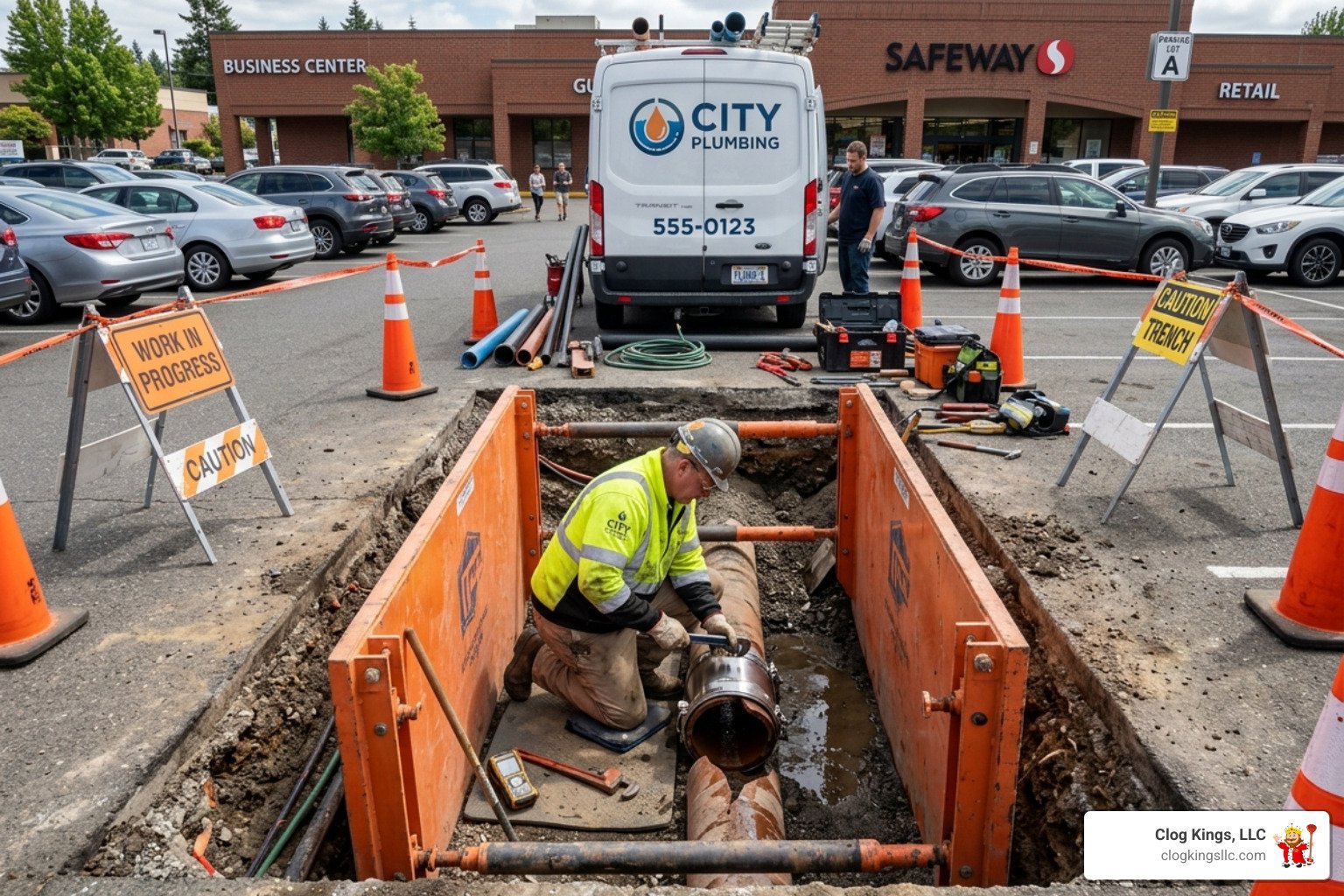

When Your Sewer Fails, Your Business Stops — What You Need to Know About Commercial Sewer Repair
Commercial sewer repair is the process of diagnosing and fixing damaged, blocked, or deteriorating sewer lines in business properties — before a small problem turns into a full shutdown.
Here’s a quick overview of what most businesses need to know:
| Topic | Quick Answer |
|---|---|
| Most common causes | Tree roots, grease buildup, aging pipes, ground shifting |
| Warning signs | Slow drains, sewage odors, gurgling toilets, wet lawn patches |
| Repair options | Trenchless (pipe lining, pipe bursting) or traditional excavation |
| Typical costs | $200–$500 (clog), $3,000–$6,000 (relining), $5,000–$15,000 (excavation) |
| Who’s responsible | Property owner handles lines on-site; municipality owns the main |
| Best first step | Schedule a video camera inspection to find the exact problem |
A sewer problem doesn’t just smell bad — it can shut down your bathrooms, kitchens, and daily operations entirely. For Florida businesses dealing with aging cast iron pipes, tree root intrusion, and high-volume wastewater, the stakes are especially high. Every hour of downtime is lost revenue, and every delay makes the damage worse.
I’m Joey Denick, and with over 20 years of hands-on experience in commercial sewer repair, I’ve seen how fast a minor blockage can escalate into a costly infrastructure failure. In this guide, I’ll walk you through everything you need to protect your business.
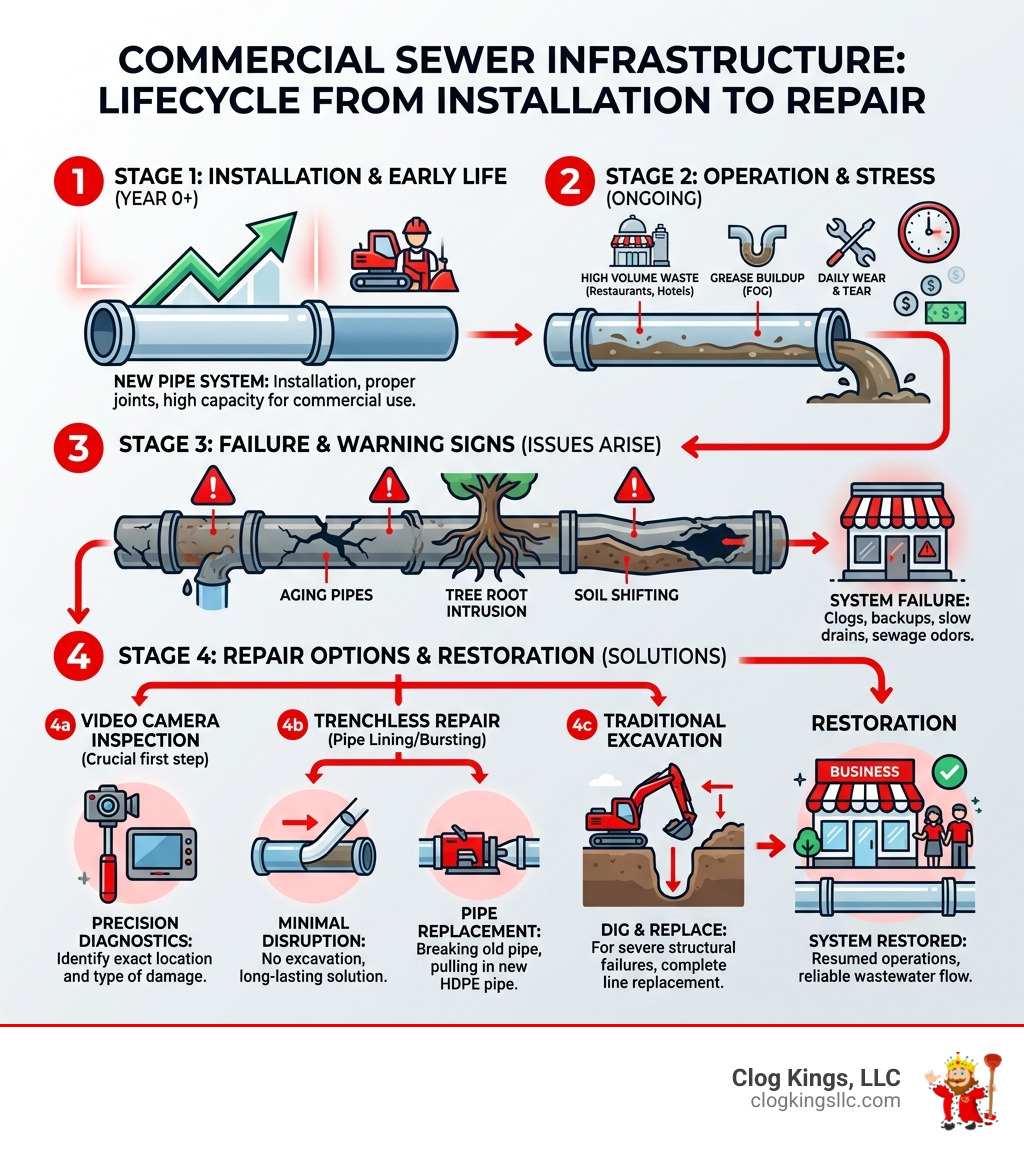
Common Causes and Signs of Commercial Sewer Line Failures
In our years serving Pasco, Manatee, Pinellas, and Hillsborough Counties, we’ve found that commercial systems face much higher stress than residential ones. A restaurant or a multi-unit office building processes more waste in a week than a single-family home does in a month. This high volume accelerates common sewer line issues that can lead to total system failure.
The Culprits Behind the Chaos
One of the most frequent issues we encounter is tree root intrusion. In our sunny Florida climate, thirsty roots from live oaks or laurel oaks can travel hundreds of feet to find moisture. They enter through tiny cracks or joints and can create a massive blockage in less than 18 months.
Other major causes include:
- Grease Buildup: Especially in commercial kitchens, fats, oils, and grease (FOG) solidify inside pipes, narrowing the passage until nothing can get through.
- Aging Infrastructure: Many properties in Tampa and St. Petersburg still rely on cast iron or clay pipes. Cast iron typically lasts 50–75 years but corrodes much faster in Florida’s acidic, sandy soils. Clay pipes often deteriorate or crack within 50–60 years.
- Ground Shifting: Our local geography and seismic activity can cause the earth to move, leading to “bellied” pipes (where a section sinks) or snapped joints.
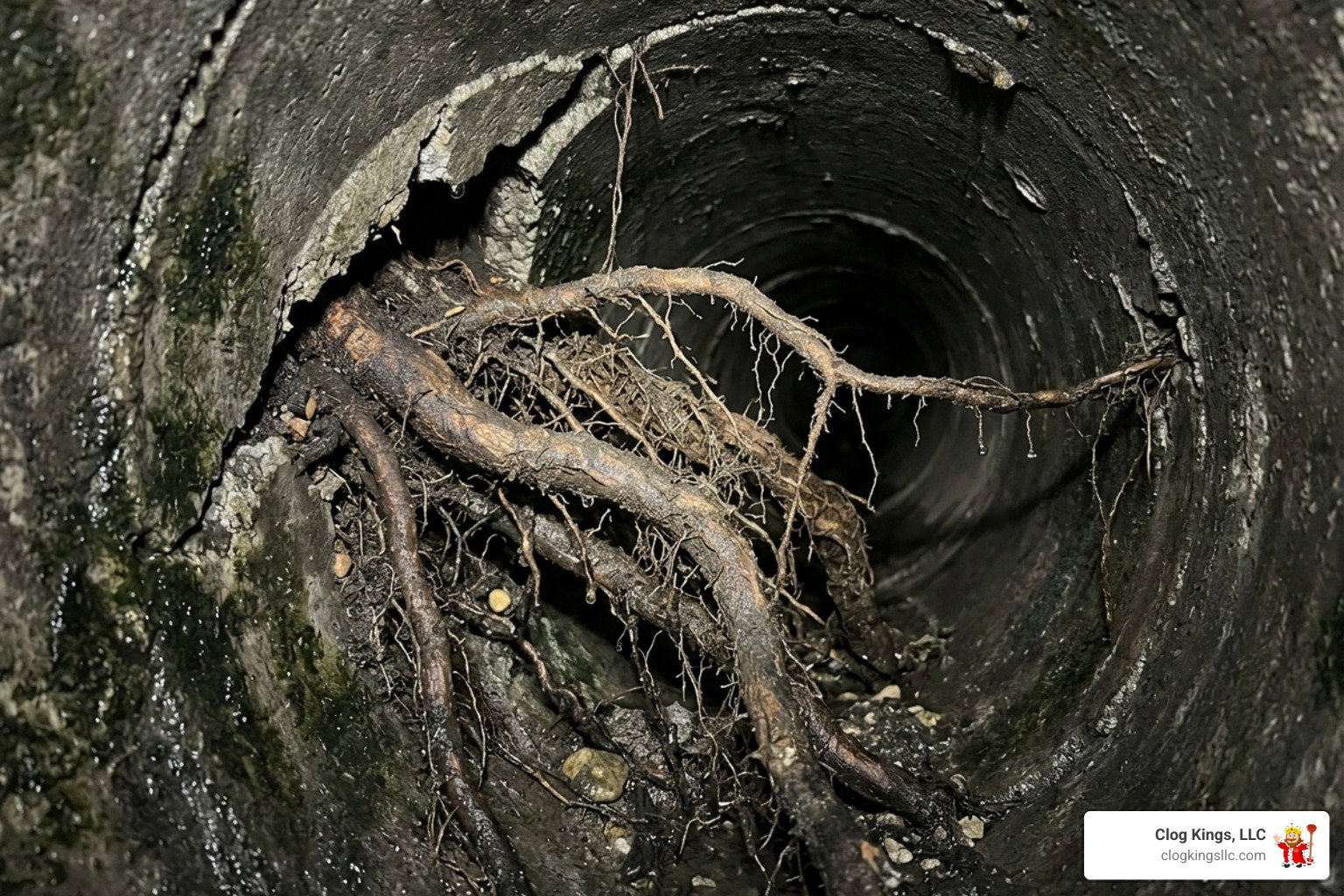
Recognizing the Red Flags
Your building will usually try to tell you something is wrong before a total backup occurs. We recommend keeping an eye out for these 3 common signs of a damaged sewer pipe:
- Slow Drains and Gurgling Toilets: If multiple fixtures are draining slowly or your toilets make a “glug-glug” sound, air is likely trapped by a blockage.
- Unpleasant Odors: Persistent sewage smells in your bathrooms or around your property are a dead giveaway of a leak or break.
- Lush Lawn Patches or Soggy Ground: If one area of your landscaping is suddenly much greener or wetter than the rest, it’s likely being “fertilized” by a leaking sewer line.
Ignoring these signs can lead to symptoms that your Manatee County property needs a sewer line replacement, such as foundation cracks or pest infestations. Rats, cockroaches, and sewer flies often use broken pipes as a “highway” into your building.
Modern Solutions: Trenchless Commercial Sewer Repair vs. Traditional Methods
In the past, commercial sewer repair meant bringing in backhoes, tearing up parking lots, and shutting down business for a week. While traditional excavation is still necessary for completely collapsed lines, modern technology has given us much better options.
| Feature | Trenchless Repair | Traditional Excavation |
|---|---|---|
| Disruption | Minimal (1-2 small access points) | High (digging long trenches) |
| Timeline | 1–3 days | 5–8+ days |
| Cost | Higher upfront, lower restoration | Lower upfront, high restoration |
| Durability | 50+ years (HDPE/Epoxy) | Varies by pipe material |
| Property Damage | Preserves landscaping/pavements | Requires major surface repair |
The Trenchless Revolution
We specialize in trenchless repairs because they keep your business running. The two most common methods are:
- Pipe Relining (CIPP): We insert a resin-coated liner into the old pipe. Once it cures (hardens), it creates a “pipe within a pipe” that is seamless and incredibly durable.
- Pipe Bursting: We pull a new, high-density polyethylene (HDPE) pipe through the old one. The old pipe is literally “burst” outward to make room for the new, often larger, line.
Every job starts with a video inspection of sewer lines. We use high-definition cameras with location transponders to map your system and pinpoint the exact location of the damage without any guesswork.
Benefits of Trenchless Commercial Sewer Repair for Businesses
Choosing trenchless sewer repair services offers several “best friend” benefits to your bottom line. Since we don’t have to tear up your asphalt or sidewalk, your restoration savings are massive. You won’t have to pay to repave a parking lot or replace expensive landscaping.
Furthermore, the materials used in commercial trenchless sewer line replacement—like epoxy resins and HDPE—are designed to last at least 50 years. They are resistant to corrosion and root intrusion, meaning you won’t have to deal with this problem again for a long time.
Why Specialized Commercial Sewer Repair Outperforms Residential Services
It might be tempting to call a general plumber, but there are significant benefits of choosing a commercial plumber for sewer work. Commercial systems are far more complex. We deal with larger pipe diameters, industrial-grade grease traps, and complex system mapping that residential-only plumbers aren’t equipped for.
Whether it’s staying compliant with local health codes or managing 3 common commercial plumbing problems, our team at Clog Kings, LLC has the industrial-grade equipment and expertise to handle the high-volume capacity of a business environment. You can explore more about these specific needs in our category: commercial plumbing section.
The Financials: Commercial Sewer Repair Costs and Responsibility
Budgeting for commercial sewer repair is a priority for any facility manager. While every project is unique, understanding the factors that influence pricing can help you avoid “sticker shock.”
Factors Influencing Commercial Sewer Repair Pricing
Several variables dictate the final invoice:
- Pipe Diameter and Depth: Larger commercial mains (6″ to 12″+) require more materials and heavier equipment than a standard 4″ residential line.
- Method of Repair: While sewer-repair via hydro jetting is affordable ($500–$1,000), a full sewer-replacement can range from $5,000 to $15,000 depending on the depth and length of the run.
- Permits and Documentation: Commercial work often requires specific city permits and “as-built” drawings for code compliance, which adds to the administrative cost.
- Emergency Timing: 24/7 service is critical, but repairs performed on weekends or holidays may carry surcharges.
When deciding when you should replace vs repair your sewer line, consider the “total project cost.” A trenchless relining might cost more than a patch repair, but it prevents future failures and saves you thousands in surface restoration.
Who Pays? Responsibility and Insurance
A common question in Pinellas or Hillsborough County is: “Who is responsible for this?”
- Property Owner: Generally responsible for all lines from the building to the property boundary or the “upper lateral.”
- Municipality: Responsible for the main sewer line located in the public right-of-way.
- Insurance: Most commercial policies cover “sudden and accidental” damage (like a pipe bursting due to a soil shift) but often exclude “gradual deterioration” (like a pipe rusting away over 40 years). Always document the damage with a video inspection to support your claim.
Proactive Maintenance and Emergency Response
When a sewer backs up at 2:00 PM on a Tuesday, you don’t have time to wait. That’s why we offer 24/7 emergency response throughout the Tampa Bay area. Our goal is emergency mitigation—stopping the overflow immediately to protect your property and reputation.
Preventing Major Commercial Sewer Repair with Routine Inspections
The best way to handle a sewer crisis is to prevent it. We recommend an annual maintenance plan that includes:
- Routine Video Diagnostics: Catching a small crack before it becomes a collapse.
- Hydro Jetting: Using high-pressure water to scrub grease and scale off pipe walls.
- Grease Trap Management: Ensuring your interceptors are working so FOG doesn’t reach the main line.
- Smoke Testing: A smoke test clears the air on your sewer system by identifying exactly where sewer gases are escaping.
Knowing when to call a professional for sewer repair in Hillsborough County is key. If you notice even one of the 5 signs you need a sewer line inspection, such as recurring clogs, it’s time to act. Proactive care ensures health department compliance and keeps your business’s reputation spotless. You can find more tips on maintaining your system in our category: sewer lines blog.
Frequently Asked Questions about Commercial Sewer Repair
Who is responsible for sewer line repairs in a commercial property?
In most cases, the property owner is responsible for the sewer line until it connects with the municipal main, typically at the property line or curb. However, in some commercial leases, the tenant may be responsible for maintenance and “minor” repairs. Always check your lease agreement and have a professional locate the “boundary trap” or cleanout to determine where your responsibility ends.
How long does a typical commercial sewer repair take?
Trenchless methods like CIPP lining can often be completed in 1 to 2 days. Traditional excavation usually takes 5 to 8 days, depending on the depth of the pipe and the amount of concrete that needs to be removed. We always strive to perform work during off-peak hours or in phases to minimize your downtime.
What are the risks of delaying commercial sewer repairs?
Delaying a repair is a gamble that rarely pays off. The risks include:
- Structural Damage: Leaking sewage can erode the soil under your building, leading to foundation cracks.
- Health Hazards: Raw sewage carries bacteria and viruses that can lead to immediate closure by the health department.
- Financial Impact: A “planned” repair is always cheaper than an emergency “emergency” replacement after a catastrophic failure.
- Reputation Damage: Nothing drives customers away faster than a foul odor or a “Restrooms Out of Order” sign.
Conclusion
Commercial sewer repair doesn’t have to be a nightmare. By choosing modern trenchless solutions, staying on top of proactive maintenance, and partnering with a specialized commercial plumber, you can protect your business’s infrastructure and its bottom line.
At Clog Kings, LLC, we are proud to provide 24/7 local expertise to businesses across Pasco, Manatee, Pinellas, and Hillsborough Counties. Whether you need a routine inspection or an emergency pipe bursting, we have the tools and experience to get the job done right the first time.
Don’t let a hidden pipe issue become a public problem. Contact us today for more info about commercial sewer repair services and let us help you keep your business running smoothly.
