
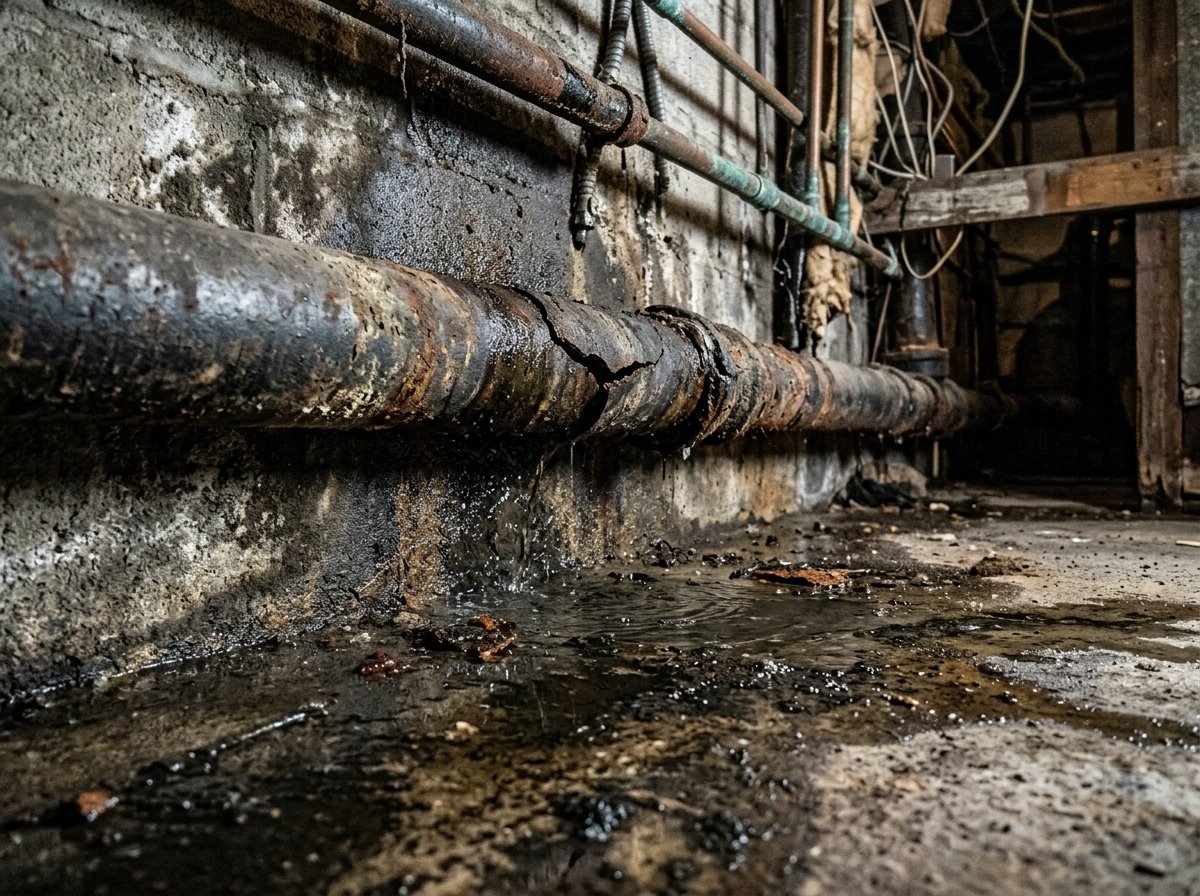

When Your Basement Is Trying to Tell You Something’s Wrong Underground
A cracked sewer pipe in basement foundations is one of those problems that sneaks up on you. One day it’s a slow floor drain. Next, it’s a foul smell you can’t find. Then comes the sewage backup — and suddenly you’re looking at a serious repair bill.
Here’s the short answer on what to look for and what to do:
Quick Reference: Cracked Sewer Pipe in Basement
| Warning Sign | What It Means |
|---|---|
| Floor drain backing up | Blockage or crack in the main sewer line below |
| Gurgling toilets or drains | Air escaping through a crack in the pipe |
| Sewage smell in basement | Sewer gas leaking from a break underground |
| Wet spots or damp concrete | Sewage seeping through the slab |
| Mold along baseboards | Moisture from a slow, hidden leak |
| Lush grass or soggy soil outside | Sewage fertilizing the ground above a crack |
If you suspect a cracked sewer pipe under your basement slab:
- Stop using water and plumbing fixtures immediately
- Ventilate the area if you smell sewer gas
- Avoid contact with any standing water or wet surfaces
- Call a licensed plumber for a camera inspection
The problem is more common than most homeowners realize — especially in Florida homes built before the 1980s, where cast iron, clay tile, and Orangeburg pipes are still in use. These materials age out, corrode, and crack. And when they do, the damage doesn’t stay underground for long.
I’m Joey Denick, and with over 20 years of hands-on experience diagnosing and repairing cracked sewer pipes in basements across Florida, I’ve seen how fast a small crack can turn into a five-figure emergency. In this guide, I’ll walk you through everything you need to know — from spotting the early signs to choosing the right repair method for your home.
Identifying a Cracked Sewer Pipe in Basement: Key Warning Signs
Detecting a cracked sewer pipe in basement areas can be tricky because the evidence is often buried under inches of concrete. However, your home has several ways of “whispering” that a disaster is brewing beneath the floorboards.
One of the most common early indicators is a persistent, musty odor. While many basements are naturally a bit damp, a true sewer leak carries the unmistakable scent of rotten eggs (hydrogen sulfide gas). This isn’t just a nuisance; it’s a sign that the airtight seal of your drainage system has been breached. If you notice mold growth on basement walls or along the baseboards where the floor meets the wall, it’s often because moisture from a leaking pipe is wicking up through the porous concrete slab.
We often see homeowners ignore 3 common signs of a damaged sewer pipe until they are facing a full-blown backup. If you are experiencing any of these 5 signs you need a sewer line inspection, it is time to act before the “whisper” becomes a “shout.”
Common Signs of a Cracked Sewer Pipe in Basement
When a main line cracks, the lowest point in your home usually bears the brunt of the symptoms. In most Florida homes with a basement or a below-grade slab, this means the floor drain.
- Floor Drain Backups: If you see soapy water or waste bubbling up from the floor drain when the washing machine runs or someone takes a shower upstairs, you likely have a breach or a major blockage in the main line.
- Gurgling Fixtures: Do your toilets “glug” when the sink drains? This happens because air is being trapped or escaping through a crack in the pipe, disrupting the vacuum needed for smooth drainage.
- Pest Invasions: Rats, roaches, and sewer flies love cracked pipes. They use these openings as “highway exits” to enter your home. If you have a sudden influx of pests in the basement that won’t go away, the source might be underground.
For more detailed red flags, check out our guide on signs your home needs a sewer line replacement.
External Symptoms Near the Foundation
Sometimes the best clues aren’t inside the basement at all, but just outside the foundation walls.
- Lush, Green Patches: Sewage acts as a potent fertilizer. If you notice a strip of grass that is significantly greener or grows faster than the rest of the yard, it’s likely positioned right over a leaking sewer lateral.
- Soggy Soil and Sinkholes: In our Florida sandy soil, leaking water can wash away the earth supporting your home. This leads to soft spots in the yard or even small sinkholes.
- Foundation Cracks: As the soil shifts due to constant moisture from a leak, the concrete slab can settle unevenly, causing visible cracks in the basement floor or exterior foundation.
In Pinellas County, programs like the Private Sewer Lateral Find and Fix Program highlight how critical these external leaks are to the overall health of our local infrastructure.
Why Sewer Pipes Under Basement Slabs Fail
Understanding why a cracked sewer pipe in basement floors occurs helps you determine if you need a quick patch or a total system overhaul. Most failures come down to three things: age, material, and the Florida environment.

Material Deterioration and Age
If your home was built before the mid-1980s, your pipes are likely reaching the end of their engineered lifespan.
- Cast Iron: These were the standard for decades. While they can last 50 to 75 years, they suffer from “channeling,” where the bottom of the pipe corrodes away until it’s paper-thin or gone entirely. We specialize in relining cast iron sewer pipes to save homeowners from having to rip up their floors.
- Clay Tile: Common in older neighborhoods, clay is incredibly durable but very brittle. Ground shifting or heavy vehicle traffic overhead can snap these pipes like a pencil.
- Orangeburg Pipe: Made of tar-impregnated wood fiber, these “paper pipes” were used in the 1950s and 60s. They almost always fail within 30 to 50 years, often flattening into an oval shape before collapsing.
- PVC: Modern PVC is the gold standard today, but even it can crack if installed poorly or stressed by extreme soil movement.
Environmental and Installation Factors
Florida presents unique challenges for underground plumbing. Our common sewer line issues often stem from the very ground we stand on.
- Soil Shifting: Our sandy soil moves. When the ground settles unevenly under a heavy concrete slab, it puts immense “shear stress” on the pipes.
- Tree Roots: Roots are programmed to find water. Even a tiny hairline crack in a pipe joint releases moisture and nutrients that attract roots like a magnet. Once inside, they expand, acting like a slow-motion wedge that splits the pipe open.
- Corrosion: Hydrogen sulfide gas naturally produced by sewage can turn into sulfuric acid, which eats away at the top of cast iron pipes (crown corrosion) while the water eats away the bottom.
Confirming the Damage and Understanding the Risks
You shouldn’t start digging just because you smell something funny. Accurate diagnosis is the difference between a $1,500 fix and a $15,000 mistake.
How to Confirm a Cracked Sewer Pipe in Basement
We use a “detective” approach to find the exact location of the break.
- CCTV Camera Inspection: This is the most effective tool in our kit. We feed a high-definition, waterproof camera through your lines. We can see the cracks, root intrusions, and “bellies” (sagging sections) in real-time. You can learn more about how this works on our video inspection page.
- Hydrostatic Testing: By plugging the line and filling it with water, we can see if the water level drops. If it does, you have a leak.
- Smoke Testing: We pump non-toxic “smoke” into the drains. If smoke starts wafting out of cracks in your basement floor or yard, we’ve found the breach.
Potential Risks of Ignoring the Leak
Ignoring a cracked sewer pipe in basement foundations is playing a dangerous game.
- Structural Integrity: Constant water leaks under a slab can create “voids” (empty spaces) in the soil. Without support, your concrete floor can crack or collapse.
- Health Hazards: Raw sewage contains harmful bacteria like E. coli and parasites. Furthermore, sewer gas contains methane (a fire hazard) and hydrogen sulfide, which can cause headaches, dizziness, and respiratory issues.
- Mold Growth: Once moisture gets into your basement drywall or insulation, mold can spread through your HVAC system to the rest of the house.
Knowing when to call a professional for sewer repair is vital for protecting both your family’s health and your home’s value.
Repair Options for a Cracked Sewer Pipe in Basement
In the old days, fixing a pipe under a basement meant one thing: jackhammers. Today, we have much better options that don’t involve turning your home into a dusty construction zone.
Trenchless Pipe Lining (CIPP)
Cured-In-Place Pipe (CIPP) is our preferred method for most residential repairs. Instead of digging up the pipe, we “re-manufacture” it from the inside.
- How it works: We pull an epoxy-saturated felt liner through the existing pipe. We then inflate it so it presses against the old pipe walls. Once the resin cures (hardens), it forms a brand-new, seamless, structural pipe inside the old one.
- Benefits: No digging, no broken concrete, and it’s usually finished in a single day. Plus, it has a 50-year design life. You can read all about trenchless pipe lining to see if it’s right for you.
Traditional Excavation and Replacement
Sometimes, a pipe is too far gone for lining. If the pipe has completely collapsed or shifted so much that a camera can’t pass through, we have to go the traditional route.
- The Process: This involves jackhammering the basement slab, digging out the old pipe, and laying new PVC.
- When it’s necessary: If there is a “belly” in the line (a sag where water pools), lining won’t fix the slope issue. Only excavation can restore the proper gravity flow.
For more on full-scale projects, visit our sewer replacement services page.
Trenchless vs. Traditional: Choosing the Best Fix
Choosing between these two is often a balance of upfront cost versus total project impact.
| Feature | Trenchless (CIPP) | Traditional Excavation |
|---|---|---|
| Time | 1–2 Days | 5–10 Days |
| Destruction | Minimal (Small access point) | High (Jackhammered floors) |
| Restoration Cost | Near Zero | High (New concrete/flooring) |
| Lifespan | 50+ Years | 50+ Years |
| Best For | Cracks, roots, aging cast iron | Collapsed pipes, poor slope |
Cost and Longevity Considerations
While the “plumbing” portion of a trenchless repair might seem more expensive per linear foot, the total project cost is often 30–50% lower. Why? Because you aren’t paying to replace your basement tile, hardwood, or specialized concrete finishes.
In places like Pinellas County, deciding whether to repair or replace often comes down to the condition of the rest of the line. We always recommend a full camera inspection to ensure we aren’t just putting a “band-aid” on a system that is failing everywhere.
Frequently Asked Questions about Basement Sewer Cracks
Does homeowners insurance cover a cracked sewer pipe under the slab?
Standard policies usually cover “sudden and accidental” damage (like a pipe bursting), but they often exclude “wear and tear” or age-related corrosion. However, many policies will cover the “cost of access” (breaking and repairing the concrete) and the damage caused by the backup, even if they don’t pay for the pipe itself. We recommend checking if you have a “Sewer and Drain Backup” endorsement.
How long does it take to repair a sewer pipe under a basement?
Trenchless repairs are typically completed in 1 to 3 days. Traditional excavation can take a week or more, especially when you factor in the time needed for new concrete to cure before you can reinstall flooring.
Can tree roots grow through a concrete slab into the sewer?
Roots don’t usually grow through solid concrete, but they are masters at finding hairline cracks in the slab or the “seam” where the pipe exits the foundation. Once they find that moisture, they follow the pipe until they find a joint or a crack to enter.
Conclusion
Dealing with a cracked sewer pipe in basement foundations is stressful, but you don’t have to face it alone. At Clog Kings, LLC, we pride ourselves on providing honest, high-tech solutions for homeowners across Pasco, Manatee, Pinellas, and Hillsborough Counties.
Whether you need a 24/7 emergency response or a detailed video inspection to plan for the future, our team of licensed experts is here to help. We believe in fixing it right the first time, using the least invasive methods possible to protect your home and your wallet.
Don’t let a small crack turn into a basement disaster. Schedule your sewer repair today and let us give you the peace of mind you deserve.
