

How Much Does It Cost to Install an Expansion Tank on a Water Heater?
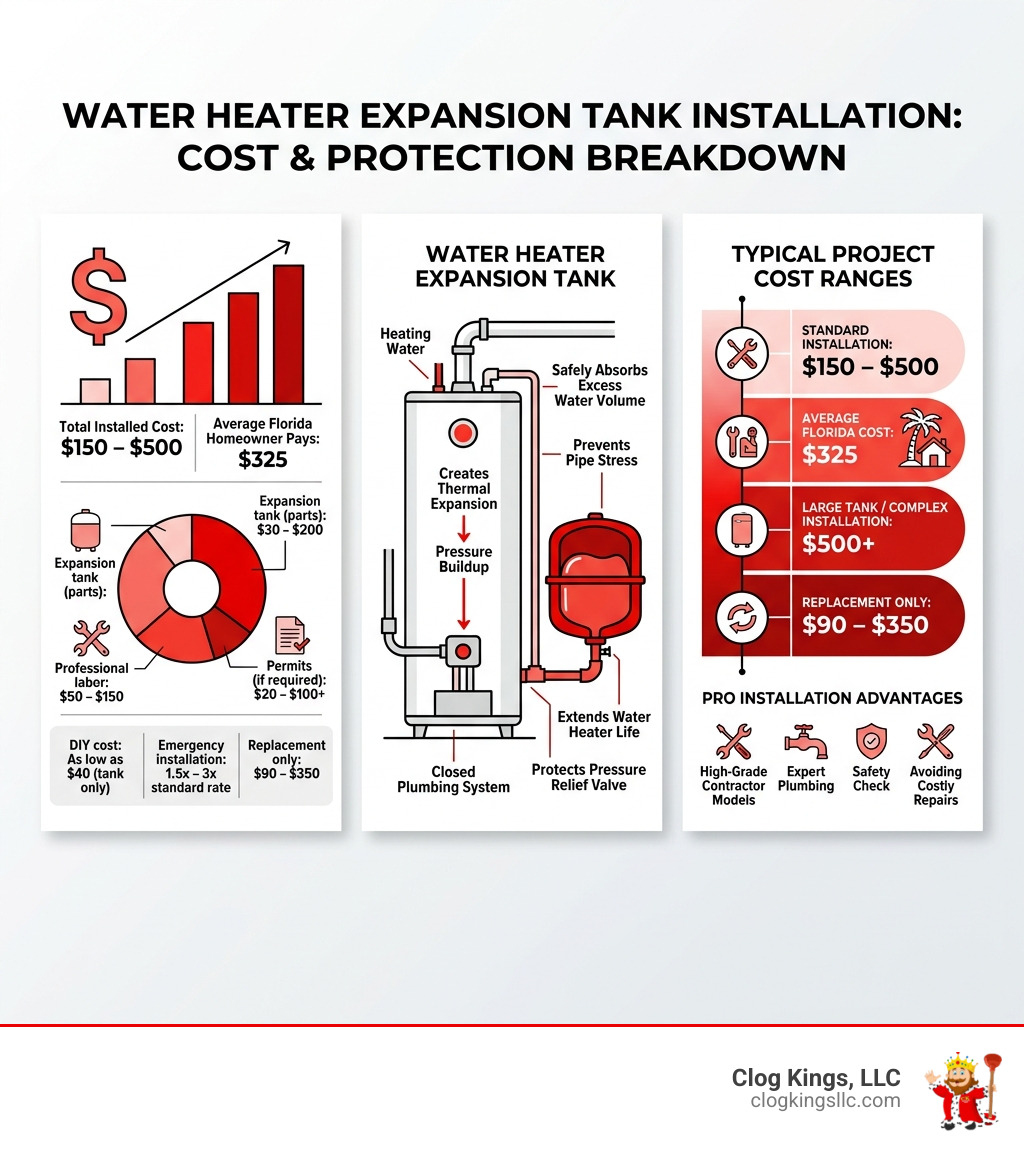
The cost to install expansion tank on water heater typically runs between $150 and $500, with most Florida homeowners paying around $325 when hiring a licensed plumber.
Here’s a quick breakdown:
| What You’re Paying For | Typical Cost |
|---|---|
| Expansion tank (parts only) | $30 – $200 |
| Professional labor | $50 – $150 |
| Permits (if required) | $20 – $100+ |
| Total installed cost | $150 – $500 |
- DIY cost: As low as $40 (tank only, no labor)
- Emergency or after-hours installation: Can run 1.5x – 3x the standard rate
- Replacement only (no new install): $90 – $350
Your final price depends on tank size, your local plumber’s rates, and whether permits are required in your area.
An expansion tank is a small but critical safety device. Without one, the pressure buildup from heating water in a closed plumbing system can silently damage your pipes, wear out your water heater faster, and in extreme cases, trigger your pressure relief valve repeatedly — or worse.
If your home has a pressure-reducing valve or a backflow preventer (very common in Florida counties), you almost certainly have a closed system. That means thermal expansion has nowhere to go — except into your plumbing.
I’m Joey Denick, and with over 20 years of hands-on plumbing experience, I’ve seen how skipping an expansion tank leads to costly water heater repairs that far exceed the cost to install expansion tank on water heater upfront. In the sections below, I’ll walk you through everything you need to know to budget this job correctly and avoid overpaying.
Average cost to install expansion tank on water heater
When we talk about the average cost to install expansion tank on water heater, we usually see a national average of around $325. However, in our local service areas like St. Petersburg, Tampa, and throughout Pasco and Manatee counties, prices can fluctuate based on the complexity of your existing plumbing.
The total price is generally split into two main categories: the hardware (the tank and mounting supplies) and the professional labor. For a standard 2-gallon tank, which is common for most 40- to 50-gallon water heaters, the tank itself might only cost between $40 and $70 at a big-box store. However, when you hire a pro, we often provide high-grade contractor models that offer better longevity than the entry-level retail versions.
Parts vs. Labor Breakdown
Labor is usually the largest variable. A straightforward installation takes a licensed plumber about one to two hours. If your pipes are easily accessible and there is already a “Tee” fitting in place, the labor cost stays on the lower end ($50–$150). If we have to cut into copper lines, install new mounting brackets, or reroute piping to make space for the tank, the labor will naturally increase.
| Tank Size | Typical Parts Cost | Estimated Labor (Hours) | Total Estimated Cost |
|---|---|---|---|
| 2-Gallon | $40 – $60 | 1 – 2 | $150 – $350 |
| 4.5-Gallon | $60 – $100 | 1.5 – 2.5 | $250 – $450 |
| 5+ Gallon | $140 – $200 | 2 – 3 | $400 – $600+ |
Factors affecting the cost to install expansion tank on water heater
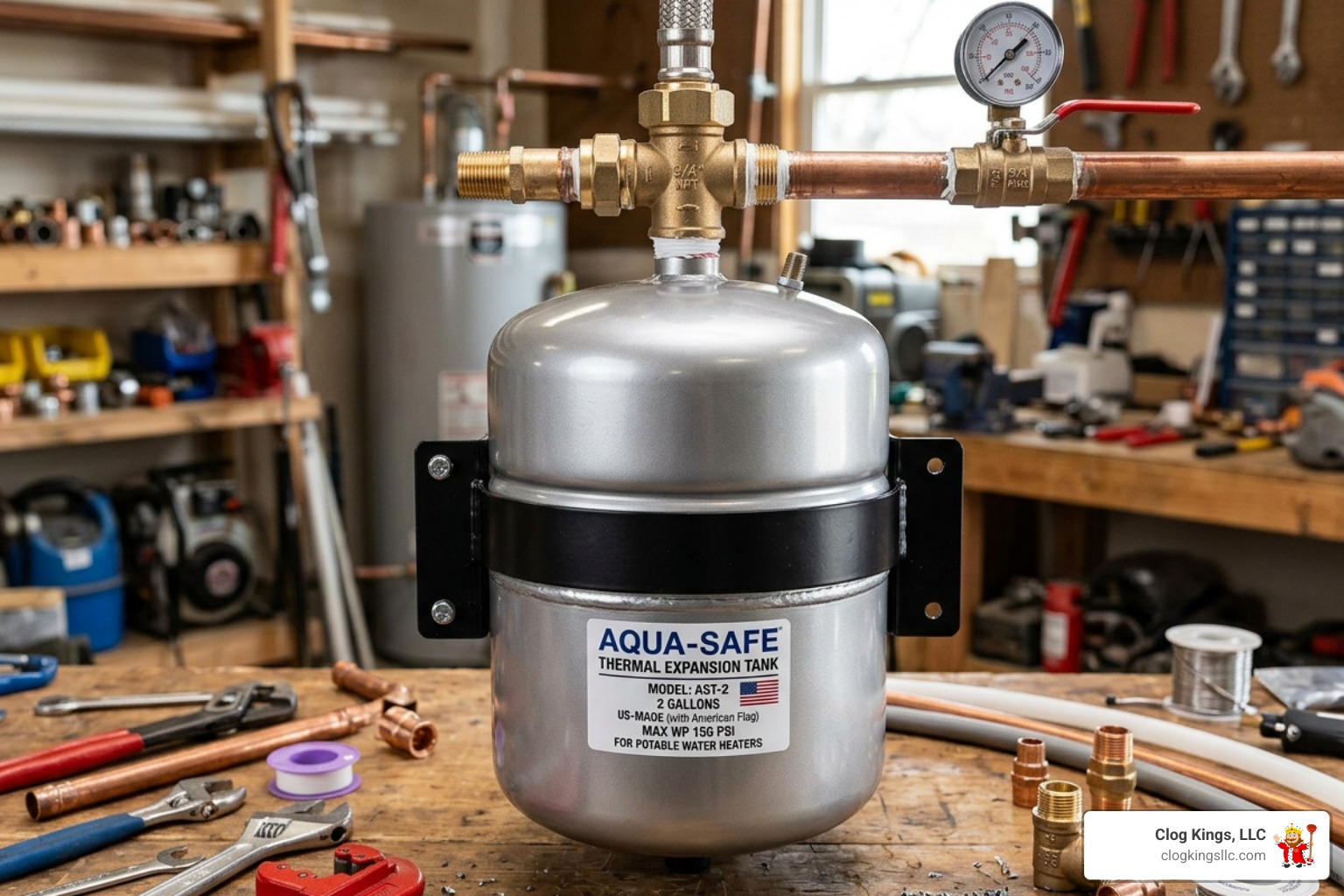
Several technical factors influence where your quote falls within that $150 to $500 range.
1. Tank Capacity and Size The larger your water heater, the larger the expansion tank needs to be. While a 2-gallon tank is standard, homes with 80-gallon heaters or high-pressure systems may require a 4.5-gallon or even a 9-gallon tank. Larger tanks are not only more expensive to buy but often require heavy-duty mounting hardware to support the weight of the water.
2. Material Quality: Bladder vs. Diaphragm Most modern expansion tanks use a butyl rubber diaphragm or a bladder to separate the water from the pressurized air pocket. Bladder-style tanks are often considered superior because they prevent the water from ever touching the steel shell of the tank, which significantly reduces the risk of internal corrosion. Choosing a high-quality stainless steel tank over a standard carbon steel model will also add to the initial cost to install expansion tank on water heater, but it pays off in durability.
3. Accessibility If your water heater is tucked away in a tight crawlspace or a tiny closet in a St. Petersburg condo, the labor time will increase. We need enough “elbow room” to safely solder pipes or press-fit connections without damaging the surrounding structure.
Labor and regional price variations
In the Tampa Bay area, including Hillsborough and Pinellas counties, labor rates for licensed plumbers typically range from $75 to $150 per hour. While a handyman might offer a lower rate (around $60–$100), it is important to remember that plumbing codes in Florida are strict.
Zip Code Impact Your location matters. In more densely populated or higher-cost-of-living areas like downtown St. Petersburg or parts of Manatee County, overhead costs for plumbing companies are higher, which can reflect in the hourly rate. Additionally, if you live in a remote part of Pasco County, some companies may charge a small travel fee to cover fuel and time.
Emergency Surcharges If your current expansion tank has failed and is spraying water all over your garage, you might need an emergency visit. Most reputable plumbers, including us, offer 24/7 service, but expect to pay 1.5 to 3 times the standard labor rate for nights, weekends, or holidays. We always remind our customers that water pressure problems are worth fixing before they become midnight emergencies!
Why your home needs a thermal expansion tank
You might be wondering, “Why do I even need this extra tank?” The answer lies in the physics of water. When water is heated, it expands in volume. In the old days, this extra volume would just push back into the city’s main water line.
However, modern plumbing codes (required since 1991 in many areas) now mandate “closed systems.” This is achieved through backflow preventers or pressure-reducing valves that prevent your home’s water from flowing back into the municipal supply. While this keeps the city’s water clean, it creates a problem: that expanding hot water has nowhere to go. This leads to a massive spike in internal pressure.
Without an expansion tank, this pressure puts immense stress on your water heater’s inner lining, your faucets, and your appliance valves. Over time, this leads to high water pressure damage, which can cause pipes to burst or the water heater tank to fail prematurely.
Signs you need a new expansion tank
If you already have an expansion tank, it won’t last forever. Most have a lifespan of 5 to 10 years. Here are the red flags that suggest it’s time for a replacement:
- Dripping Faucets: If your faucets only drip while the water heater is running, it’s a sign that the thermal expansion is forcing water past the faucet seals.
- T&P Valve Leaks: The Temperature and Pressure (T&P) relief valve on the side of your heater is a safety device. If it’s constantly dripping or “weeping,” it’s trying to bleed off the excess pressure that a failed expansion tank should be handling.
- Water Hammer: Hearing loud “bangs” or weird noises from your water heater when you turn off a tap can indicate that the air cushion in your expansion tank has vanished.
- Visible Corrosion: Any rust around the threaded connection at the top of the tank is a sign of a slow leak that will eventually lead to a flood.
Sizing and choosing the right tank for your system
Getting the right size is crucial for the cost to install expansion tank on water heater to be a good investment. If the tank is too small, it won’t be able to absorb enough volume, and your pressure will still spike.
Sizing requirements for the cost to install expansion tank on water heater
Sizing is based on two main factors: the total gallon capacity of your water heater and your home’s incoming water pressure (measured in PSI).
- For 40-50 Gallon Heaters: If your water pressure is below 60 PSI, a 2-gallon tank is usually sufficient. If your pressure is higher (60-80 PSI), you should step up to a 4.5-gallon tank.
- For 80 Gallon Heaters: You will almost always need at least a 4.5-gallon tank to handle the volume.
- Tankless Systems: While some people think they don’t need one, tankless water heater installation in a closed system still requires a small, specialized expansion tank (often around 1 gallon) to protect the internal heat exchanger.
It’s also vital to distinguish between a potable water tank and a boiler tank. Potable tanks (usually white or beige) are lined with food-grade materials for drinking water. Boiler tanks (often gray or blue) are for closed-loop heating systems and are not safe for your tap water. Using the wrong one can lead to water heater leaks and safety issues.
Professional installation vs. DIY risks
We get it—saving $150 on labor sounds tempting. You can buy a tank for $40 and try to handle it yourself. However, we strongly advise homeowners to not DIY hot water heater installation or expansion tank work for several reasons.
1. Pressure Calibration Expansion tanks come “pre-charged” with air, but that charge must be manually adjusted with a tire gauge and a pump to match your home’s specific water pressure before installation. If the air pressure in the tank doesn’t match the water pressure in your pipes, the tank won’t work, and the internal bladder will fail within months.
2. Structural Support A 2-gallon expansion tank weighs about 5 pounds when empty, but nearly 20 pounds when full of water. If it isn’t supported by proper mounting brackets or straps, that weight can snap your copper pipes, leading to a massive flood in your garage or laundry room.
3. Permit and Code Compliance In many parts of Florida, including Pinellas and Hillsborough counties, adding an expansion tank is considered a modification to the plumbing system that may require a permit. Professional installers handle the paperwork and ensure the work passes a safety inspection.
Additional expenses to consider
When budgeting the cost to install expansion tank on water heater, don’t forget these potential “add-ons”:
- Pipe Modifications ($50–$150): If your water heater was installed 20 years ago, there might not be a spot to screw in a new tank. We may need to cut out a section of pipe and install a new “Tee” fitting.
- Mounting Brackets ($20–$50): Necessary to take the weight off your pipes.
- Pressure Reducing Valve (PRV) Replacement ($150–$300): If we find that your home’s pressure is over 80 PSI, your PRV might be failing. An expansion tank cannot fix high city pressure; it only fixes thermal expansion.
- T&P Valve Replacement ($60–$100): If your relief valve has been leaking for a long time due to high pressure, the seal might be permanently damaged and need replacement alongside the new tank.
Frequently Asked Questions about expansion tank costs
How long do expansion tanks typically last?
You can expect a quality expansion tank to last between 5 and 10 years. The rubber diaphragm inside eventually becomes brittle or loses its air charge. Regular maintenance, such as checking the air pressure once a year, can help you catch a failing tank before it causes a broken water heater emergency.
What are the signs of a failing expansion tank?
Beyond the leaks mentioned earlier, you can perform a “thump test.” Tap the top and bottom of the tank with a knuckle. The top (air side) should sound hollow, and the bottom (water side) should sound dull. If the whole tank sounds dull and heavy, the diaphragm has likely ruptured, and the tank is “waterlogged.” You might also see rust around the fittings or notice a sudden drop in hot water pressure.
Is a permit required for the cost to install expansion tank on water heater?
In many Florida jurisdictions, yes. Local building codes are designed to ensure that safety devices like expansion tanks are installed correctly to prevent tank explosions. While a permit might add $20 to $100 to your total, it provides peace of mind that a third-party inspector has verified the safety of your home.
Conclusion
Investing in the cost to install expansion tank on water heater is one of the smartest moves you can make as a homeowner. For a relatively small upfront price, you protect your home’s most expensive plumbing appliance and prevent the “silent killer” of high pressure from ruining your pipes and fixtures.
At Clog Kings, LLC, we pride ourselves on providing transparent, upfront pricing and expert installation across Pasco, Pinellas, Manatee, and Hillsborough Counties. Whether you are in St. Petersburg, Tampa, or Sarasota, our team is available 24/7 to ensure your hot water system is safe, efficient, and up to code.
Don’t wait for a puddle in your garage to take action. If you haven’t had your expansion tank checked in the last five years, or if you’re ready for a professional upgrade, give us a call today.
