

What to Do When You Need to Fix a Broken Toilet
Fixing a broken toilet is something most Florida homeowners will face at least once — and the good news is that many common problems are simpler to solve than you’d expect.
Here’s a quick overview of the most common toilet problems and their fixes:
| Problem | Likely Cause | Quick Fix |
|---|---|---|
| Toilet keeps running | Worn flapper or faulty fill valve | Replace flapper ($5–$15) or fill valve ($10–$20) |
| Water pooling at base | Failed wax ring or loose bolts | Tighten bolts or replace wax ring |
| Hairline crack in tank | Impact, temperature change, or age | Apply waterproof epoxy ($10–$20) |
| Toilet won’t flush | Chain too loose or clog | Adjust chain or use a plunger |
| Toilet fills slowly | Kinked supply line or debris in fill valve | Open supply valve fully or clean fill valve |
| Gurgling sounds | Partial clog or venting issue | Use a plunger or call a plumber |
A broken toilet is more than an inconvenience. Left unfixed, even a slow leak can soak into your subfloor, invite mold, and quietly drive up your water bill. A running toilet alone can waste hundreds of gallons per day.
The fix is often fast and cheap — but only if you know where to look.
I’m Joey Denick, and with over 20 years of hands-on plumbing experience, I’ve seen every type of broken toilet scenario imaginable — from simple flapper swaps to full base replacements after hidden leaks rotted out a subfloor. In this guide, I’ll walk you through exactly how to fix a broken toilet yourself, and tell you honestly when it’s time to call in a pro.
Essential Tools and Safety to Fix Broken Toilet
Before we roll up our sleeves and dive into the tank, we need to talk about the “Rules of the Road.” To safely fix a broken toilet, you don’t need a truck full of industrial gear, but you do need the right basics.
First, let’s talk about the shut-off valve. This is the silver handle located on the wall or floor behind your toilet. To stop the flow of water, turn it clockwise (righty-tighty) until it stops. Pro tip: Don’t use a wrench on this handle! These valves can become brittle over time, and forcing them with a tool can snap the stem, turning a small repair into a localized flood.
Next, handle that tank lid like it’s made of thin glass—because it basically is. If you drop it on the tile floor of your St. Petersburg bathroom, it will shatter, and finding a matching replacement lid is notoriously difficult. Always place it on a thick towel in a safe corner.
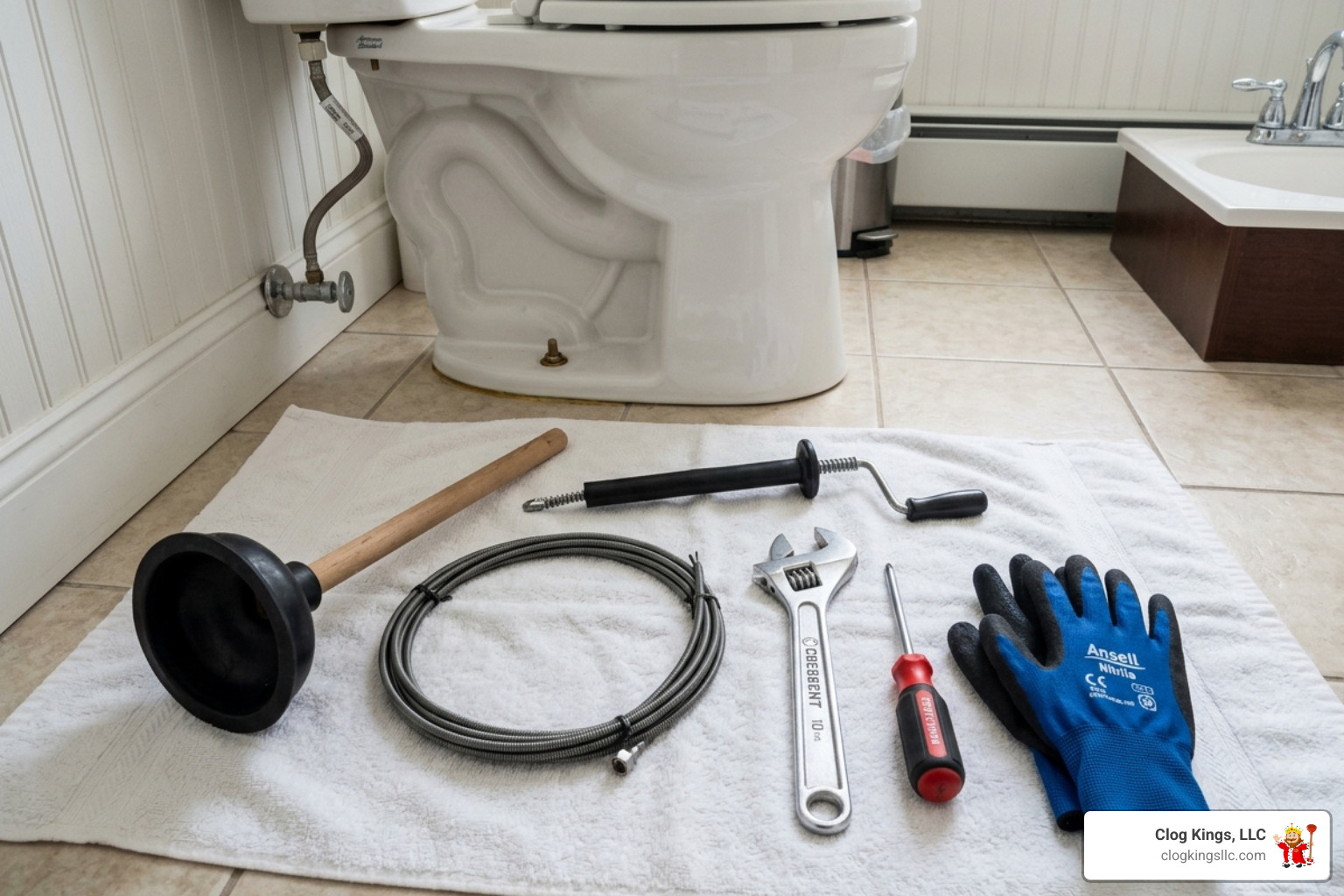
Recommended Tool Kit
- Flange Plunger: Unlike the flat sink plungers, these have a “sleeve” or “horn” at the bottom that fits snugly into the toilet drain.
- Toilet Auger: For deep clogs that a plunger can’t reach.
- Adjustable Wrench: For supply lines and mounting bolts.
- Screwdriver: For adjusting fill valve heights.
- Waterproof Gloves: Because, well… it’s a toilet.
Comparing Plunger Types
| Plunger Type | Best Use | Why? |
|---|---|---|
| Cup Plunger | Sinks and Tubs | Flat bottom creates a seal on flat surfaces. |
| Flange Plunger | Toilets | The extended rubber flap fits the toilet’s curved drain hole perfectly. |
| Accordion Plunger | Tough Toilet Clogs | High-pressure plastic bellows push more air/water with less effort. |
Preparing Your Workspace
To fix a broken toilet without making a mess of your bathroom floor, follow these prep steps:
- Shut off the water: Close that supply valve we mentioned.
- Drain the tank: Flush the toilet and hold the handle down until as much water as possible exits the tank.
- Sponge it out: Use a large sponge and a bucket to soak up the remaining inch of water at the bottom of the tank. This is crucial if you are replacing the fill valve or flush valve.
- Protect the floor: Lay down old towels around the base. Even “clean” tank water can be messy.
Troubleshooting and Repairing Internal Tank Components
The inside of your toilet tank is a marvel of simple engineering. Most of the time, when you need to fix a broken toilet, the culprit is one of three things: the flapper, the fill valve, or the chain.
The water in your tank is actually clean—it’s the same water that comes out of your shower head. However, over time, chlorine and minerals in our Florida water supply can degrade the rubber components. This leads to the “phantom flush,” where the toilet randomly runs for a few seconds to refill a leaking tank. Got a Running Toilet? Here’s Why You Shouldn’t Ignore It because that constant running can waste up to 200 gallons of water a day!
Replacing the Fill Valve to Fix Broken Toilet Performance
If your toilet is making a constant hissing sound or taking forever to refill, your fill valve is likely shot. Modern fill valves (like the popular Fluidmaster models) usually last about 10 years.
- Check the water level: The water should sit about 1/2 inch below the top of the overflow tube. If it’s too high, water is constantly draining into the tube.
- Adjust the screw: Most modern valves have an adjustment screw or a clip on the float cup. Turn it to lower the float.
- Replacement: If adjusting doesn’t work, you’ll need to replace the whole unit. After draining the tank, unscrew the supply line nut under the tank, then the locking nut holding the valve in place. Pop the new one in, tighten (hand-tight plus a quarter turn with a wrench), and reconnect.
For more detailed steps, check out this guide on How to Repair a Leaky Toilet Flush Valve.
Flapper and Chain Adjustments
The flapper is the rubber “trap door” at the bottom of the tank. If it doesn’t seal perfectly, water leaks into the bowl.
- The Chain: If the chain is too long, it can get caught under the flapper. If it’s too short, it keeps the flapper from closing fully. Aim for about 1/2 inch of slack.
- The Flapper: Run your finger along the bottom of the flapper. If it leaves a black, inky residue on your hand, the rubber has degraded. It’s time for a $5 replacement.
- Mineral Deposits: Sometimes the “seat” (the plastic ring the flapper sits on) gets covered in calcium. Scrub it gently with a non-scratch pad to restore the seal.
If you are struggling with a persistent leak, How to Fix a Running Toilet provides excellent visual cues for these adjustments.
Porcelain Repair: Managing Cracks and Base Leaks
Now we’re getting into the “heavy lifting” of toilet repair. Porcelain is incredibly durable, but it’s not invincible. Hairline cracks can form due to someone dropping a heavy object on the tank, or even just the house settling over time in the sandy soil of Tampa or Hillsborough County.
Using Epoxy to Fix Broken Toilet Porcelain Cracks
Can you fix a broken toilet that has a crack? The answer depends on where the crack is.
- Hairline cracks above the waterline: These are mostly cosmetic and can be fixed with a waterproof porcelain epoxy kit ($10–$20).
- Cracks below the waterline: These are dangerous. While epoxy can provide a temporary seal, the pressure of the water and the weight of a person sitting on the toilet can cause a sudden, catastrophic failure.
How to apply epoxy:
- Drain and completely dry the area.
- Lightly sand the crack to give the epoxy a surface to grip.
- Mix the two-part epoxy and apply it with a putty knife.
- Let it cure for at least 24 hours before refilling.
Replacement Criteria: If the crack is longer than an inch or is leaking water onto the floor, do not attempt a DIY fix. You need to replace the entire fixture to avoid a flood.
Resolving Leaks at the Base
If you see water pooling around the floor bolts, you likely have a failed wax ring. This is the seal that connects your toilet to the sewer pipe.
Signs your seal has failed:
- Water pooling at the base after a flush.
- A “sewer gas” smell in the bathroom.
- The toilet “rocks” or wobbles when you sit down.
- Visible water damage to the subfloor or discolored grout.
To fix this, you must remove the entire toilet. Once the toilet is off, scrape away the old, nasty wax and install a new reinforced wax ring or a modern rubber “wax-free” seal. If your floor is uneven, use plastic shims to stop the rocking before you tighten the closet bolts. Be careful! Overtightening these bolts will crack the porcelain base instantly.
For help identifying these sneaky drips, see 5 Easy Ways to Find Hidden Water Leaks in Your Home.
Professional Intervention vs. DIY Maintenance
We love a good DIY project, but part of being a smart homeowner is knowing when you’re out of your league. Some “broken” toilets are actually symptoms of much larger problems.
When to Call a Pro
- The “Stubborn” Clog: If you’ve plunged and augered and the water still won’t go down, the blockage is likely deeper in your sewer line.
- Gurgling in the Shower: If your shower or tub gurgles when you flush the toilet, your main sewer line is backed up. This is a plumbing emergency.
- Cracked Bowl: As mentioned, a crack in the bowl is a ticking time bomb.
- The Rocking Toilet with a Soft Floor: If the floor feels “squishy” around the toilet, the wax ring has been leaking for a long time, and your subfloor is rotting. This requires structural repair that goes beyond simple plumbing.
Check out 4 Reasons You Should Hire a Plumber for Toilet Repairs for more insight into these complex issues.
Preventive Care and Longevity
To avoid having to fix a broken toilet in the first place, follow these maintenance tips:
- Clean the rim jets: Use a small mirror to look under the rim of the bowl. If those little holes are clogged with minerals, your flush will be weak. Clean them with an acidic cleaner and a stiff brush.
- Skip the “Blue Tablets”: Those bleach tablets you drop in the tank are terrible for your toilet. They eat away at the rubber flapper and seals, causing them to fail years earlier than they should.
- Check the lifespan: Flappers last 3–5 years; fill valves last about 10. If your toilet is over 20 years old, it might be using 3.5 to 7 gallons per flush. Upgrading to a modern High-Efficiency Toilet (HET) can pay for itself in water savings.
For Hillsborough residents, DIY vs. Professional Plumbing: What Hillsborough Homeowners Should Know offers great local advice on when to tackle a project yourself.
Frequently Asked Questions
Why is my toilet gurgling or bubbling?
Gurgling usually means air is struggling to escape your pipes. This can be caused by a partial clog in the drain or a blockage in your plumbing vent (the pipe that goes up through your roof). When air can’t get out of the vent, it pushes back through the toilet trap, causing bubbles. A plumbing snake can sometimes clear a nearby clog, but vent issues often require a pro on the roof.
How much does it cost to fix a broken toilet?
DIY repairs are very affordable. A flapper is $5–$15, a fill valve is $15–$25, and a wax ring kit is about $10. If you call a professional plumber in the Tampa Bay area, expect to pay between $100 and $300 for a standard repair, depending on the parts needed. While more expensive than DIY, it comes with a guarantee that your floor won’t be ruined by a hidden leak.
Can a cracked toilet tank be permanently fixed?
Technically, epoxy can “permanently” seal a small hairline crack above the water line. However, we generally recommend replacement for any crack. Porcelain is under constant tension from the weight of the water and the bolts. A small crack today can become a 20-gallon flood tomorrow while you’re at work.
Conclusion
Whether it’s a simple chain adjustment or a full wax ring replacement, learning how to fix a broken toilet is an empowering skill for any homeowner. By catching leaks early and maintaining your tank components, you save money on your water bill and prevent costly damage to your home’s structure.
The goal is a toilet that flushes powerfully, refills quietly, and stays bone-dry on the outside. If you’ve tried the steps above and your commode is still giving you trouble—or if you’ve discovered a crack that makes you nervous—don’t risk a flood.
At Clog Kings LLC, we provide 24/7 expert plumbing services across Pasco, Manatee, Pinellas, and Hillsborough Counties. From Clearwater to Tampa, we’re here to handle the messy jobs so you don’t have to.
