
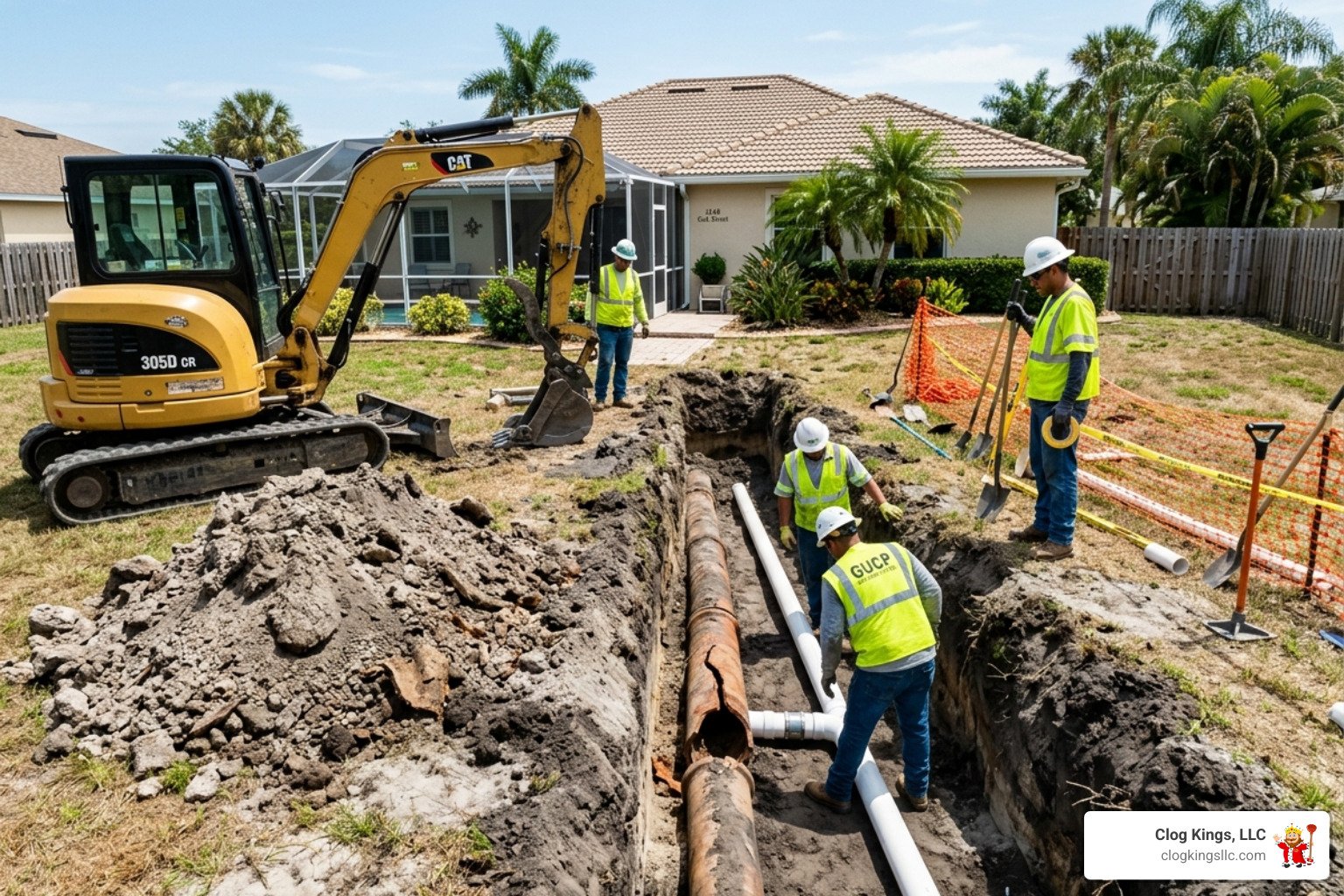

What Florida Homeowners Are Really Paying to Replace a Clay Sewer Line
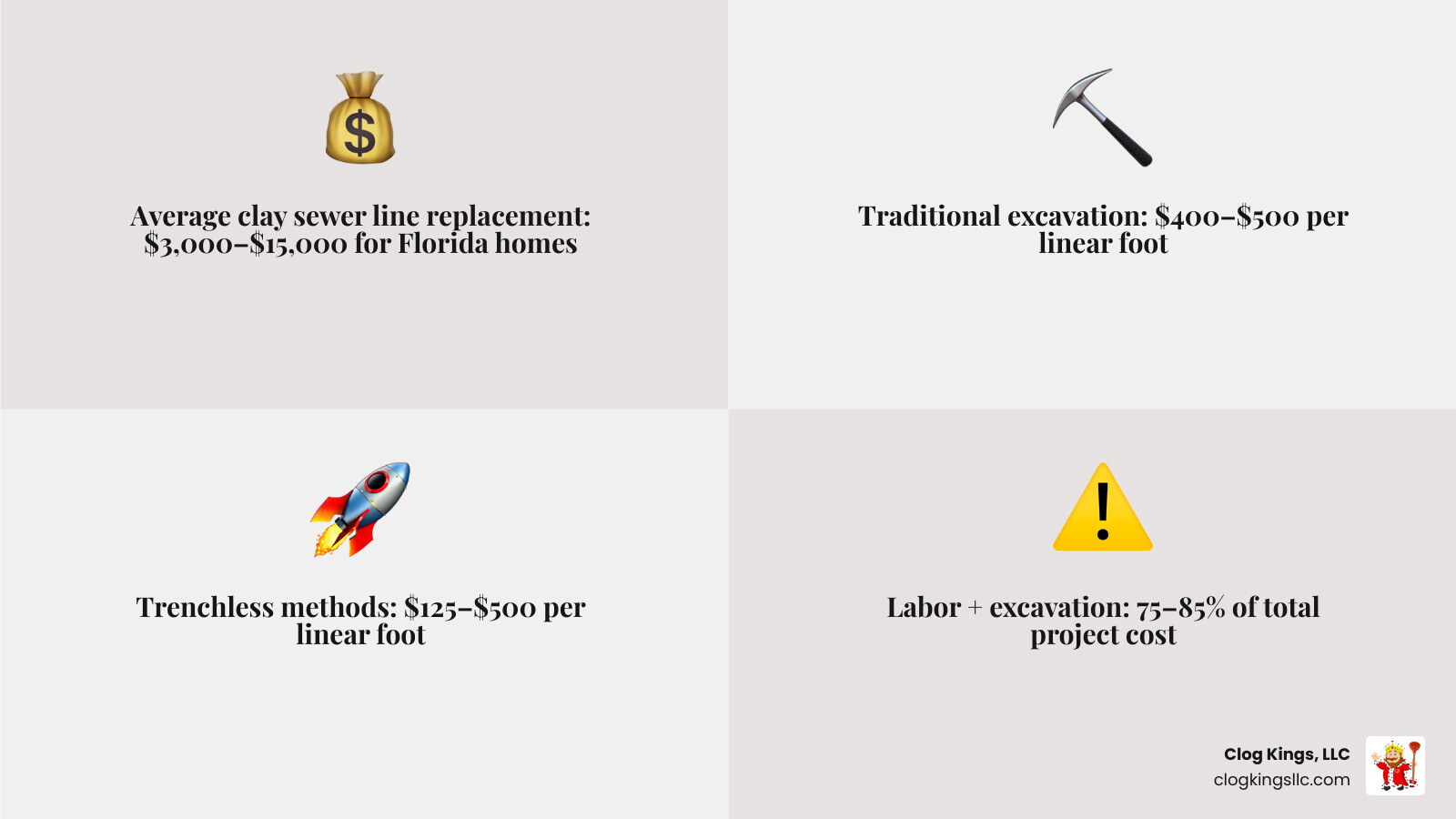
The cost to replace a clay sewer line typically runs between $3,000 and $15,000 for most Florida homeowners, depending on pipe length, depth, access, and the method used.
Here’s a quick breakdown to answer your question fast:
| Replacement Scenario | Estimated Cost |
|---|---|
| Short run (20-30 ft), trenchless | $3,500 – $7,500 |
| Average run (40-60 ft), traditional excavation | $6,000 – $12,000 |
| Long run (75+ ft) or deep burial | $10,000 – $25,000+ |
| Per linear foot (traditional) | $400 – $500 |
| Per linear foot (trenchless) | $125 – $500 |
These numbers can climb higher with older clay pipes. Why? Because clay lines often need full removal rather than spot patching, especially once root intrusion or joint failure sets in.
If your home was built before 1980, there is a good chance you have clay sewer pipes underground right now. And if they are starting to fail, the clock is ticking.
Slow drains, sewage smells in the yard, or soggy grass patches are not just annoyances. They are warning signs that a failing clay line could soon become a much bigger — and more expensive — problem.
I’m Joey Denick, and with over 20 years of hands-on experience diagnosing and replacing clay sewer lines across Florida, I’ve seen how the cost to replace a clay sewer line can vary wildly depending on factors most homeowners never think to ask about. Understanding those factors before you call a contractor can save you thousands.
Understanding the Cost to Replace Clay Sewer Line in 2026
When we look ahead to 2026, the financial landscape for home repairs continues to shift. For homeowners in Pasco, Manatee, Pinellas, and Hillsborough Counties, the cost to replace a clay sewer line is influenced by rising material costs and specialized labor. While the average cost to replace a sewer line in 2025 ranges from $1,400 to $5,300, though complex clay lines often exceed $10,000, clay pipes present unique challenges that often push estimates toward the higher end of that spectrum.
The primary reason for this price jump is fragility. Clay is brittle. Unlike modern plastics, you can’t simply “patch” a clay pipe easily once it starts to shatter or succumb to “channel rot”—where the bottom of the pipe literally wears away. In many of our local service areas like Tampa and St. Petersburg, we find that labor accounts for nearly 45% of the total project cost, while excavation and equipment make up another 30-40%.
Comparing Clay Sewer Line Replacement Cost to Modern PVC
If you are currently facing a failing vitrified clay pipe (VCP), the best move is almost always to upgrade to Schedule 40 PVC. Clay was the standard for decades because it is resistant to chemical corrosion, but its “bell-and-spigot” joints are magnets for tree roots.
When we perform a sewer replacement, we prioritize PVC because it offers a much higher return on investment. PVC is lightweight, features watertight solvent-welded joints, and has a lifespan that can exceed 100 years. In contrast, clay pipes are only intended to last about 50-60 years. If your home was built in the 1960s or 70s, your clay pipes are likely living on borrowed time.
| Feature | Vitrified Clay Pipe | Schedule 40 PVC |
|---|---|---|
| Average Lifespan | 50-60 Years | 100+ Years |
| Joint Type | Bell-and-Spigot (Leaky) | Solvent Weld (Airtight) |
| Root Resistance | Low | Very High |
| Material Cost | Higher (due to weight/shipping) | Lower |
Regional Price Variations and Florida Soil Factors
Geography plays a massive role in your final bill. In Florida, we deal with sandy soil that shifts easily. This shifting is a nightmare for rigid clay pipes, often causing them to “offset” or crack at the joints. Furthermore, our high water table in coastal areas like Pinellas County means that deep excavations require specialized pumping equipment to keep the trench dry, which adds to the labor hours.
When considering Pinellas County sewer lines repair or replace options, you also have to factor in local permitting. In our region, permit fees can range from $200 to $500, and the city often requires a final inspection before we can backfill the trench.
Why Clay Pipes Fail and When to Choose Replacement
Clay pipes fail because they are fundamentally “modular.” They were laid in short sections, creating a joint every few feet. Over time, the seals between these sections degrade. Once a tiny gap appears, moisture escapes, and tree roots—always hunting for water—find their way in.
Warning Signs Your Clay Mainline is Failing
You don’t always need a camera to know there is trouble, though we highly recommend one. There are 3 common signs of a damaged sewer pipe that every homeowner should watch for:
- Persistent Backups: If you find yourself snaking the drain more than once a year, you likely have a structural break or root intrusion that a snake can’t fix.
- Soggy Spots: If one patch of your lawn is suspiciously lush or damp even during a dry spell, your sewer line is likely “irrigating” your yard from a crack.
- The “Gurgle”: When you flush the toilet and hear a gurgling sound in the shower or sink, it means air is trapped by a blockage in the mainline.
If you notice these, it’s time for 5 signs you need a sewer line inspection to confirm the state of your pipes before a total collapse occurs.
When to Repair vs. Fully Replace
It is tempting to ask for a “spot repair” to save money. However, with clay pipes, this is often a “band-aid” on a major wound. If your line has multiple root intrusions or the pipe material is flaking away due to age, a spot repair just moves the problem a few feet down the line.
We generally use a simple rule: if the cost of the repair exceeds 40% of the total replacement cost, or if there are more than two major issues in the line, you should go for a full replacement. To help you decide, we’ve put together a guide on when should you replace vs repair your sewer line to ensure you aren’t throwing money down a broken pipe.
Comparing Methods: Traditional Digging vs. Trenchless Technology
The biggest factor in the cost to replace a clay sewer line is the method of entry.
Traditional Excavation: This involves bringing in a backhoe or a crew with shovels to dig up the entire length of the pipe. While running a new sewer pipe in 2025 will cost between $50 and $250 per linear foot, the “hidden” cost is the destruction of your property. If your sewer line runs under a manicured lawn, a concrete driveway, or a beautiful patio, you have to pay to replace all of those things after the plumber leaves.
Trenchless Technology: This is the modern standard. It allows us to replace or repair the pipe with minimal digging.
How Trenchless Methods Impact the Cost to Replace Clay Sewer Line
Trenchless options like Pipe Bursting or CIPP (Cured-In-Place Pipe) might have a higher “per foot” cost for the plumbing work itself, but they often save homeowners $2,000 to $5,000 in landscaping and driveway restoration costs.
In Pipe Bursting, we pull a new HDPE (High-Density Polyethylene) pipe through the old clay one. A “bursting head” breaks the old clay pipe apart and pushes it into the surrounding soil, making room for the new, seamless line. You can learn all about trenchless pipe lining and how it preserves your yard on our specialized service pages.
The Benefits of Pipe Lining for Aging Clay
If your clay pipe is still structurally sound (not collapsed) but has leaky joints or minor cracks, epoxy lining is a fantastic choice. We saturated a felt liner with epoxy resin, pull it into the pipe, and inflate it. Once it cures, it creates a “pipe within a pipe” that is as strong as PVC.
This is often called pipe lining the modern solution for aging pipes because it eliminates the need for joints entirely, meaning roots can never get back in. Most CIPP liners come with a 50-year rating, giving you peace of mind for decades.
Hidden Factors That Drive Up Your Clay Sewer Line Replacement Cost
Not every 50-foot pipe costs the same to replace. Several “invisible” factors can send your estimate north of $10,000.
Depth and Accessibility Challenges
The deeper the pipe, the more dangerous and expensive the job. In Florida, most residential lines are 3 to 5 feet deep. However, if your line is 7 feet deep or more, it is considered a “high-liability” project. Federal safety rules require us to use “shoring” (metal supports) to prevent the trench from collapsing on our workers. This adds significant time and equipment costs.
Furthermore, common sewer line issues like pipes running under a swimming pool or a structural foundation can triple the labor costs because we have to use specialized directional drilling or hand-digging techniques to avoid damaging your home’s infrastructure.
Additional Fees: Permits, Inspections, and Restoration
Don’t forget the paperwork. Permit fees can range from $100–$1,000 depending on whether you live in Tampa, St. Pete, or a more rural part of Hillsborough County.
Before we even start, a video plumbing inspection is a non-negotiable first step. Camera inspections usually cost $100 to $500, but they save you money by preventing “guesswork” digging. We also have to coordinate with utility companies to mark gas and power lines, and if there are large trees in the way, you might face an additional $700 to $1,500 for professional root removal or stump grinding.
Frequently Asked Questions about Clay Sewer Replacement
Does homeowners insurance cover clay sewer line replacement?
Standard homeowners insurance policies typically do not cover sewer line replacement caused by age, wear and tear, or tree root intrusion. However, if the line collapses suddenly due to a covered peril (like a sinkhole or certain types of accidental damage), you might have a claim. We always recommend checking if you have a “Service Line” rider on your policy, which can cover up to $10,000 of these costs for a small annual fee.
How long does a new replacement sewer line last?
If we replace your old clay with modern PVC or HDPE, you are looking at a lifespan of 50 to 100 years. Epoxy liners (CIPP) are generally rated for 50 years. Essentially, once you replace a clay line with modern materials, you shouldn’t have to worry about it again for the rest of your life.
How long does the replacement project typically take?
A traditional excavation project usually takes 3 to 5 days, depending on the weather and the complexity of the restoration. Trenchless methods like pipe bursting or lining are much faster, often completed in just 1 to 2 days with minimal downtime for your home’s water usage.
Conclusion
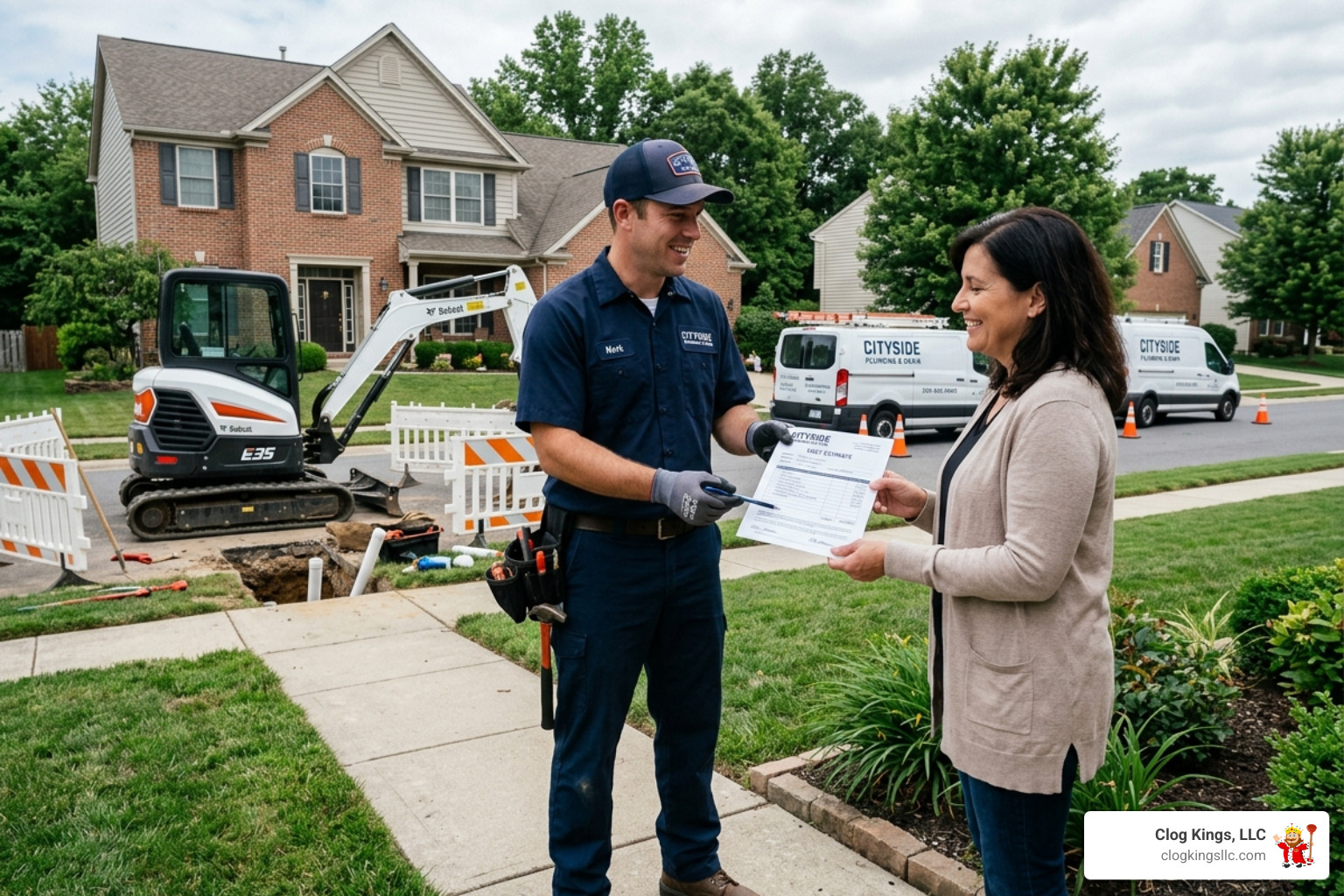
Replacing a clay sewer line is a significant investment, but it’s one that protects your home’s health, safety, and property value. At Clog Kings LLC, we pride ourselves on providing “No BS” estimates and transparent pricing for homeowners throughout Pasco, Manatee, Pinellas, and Hillsborough Counties.
Whether you need a simple sewer-repair or a full-scale mainline replacement, our team is available 24/7 to help you navigate the process. Don’t wait for a total backup to ruin your day—if you suspect your clay pipes are failing, give us a call for a professional camera inspection today. We’ll help you keep your money—and your peace of mind—from going down the drain.
