
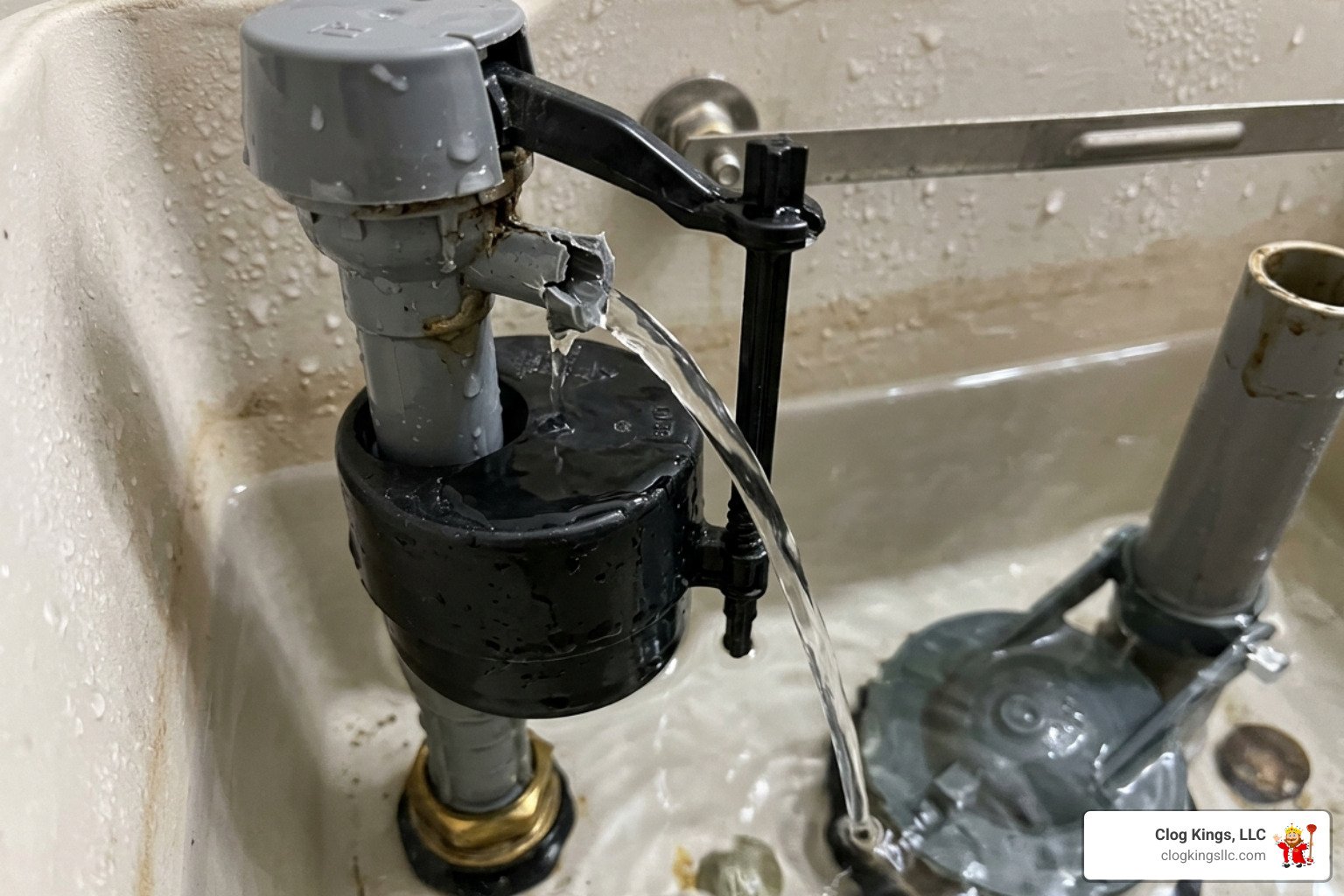

What to Do When You Have a Broken Toilet Valve
A broken toilet valve can waste up to 200 gallons of water per day — and most homeowners don’t even realize there’s a problem until they see a spike in their water bill.
Here’s a quick overview of what to do based on which valve is failing:
| Symptom | Likely Valve | Quick Fix |
|---|---|---|
| Dripping near the wall behind the toilet | Shut-off (supply) valve | Replace with a quarter-turn SharkBite valve |
| Hissing, slow refill, or constant running | Fill valve | Adjust float or replace the fill valve ($10–$20) |
| Ghost flushing or water trickling into bowl | Flush valve / flapper | Replace flapper or flush valve seat |
| Water dripping from valve when “off” | Shut-off valve | Replace valve; do not attempt to repair |
These are the three main valves involved in toilet problems. Each fails differently, and each has a different fix. We’ll walk through all of them below.
One homeowner described it well in a DIY forum: their pull-type shut-off valve dripped once every 10–12 seconds even when fully closed — and once every 5–6 seconds when open. The valve was beyond repair. A plumber had to use a hacksaw to cut it off the copper pipe stub. That’s a common scenario with older, builder-grade valves.
I’m Joey Denick, and with over 20 years of hands-on plumbing experience, I’ve replaced more broken toilet valves than I can count — from corroded compression fittings on short copper stubs to flapper seals that quietly wasted hundreds of gallons a month. This guide gives you the same advice I’d give a friend standing in their bathroom wondering what just went wrong.
Identifying a Broken Toilet Valve: Shut-Off vs. Fill vs. Flush
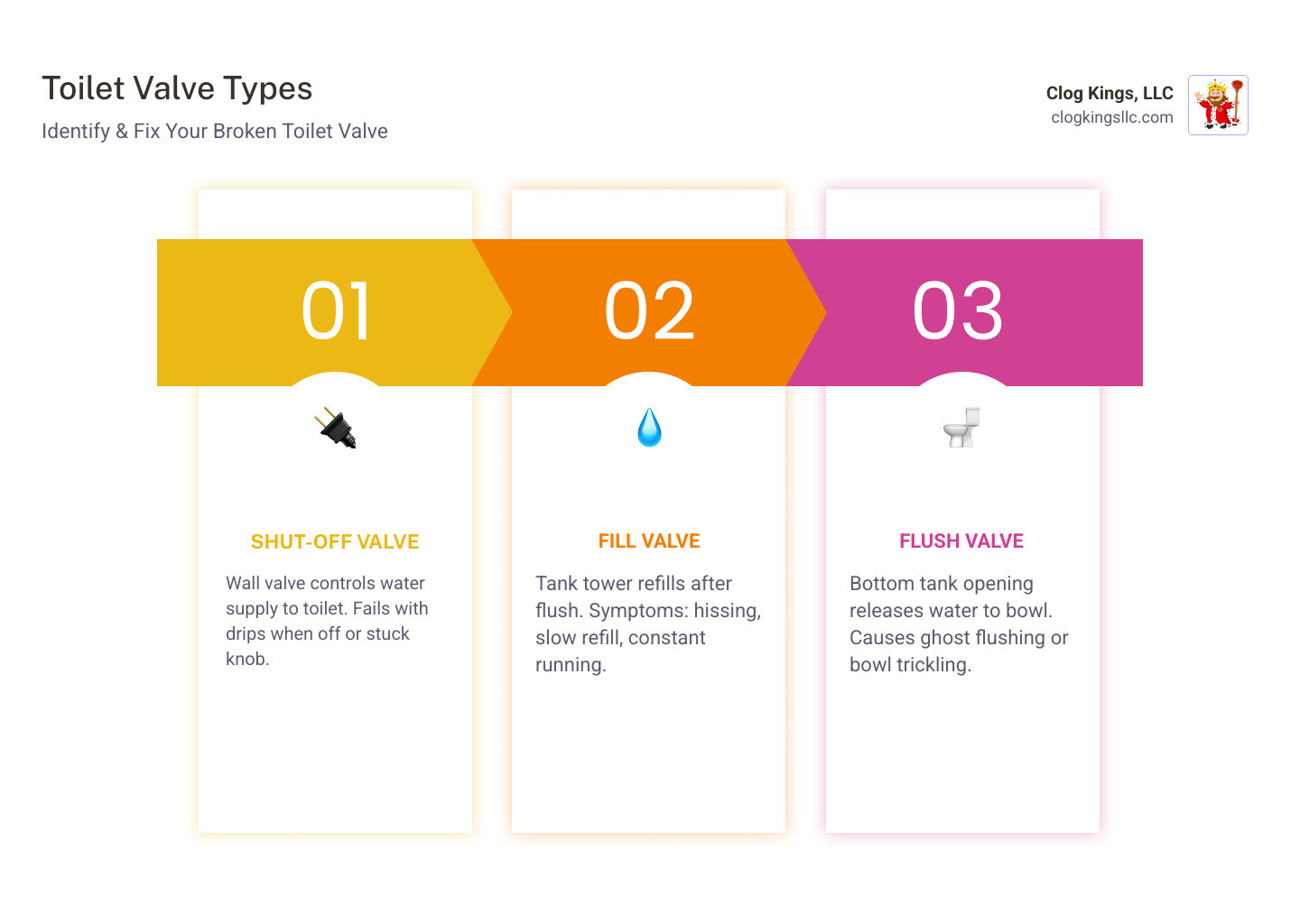
Before you grab your wrench and start dismantling your bathroom, you need to know which valve is actually causing the ruckus. A toilet isn’t just one big machine; it’s a collection of three distinct valves working in harmony. When one goes rogue, the symptoms can be confusing.
The shut-off valve (also called the supply valve) is the one on the wall or floor behind the toilet. Its only job is to turn the water on or off for the fixture. The fill valve is the tall tower inside the tank that refills it after a flush. Finally, the flush valve is the large opening at the bottom of the tank that lets the water rush into the bowl when you hit the handle.
Understanding these differences is the first step in How a Running Toilet Becomes a Big Plumbing Problem. If you misdiagnose the issue, you might spend an hour replacing the fill valve when the real culprit was a $5 flapper on the flush valve.
| Valve Type | Location | Primary Function | Failure Signs |
|---|---|---|---|
| Shut-Off Valve | On the wall/floor behind toilet | Cuts off water supply to the unit | Leaking at the handle, stuck knob, or won’t stop water |
| Fill Valve | Inside the tank (left side) | Refills the tank to a set level | Constant hissing, slow filling, or water running into overflow |
| Flush Valve | Center of the tank bottom | Discharges water into the bowl | Ghost flushing, trickling water in bowl, tank won’t hold water |
Common Signs of Supply Valve Failure
The supply valve is often the most neglected part of the toilet until you actually need it—like when a pipe bursts or the tank is overflowing. Because these valves sit idle for years, the internal washers can become brittle or mineral deposits can lock the handle in place.
If you see a green or white crusty buildup (mineral deposits) around the handle or where the pipe enters the wall, that’s a clear sign of a broken toilet valve. You might also notice a slow drip that only happens when the valve is fully open or fully closed. These small drips are sneaky and are among the 5 Easy Ways to Find Hidden Water Leaks in Your Home. If the handle feels “spongy” or spins without actually stopping the water, the internal stem is likely stripped or broken.
Understanding the Fill and Flush Mechanisms
Inside the tank, it’s all about water levels. The fill valve has a float (either a ball on a rod or a sliding cup) that tells it when to stop. If this float is set too high, water will constantly spill into the overflow tube, leading to that annoying “running” sound.
The flush valve is the gatekeeper. It relies on a rubber flapper to create a watertight seal. Over time, chlorine and minerals in our Florida water (especially in Pinellas and Hillsborough Counties) can warp the rubber. When that seal fails, water leaks from the tank into the bowl, causing the fill valve to kick on randomly to “top off” the tank. This is known as “ghost flushing,” and Is Your Toilet Running? Don’t Let It Cost You a River because it can waste thousands of gallons a month.
Troubleshooting and Fixing a Broken Toilet Valve in the Tank
When the problem is inside the tank, the fix is usually much easier and doesn’t require turning off the water to the whole house. Most tank components are made of plastic and rubber, which are designed to be replaced every 5 to 10 years.
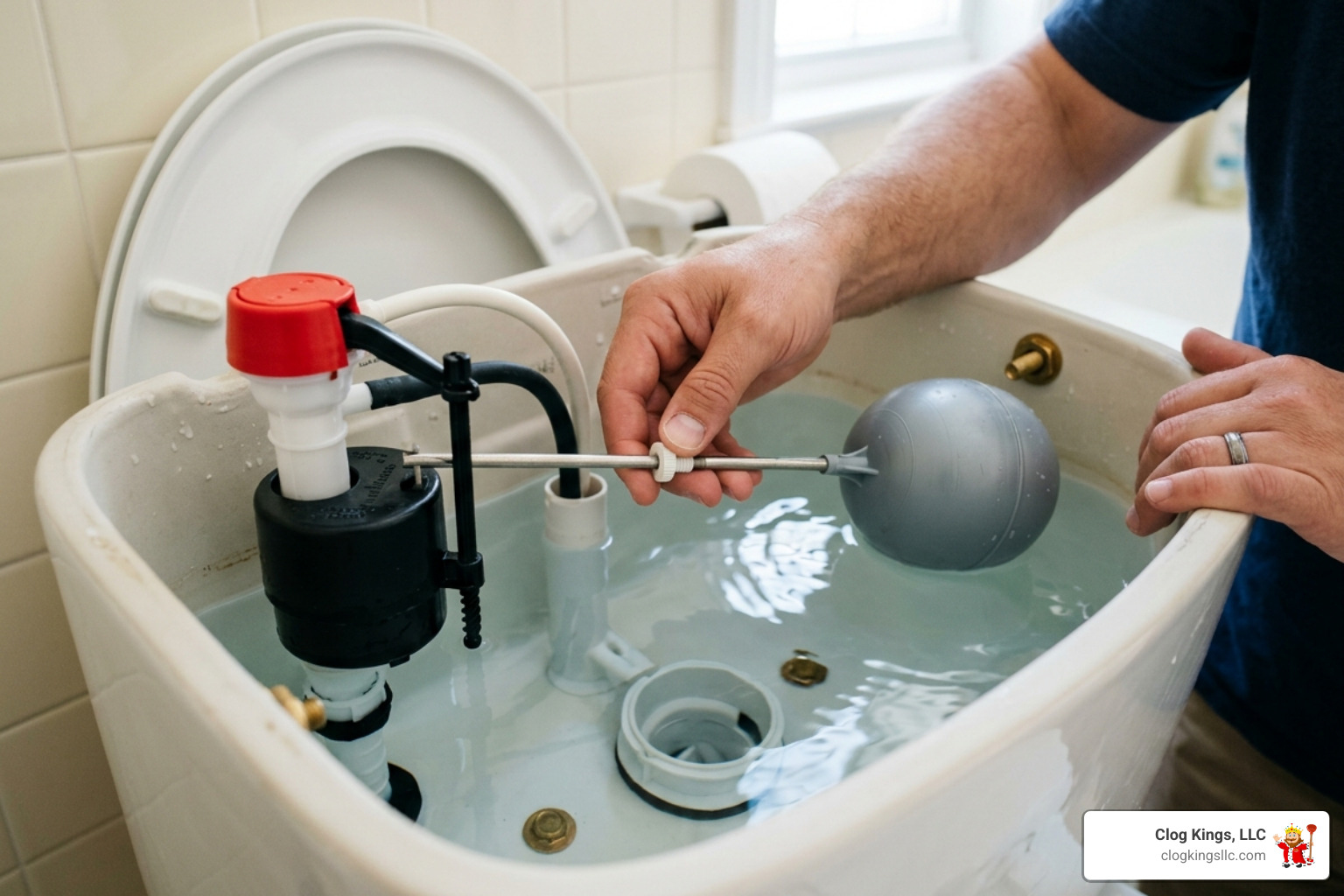
If your toilet is making a hissing sound, start by checking the water level. It should be about an inch below the top of the overflow tube. If it’s higher, you can often fix it by simply turning the adjustment screw on the fill valve to lower the float. If the hissing continues even when you manually lift the float, the internal seal of the fill valve is toast.
Signs of a Broken Toilet Valve Fill Mechanism
A faulty fill valve is one of the most common reasons a toilet runs nonstop. You might hear a screeching or humming noise as it struggles to shut off. In some cases, the refill tube (the small hose going into the overflow pipe) might be spraying water against the tank lid, causing a mess you only see when you open the tank.
For most modern toilets, you’ll want a universal “Fluidmaster-style” valve. These fit about 98% of toilets and are much more reliable than the old-fashioned ball-and-rod style. For a deeper dive into the mechanics, check out DIY Toilet Repair: Replacing a Faulty Water Fill Valve Made Easy. If you decide to replace it yourself, follow a Replacing a Toilet Fill Valve: The Complete Step-by-Step Guide for Every Scenario to ensure you get the height adjustment exactly right.
Repairing the Flush Valve and Flapper
If you hear your toilet “flush” itself in the middle of the night, you have a leaky flush valve. The easiest test is the “dye test”: drop a few drops of food coloring into the tank and wait 20 minutes. If the color appears in the bowl without flushing, your flapper is leaking.
You can often fix this by How to Repair a Leaky Toilet Flush Valve using a simple repair kit. Sometimes, it’s just a matter of cleaning the “seat” (the rim the flapper sits on) with some steel wool to remove mineral buildup. If the seat is cracked, however, you’ll need to replace the entire flush valve assembly, which usually requires removing the tank from the bowl.
How to Replace a Broken Toilet Valve (Shut-Off)
Replacing the shut-off valve on the wall is a “Level 2” DIY project. It’s not incredibly difficult, but the stakes are higher because you have to turn off the main water supply to your home. If you live in Tampa or St. Petersburg, you likely have a main shut-off near the front of your house or by the water meter.
Tools and Materials for Replacing a Broken Toilet Valve
Before you start, make sure you have everything on hand. There is nothing worse than having the water off to your whole house only to realize you bought the wrong size valve.
Essential Tools:
- Adjustable wrench (two are better—one to hold the valve and one to turn the nut)
- Channel-lock pliers
- Small bucket to catch the “spill” water
- Sponge and towels
- A new braided stainless steel supply line (don’t reuse the old one!)
For the valve itself, we highly recommend a quarter-turn ball valve. Unlike the old multi-turn valves that use a rubber washer, ball valves use a stainless steel ball that is much less likely to leak or seize up over time. If you aren’t comfortable with compression fittings, “SharkBite” (push-to-connect) valves are a lifesaver for DIYers. They literally just slide onto the pipe and lock in place.
Step-by-Step Shut-Off Valve Replacement
- Shut off the main water: Find your main valve and turn it clockwise until it stops. Open a faucet at the lowest level of your house to drain the pressure.
- Drain the toilet: Flush the toilet and use a sponge to get the last bit of water out of the tank.
- Disconnect the supply line: Use your wrench to unscrew the hose from the bottom of the toilet and then from the valve.
- Remove the old valve: If it’s a compression valve, hold the valve body with one wrench and unscrew the nut with the other. If the nut is stuck, don’t force it too hard—you don’t want to snap the copper pipe inside the wall.
- Clean the pipe: Use a piece of emery cloth or fine sandpaper to clean the copper pipe until it shines. This ensures a watertight seal.
- Install the new valve: If using a SharkBite, just push it on. If using a compression valve, slide the nut and the brass ring (ferrule) onto the pipe, then tighten the valve onto it.
- Test for leaks: Turn the main water back on slowly and check for any weeping around the fittings.
For more visual learners, you can follow this How to Replace a Toilet’s Shut-Off Valve guide. If you find yourself needing to replace the internal parts of the tank as well, check out How to Replace a Toilet Flush Valve Step by Step.
DIY vs. Professional Plumbing: When to Call for Help
We love a good DIY spirit, but plumbing has a way of turning a 20-minute job into a weekend-long nightmare. There are specific times when calling us at Clog Kings LLC is the smarter (and cheaper) move in the long run.
Challenges with Short Pipe Stubs and Corrosion
In many Florida homes, builders leave very little copper pipe sticking out of the wall. If you have less than an inch of pipe, you don’t have enough room to cut off the old compression ring and install a new one. In these cases, we often have to use a specialized “ring puller” or carefully use a hacksaw to cut the nut without damaging the pipe.
If the pipe is corroded or paper-thin, a DIYer might accidentally snap it off inside the wall. Now, instead of a simple valve replacement, you have a flood and a need for emergency wall surgery. This is exactly Why DIY Plumbing Repairs Often Backfire for Hillsborough County Residents. If the valve looks like it’s fused to the pipe with rust, it’s time to call in the pros.
Cost Comparison and Professional Benefits
A DIY fill valve replacement costs about $10–$20 for parts. Hiring a plumber for the same job usually averages $50–$150. However, that professional fee includes a warranty and the peace of mind that your bathroom won’t be flooded while you’re at work.
When it comes to the shut-off valve, the cost to hire a plumber is typically $150–$200. While that’s more than the $25 you’d spend on a SharkBite valve, a pro can identify if your water pressure is too high—a common cause of broken toilet valve failures. Before deciding, read DIY vs. Professional Plumbing: What Hillsborough Homeowners Should Know and consider these 4 Reasons You Should Hire a Plumber for Toilet Repairs.
If you’re unsure, check out our guide on When Do You Need to Hire a Plumber? to see where your project falls on the risk scale.
Frequently Asked Questions about Toilet Valves
Should I repair or replace a leaking shut-off valve?
In the old days, you could “rebuild” a valve by replacing a tiny rubber washer inside the stem. Today, most valves are “builder-grade” and aren’t meant to be serviced. If a valve is leaking from the handle, you can try tightening the “packing nut” (the nut right behind the handle) by a quarter turn. If that doesn’t stop the leak, or if the valve won’t shut off the water completely, replace it. A new quarter-turn ball valve is much more reliable and will last for decades.
What is the best type of toilet shut-off valve for DIYers?
For most DIYers, a SharkBite (push-to-connect) quarter-turn valve is the gold standard. You don’t need to worry about over-tightening a compression nut or learning how to solder copper. You simply clean the pipe, push the valve on until it clicks, and you’re done. They are slightly more expensive than compression valves, but the ease of installation is worth the extra five bucks.
How do I test for leaks after a valve replacement?
The best way is the “dry paper towel test.” After you’ve turned the water back on, wipe everything down so it’s bone dry. Then, wrap a dry paper towel around the connections. Even a tiny, microscopic leak will show up as a damp spot on the paper. Check it again after an hour, and then again the next morning. If you find a leak, it usually just needs a tiny bit more tightening. Also, keep in mind that Water Pressure Problems Are Worth Fixing, as high pressure can cause even brand-new valves to weep.
Conclusion
A broken toilet valve might seem like a minor annoyance, but between the wasted water and the potential for floor damage, it’s a problem that demands your attention. Whether you’re swapping out a noisy fill valve or upgrading an old supply line to a modern quarter-turn valve, taking action now will save you money and stress.
Preventative maintenance is key. We recommend gently turning your shut-off valves off and on once a year to keep them from seizing up. If you notice any dampness or “phantom flushing,” don’t wait for the bill to skyrocket.
If you hit a snag—especially with short pipes or heavy corrosion—don’t risk a flood. We provide 24/7 Toilet Repair and General Plumbing Repair across Pasco, Manatee, Pinellas, and Hillsborough Counties. At Clog Kings LLC, we’ve seen it all, and we’re here to help you get your bathroom back in order. Give us a call, and we’ll make sure your “quick fix” doesn’t turn into a major headache!
