
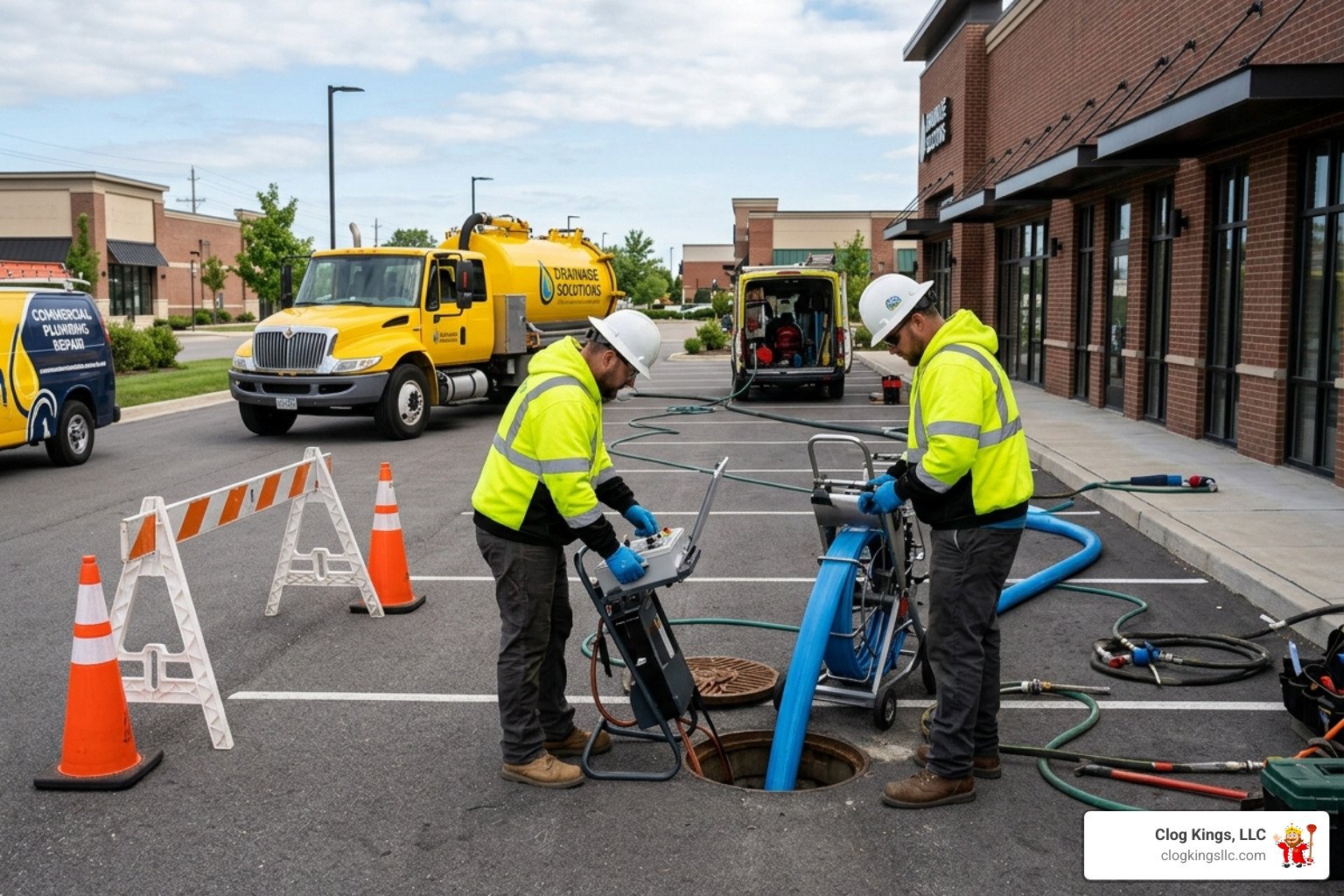

When Your Business Drains Stop Working, Every Minute Costs You
Commercial sewer line repair is the process of diagnosing and fixing damaged, blocked, or failing sewer pipes in business properties — and when something goes wrong, it can shut your entire operation down fast.
Here’s what you need to know right now:
- Signs you need repair: multiple slow drains, sewage odors, gurgling toilets, wet spots in your yard, or a full backup
- Common causes: root intrusion, grease buildup, aging cast iron or clay pipes, ground shifting, and heavy daily use
- Main repair options: trenchless pipe lining (CIPP), pipe bursting, or traditional open-cut excavation
- Who pays: the property owner is responsible for lines within the property boundary; the municipality handles the main line in the public right-of-way
- How fast it takes: trenchless repairs typically finish in 1-2 days; open-cut excavation can take 3-5 days
- What to do right now: call a licensed commercial plumber, stop using affected fixtures, and request a video camera inspection
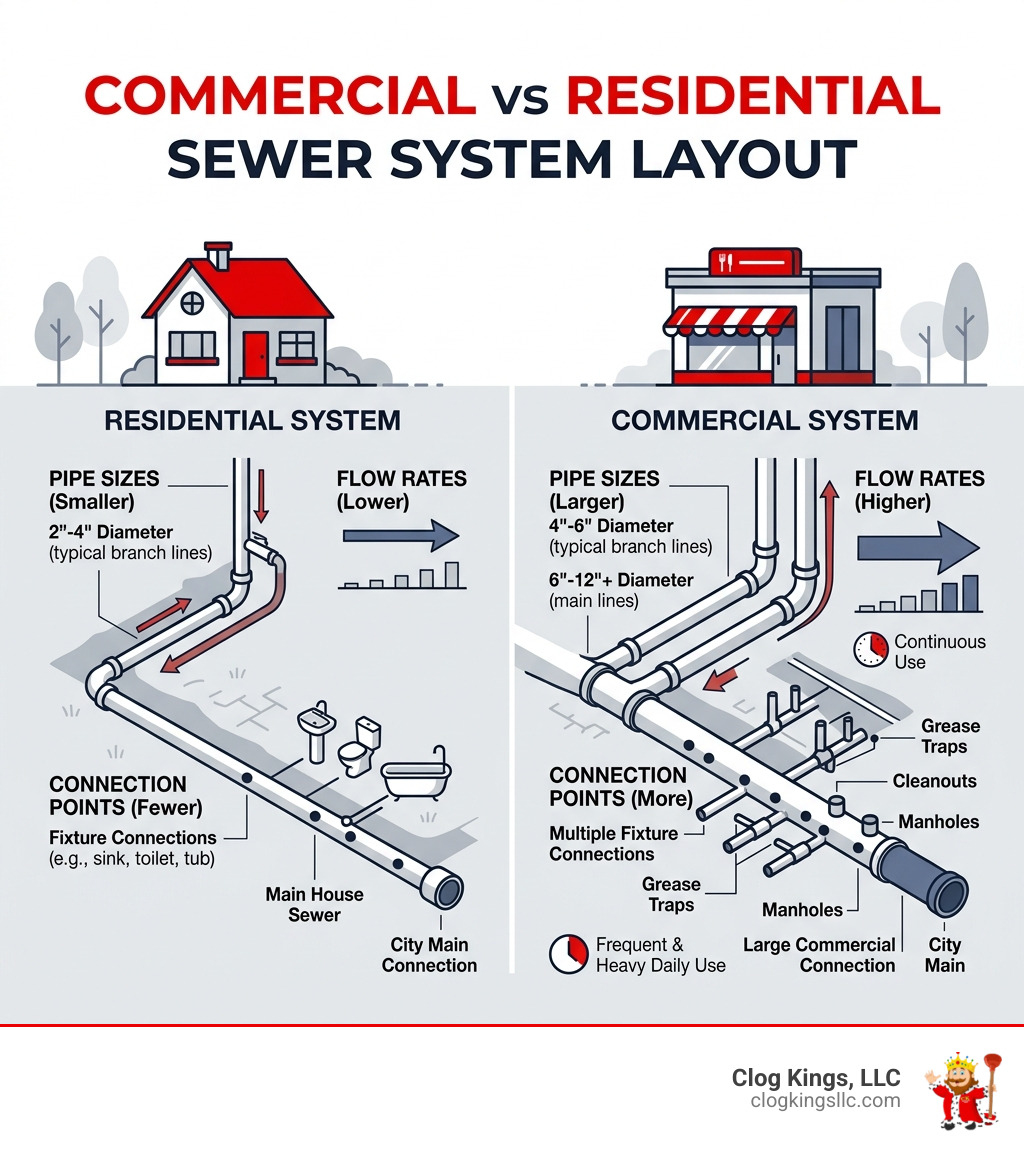
A sewer failure at a commercial property is a different animal than a backup at home. Businesses see far more daily use, carry larger-diameter pipes, and face stricter health and occupancy codes. A restaurant with sewage backing up can face immediate health department closure. An office building with non-functional restrooms can violate its occupancy permit. The stakes are simply higher — and the systems are more complex.
That’s why understanding how commercial sewer repair works, what it costs, and who is responsible matters before a crisis hits.
I’m Joey Denick, and with over 20 years of hands-on experience in commercial sewer line repair, I’ve seen how fast a small drain problem can spiral into a full business shutdown. In the sections below, I’ll walk you through everything you need to know — from spotting the early warning signs to choosing the right repair method for your property.
Identifying Signs and Causes of Commercial Sewer Line Failure
When we talk about a sewer, we are referring to the vital underground conduit that carries waste away from your business. In the Tampa Bay area—from the bustling streets of St. Petersburg to the industrial parks of Hillsborough County—these lines take a beating.
Recognizing Common Sewer Line Issues early can save you thousands in emergency remediation. Here are the 3 Common Signs of a Damaged Sewer Pipe we see most often in commercial settings:
- Persistent Foul Odors: If your customers or employees are complaining about a “rotten egg” smell, it’s likely sewer gas escaping through a crack in the line.
- Slow or Gurgling Drains: When multiple fixtures act up at once, the problem isn’t a simple clog in the sink; it’s a bottleneck in the main line.
- Lush, Soggy Patches of Grass: If one area of your landscaping is suddenly looking suspiciously green and vibrant, it might be “feeding” off a sewage leak.
The Culprits Behind the Chaos
Why do these failures happen? In our experience across Pinellas and Pasco Counties, several factors lead to Signs Your Manatee County Home Needs a Sewer Line Replacement (which apply just as heavily to businesses):
- FOG (Fats, Oils, Greases): This is the ultimate villain for restaurants. Grease solidifies as it cools, catching food debris and creating “fatbergs” that can completely choke a 6-inch main.
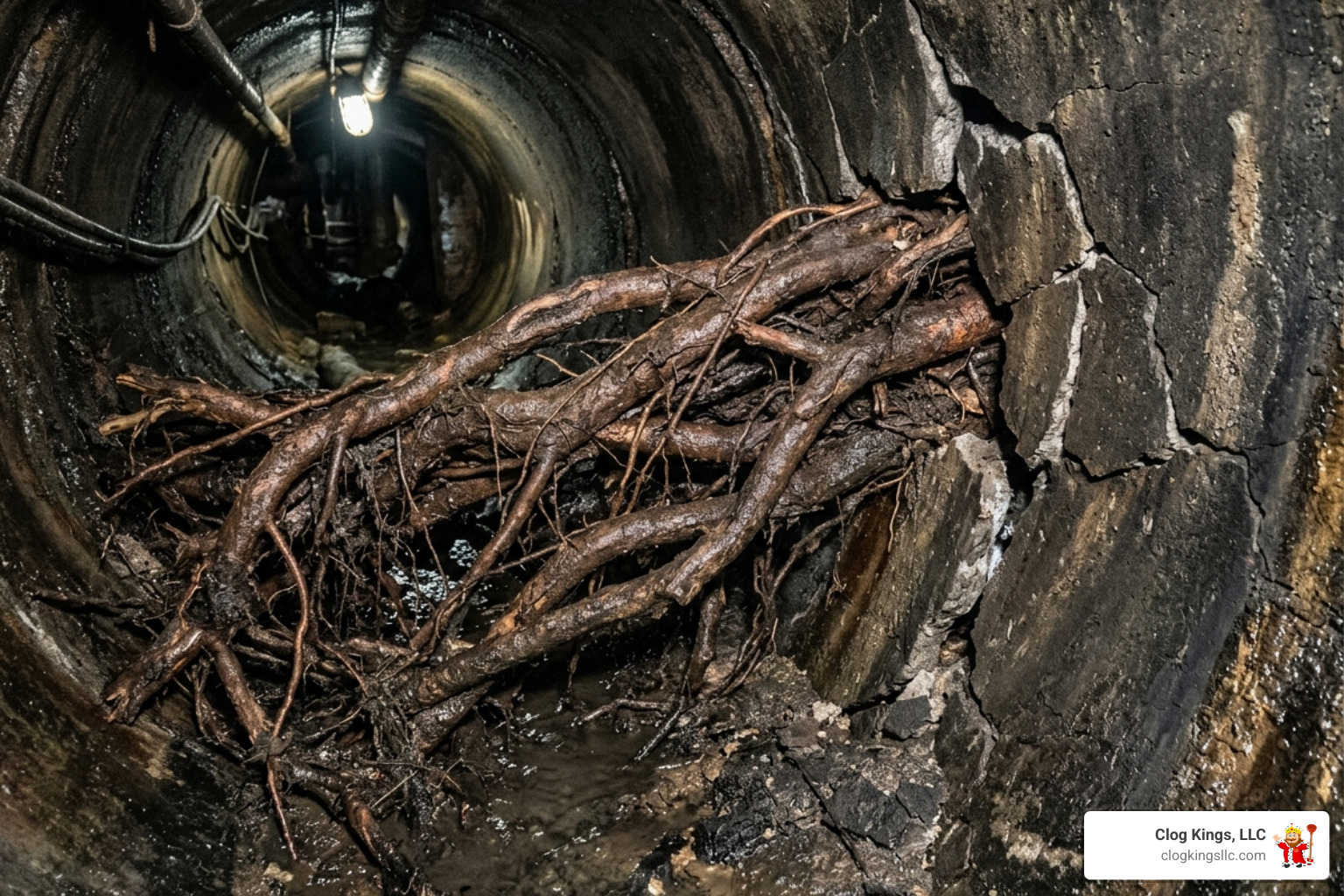
- Tree Root Intrusion: Florida’s live oaks and laurel oaks are beautiful, but their roots are moisture-seeking missiles. They can penetrate tiny cracks in clay or cast iron pipes, expanding until the pipe shatters.
- Cast Iron Corrosion: Many commercial properties built in the 1970s and 80s used cast iron. Florida’s acidic, sandy soil and high water table accelerate the oxidation process. Cast iron typically lasts 50-75 years, but in our humid environment, that lifespan can be significantly shorter.
- Ground Shifting and Structural Load: Heavy vehicle traffic in parking lots or the settling of large commercial buildings can put immense pressure on buried lines, leading to bellied or collapsed sections.
Understanding the Complexity of Commercial vs. Residential Systems
You might wonder, “Can’t any plumber fix this?” Not necessarily. There are 3 Common Commercial Plumbing Problems that require a specialized approach.
Commercial systems use much larger pipe diameters to handle higher flow rates. While a home might have a 4-inch main, a shopping center or apartment complex might utilize 6-inch, 8-inch, or even larger industrial lines. Furthermore, businesses often discharge chemicals or high-temperature water that can degrade standard residential-grade materials.
If your sewer line fails, it isn’t just a mess—it’s a legal liability. A failure can lead to the revocation of occupancy permits or severe health code violations, especially in the food service and medical industries.
The Step-by-Step Process of Commercial Sewer Line Repair
We don’t believe in guesswork. When we arrive at a commercial site in Tampa or St. Petersburg, we follow a rigorous protocol to ensure the repair is done right the first time.
1. Advanced Diagnostics
The first step is always a Video Plumbing Inspection. We navigate a high-definition waterproof camera through your lines to see exactly what’s happening. This Video Inspection of Sewer Lines allows us to pinpoint the location of a crack, root mass, or collapse without digging a single hole.
Sometimes, we’ll also perform a Smoke Test: Clearing the Air on Your Sewer System. By forcing non-toxic “smoke” into the lines, we can see exactly where gas is escaping, identifying leaks in walls or under slabs that a camera might miss.
2. Line Preparation and Cleaning
Before any repair can happen, the pipe must be cleaned. We utilize Hydro-Jetting Services to blast away grease, scale, and roots using high-pressure water. This is a core part of the Benefits of Regular Sewer and Drain Cleaning, as it restores the pipe to its original diameter and prepares the surface for lining.
3. Bypass Pumping
For businesses that need to stay open during repairs, we set up bypass pumping. This temporary system reroutes your wastewater around the section being repaired, ensuring your bathrooms and kitchens remain functional while we work.
4. Repair and Testing
Once the repair is complete—whether via trenchless lining or traditional methods—we conduct hydrostatic pressure testing to ensure the system is leak-free. We finish with a final camera pass to document the quality of the work for your records. This level of detail is why The Importance of Sewer Maintenance in Hillsborough County cannot be overstated for property managers.
Why Quick Response is Critical for Commercial Sewer Line Repair
In the business world, “time is money” isn’t just a cliché. Every hour your sewer is down, you’re risking revenue loss and structural damage. Learning How to Handle a Sewer Crisis Without Getting Your Hands Dirty starts with having a 24/7 partner on speed dial.
Knowing When to Call a Professional for Sewer Repair in Hillsborough County is vital. Delaying a repair allows raw sewage to saturate the soil under your foundation, potentially leading to sinkholes or mold infestations. Furthermore, broken lines are like an “open house” sign for pests; rats and cockroaches frequently use damaged sewer pipes as highways into commercial buildings.
Trenchless vs. Traditional Excavation Methods
One of the biggest decisions you’ll face is whether to use trenchless technology or traditional excavation.
What is Trenchless Repair?
If you’ve been researching All About Trenchless Pipe Lining, you know it’s a game-changer. Pipe Lining: The Modern Solution for Aging Pipes allows us to create a “pipe within a pipe.”
The Comparison: CIPP vs. Pipe Bursting vs. Excavation
| Feature | CIPP (Pipe Lining) | Pipe Bursting | Open-Cut Excavation |
|---|---|---|---|
| Digging Required | Minimal (Access point) | Small entry/exit pits | Extensive trenching |
| Best For | Cracks, leaks, minor gaps | Collapsed or undersized pipes | Catastrophic collapses |
| Timeframe | 1-2 Days | 1-2 Days | 3-5+ Days |
| Landscape Damage | Nearly Zero | Minimal | High |
| Lifespan | 50+ Years | 50+ Years | Varies by material |
When debating Pinellas County Sewer Lines: Repair or Replace?, we often recommend trenchless methods because they utilize epoxy resin or HDPE (High-Density Polyethylene) piping, which are immune to the corrosion that kills cast iron.
Benefits of Trenchless Technology for Businesses
The primary benefit is minimal downtime. We can often complete a Sewer Replacement using Perma-Liner™ technology in a single day. For a retail shop or a hotel, not having to tear up the parking lot or lobby floor is priceless.
Trenchless Sewer Repair is also more environmentally friendly, as it doesn’t require hauling tons of dirt or disposing of old, contaminated pipes. While the upfront cost of the technology can be higher, the savings on surface restoration (asphalt, concrete, landscaping) usually make it the more cost-effective choice in the long run.
Deciding When Should You Replace vs. Repair Your Sewer Line? depends on the structural integrity of the host pipe. If the pipe has completely pancaked, pipe bursting or traditional excavation may be the only options.
Costs, Liability, and Compliance Standards
“How much is this going to cost?” It’s the first question every owner asks. While we can’t give a flat rate without seeing the damage, we can explain the factors.
Factors Influencing Price
- Depth of Pipe: In Florida, our high water table means deeper pipes require dewatering—using pumps to clear groundwater so we can work. This adds to the labor and equipment costs.
- Pipe Diameter and Length: Industrial-grade liners for 8-inch mains are significantly more expensive than 4-inch residential liners.
- Location: If the pipe is under a structural slab or a busy highway, the complexity of access increases.
- Restoration Needs: If we have to cut through and then replace asphalt or high-end landscaping, those costs must be factored in.
Who is Responsible?
Generally, the commercial property owner is responsible for the sewer line from the building until it reaches the municipal connection (usually at the property line or the middle of the street). However, in multi-tenant complexes, you must review your lease agreements. Some triple-net (NNN) leases may pass maintenance costs to the tenants.
Compliance and Safety
Commercial work in the Tampa Bay area must adhere strictly to Florida plumbing codes. This includes obtaining the correct permits and coordinating with the local utility authority. We provide full digital documentation of the repair, which is essential for your insurance company and facility management records.
Choosing a Contractor for Commercial Sewer Line Repair
Not all plumbers are equipped for Commercial Plumbing. When learning How to Pick Commercial Plumbing Services, look for these Benefits of Choosing a Commercial Plumber:
- Industrial-Grade Equipment: Do they have high-flow hydro-jetters and mainline cameras?
- 24/7 Availability: Sewer crises don’t wait for business hours.
- Insurance and Licensing: Ensure they carry high-limit commercial liability insurance to protect your property.
- Experience: Ask for references from other local businesses or property managers.
Frequently Asked Questions about Commercial Sewer Line Repair
Who is responsible for paying for the repair?
As mentioned, the property owner typically owns the line up to the municipal main. If the break occurs in the public right-of-way due to a city pipe failure, the municipality may be responsible. Always request a camera inspection to document the exact location of the break before assuming liability. You can find more info in our Sewer Lines category.
How long do commercial sewer pipes typically last?
- Cast Iron: 50-75 years (less in Florida’s acidic soil).
- PVC: 100+ years.
- Clay: 50-60 years (very susceptible to root damage).
- Orangeburg: 30-50 years (these are “bituminous fiber” pipes and almost always need replacement). If your building is over 40 years old, check these 5 Signs You Need a Sewer Line Inspection.
Can trenchless methods fix a completely collapsed line?
Usually, no. CIPP lining requires a “host pipe” to hold the shape of the liner. However, pipe bursting can often replace a collapsed line by pulling a new HDPE pipe through the debris of the old one. We use camera verification to determine which method is safe for your building’s structural integrity.
Conclusion
Commercial sewer line repair doesn’t have to be a nightmare that ends in weeks of construction and lost revenue. By choosing modern trenchless technologies and a partner that understands the unique demands of Florida businesses, you can get back to work faster than you thought possible.
At Clog Kings, LLC, we pride ourselves on being the 24/7 local experts for Pasco, Manatee, Pinellas, and Hillsborough Counties. Whether you’re dealing with a sudden grease blockage in a Tampa restaurant or aging cast iron pipes in a St. Petersburg office complex, we have the industrial-grade tools and the “No BS” approach to fix it right.
Don’t wait for a small leak to become a catastrophic collapse. Schedule Your Commercial Sewer Repair with us today, and let’s keep your business flowing smoothly.
